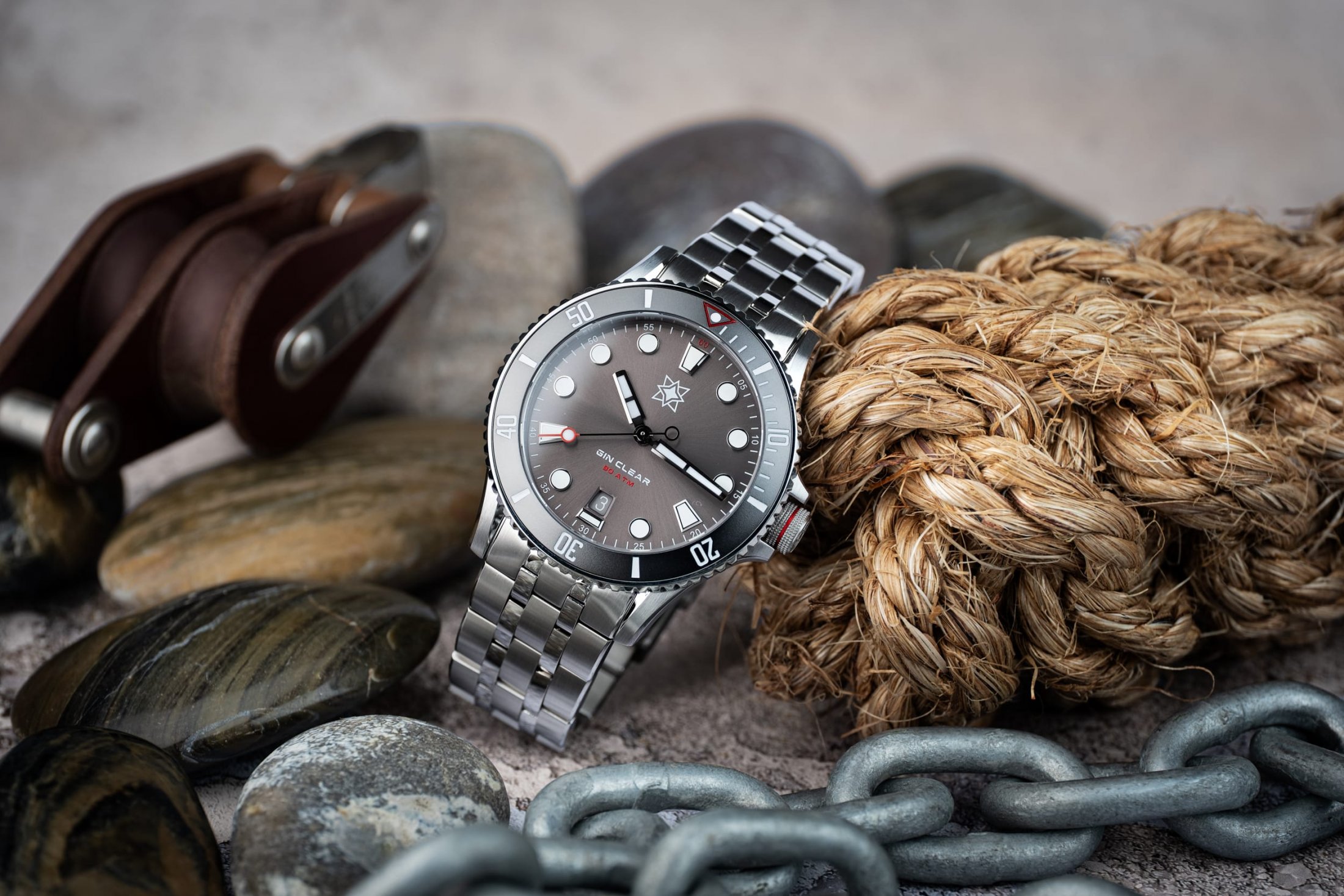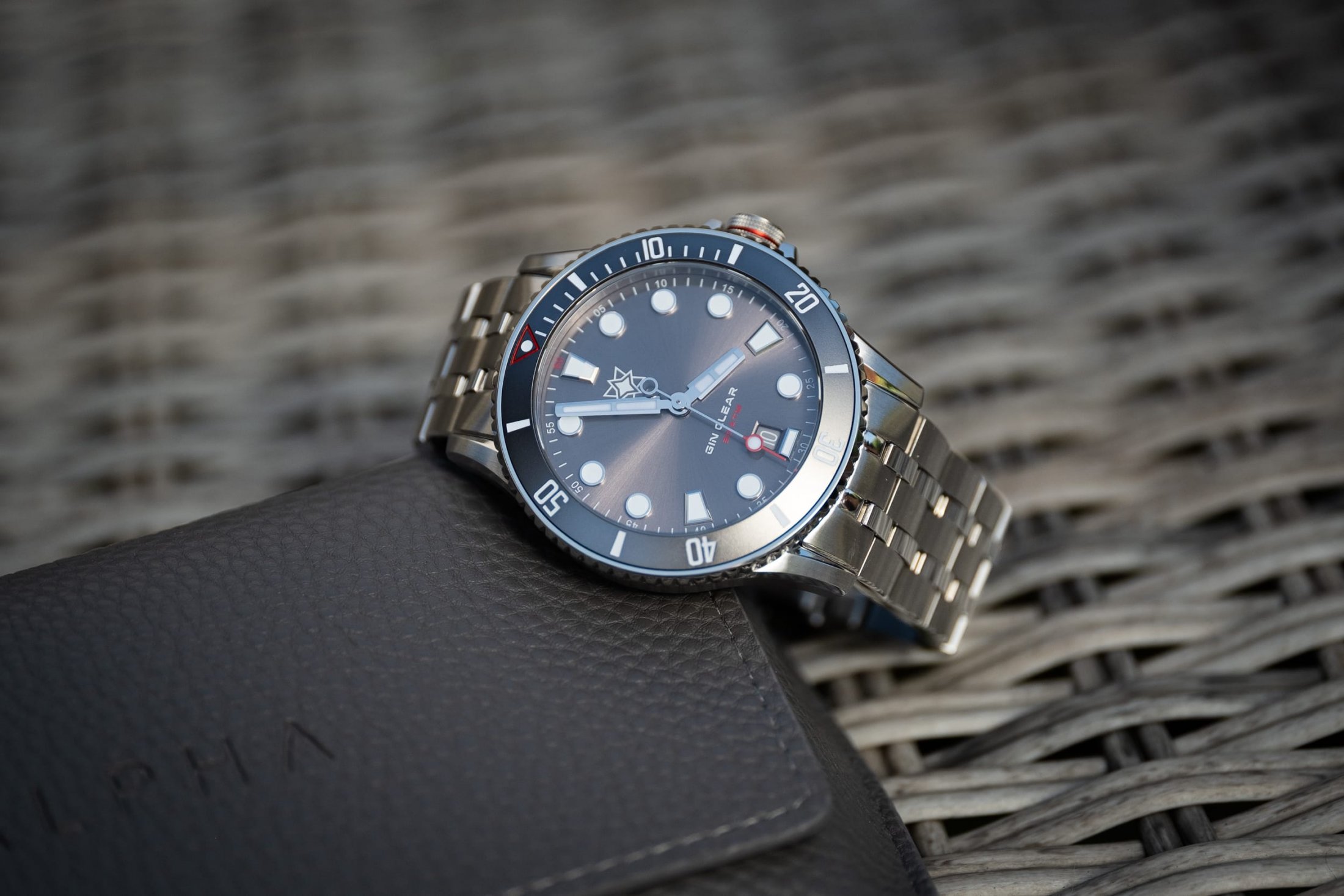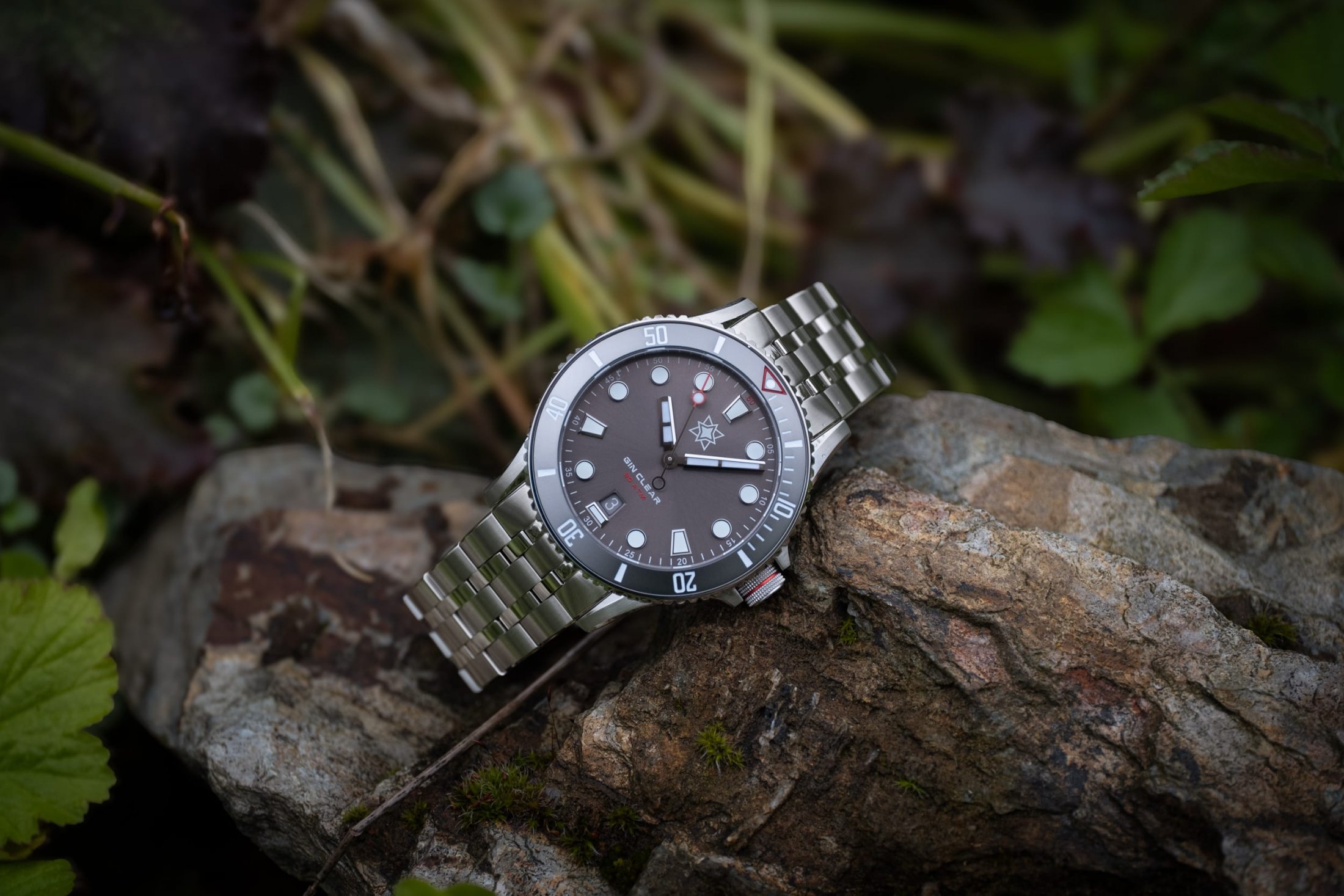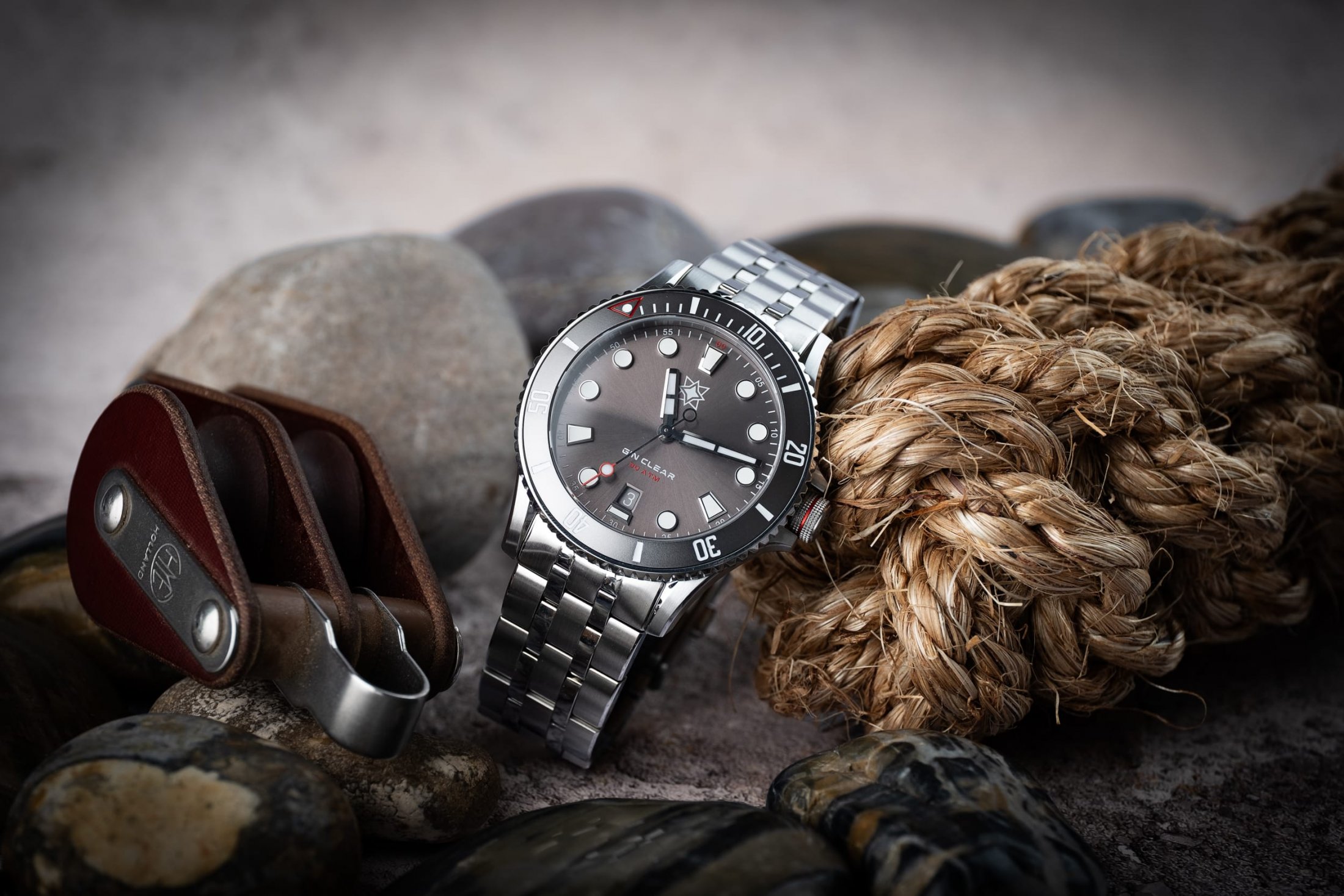
Building on the considerable success of the previous iteration of the Gin Clear, Australian brand Second Hour has made incremental but thoughtful improvements to the MK3, along with introducing two new dial colours!
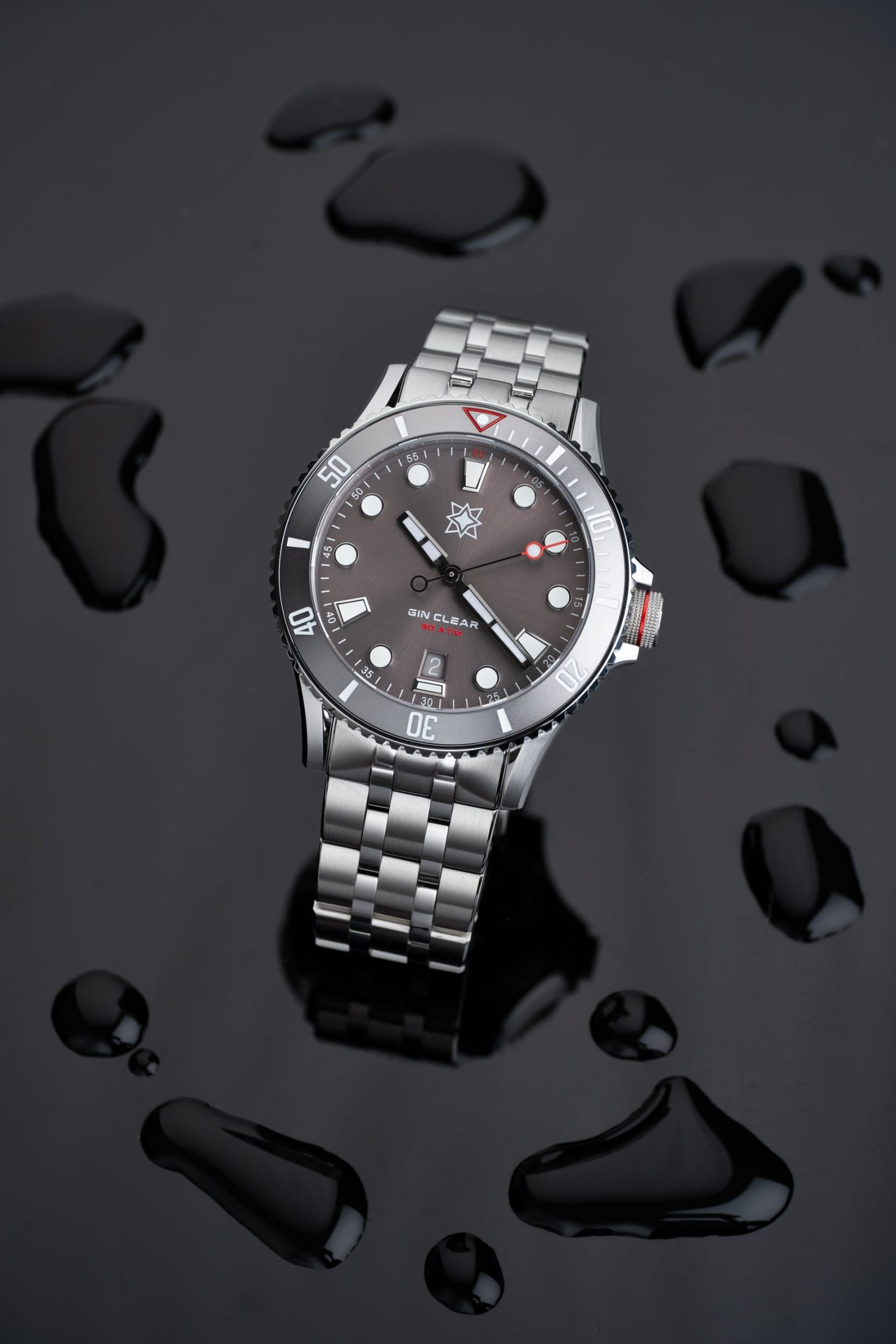
With a name originating from the affectionate term divers’ give to clear seas, the Gin Clear MK3 is the brand’s flagship diver and is priced at $1325AUD (approx. £645/$950 USD/€816 at time of press). This is an increase of approx. 10% over the previous model. You can choose from four colours; Sunburst Black and Arctic White are carried over from the MK2, but these are joined by two brand new dial colours, Emerald and Dark Rhodium. The MK3 is powered by a Swiss automatic movement, has a two-year warranty, comes fitted with a bracelet and is presented in a handy rectangular, leather-look travel case. The latest release is said to offer numerous improvements over the Gin Clear MK2. So how does it stack up against competitors and indeed its predecessor in real-life?
The Case and Wearing Experience
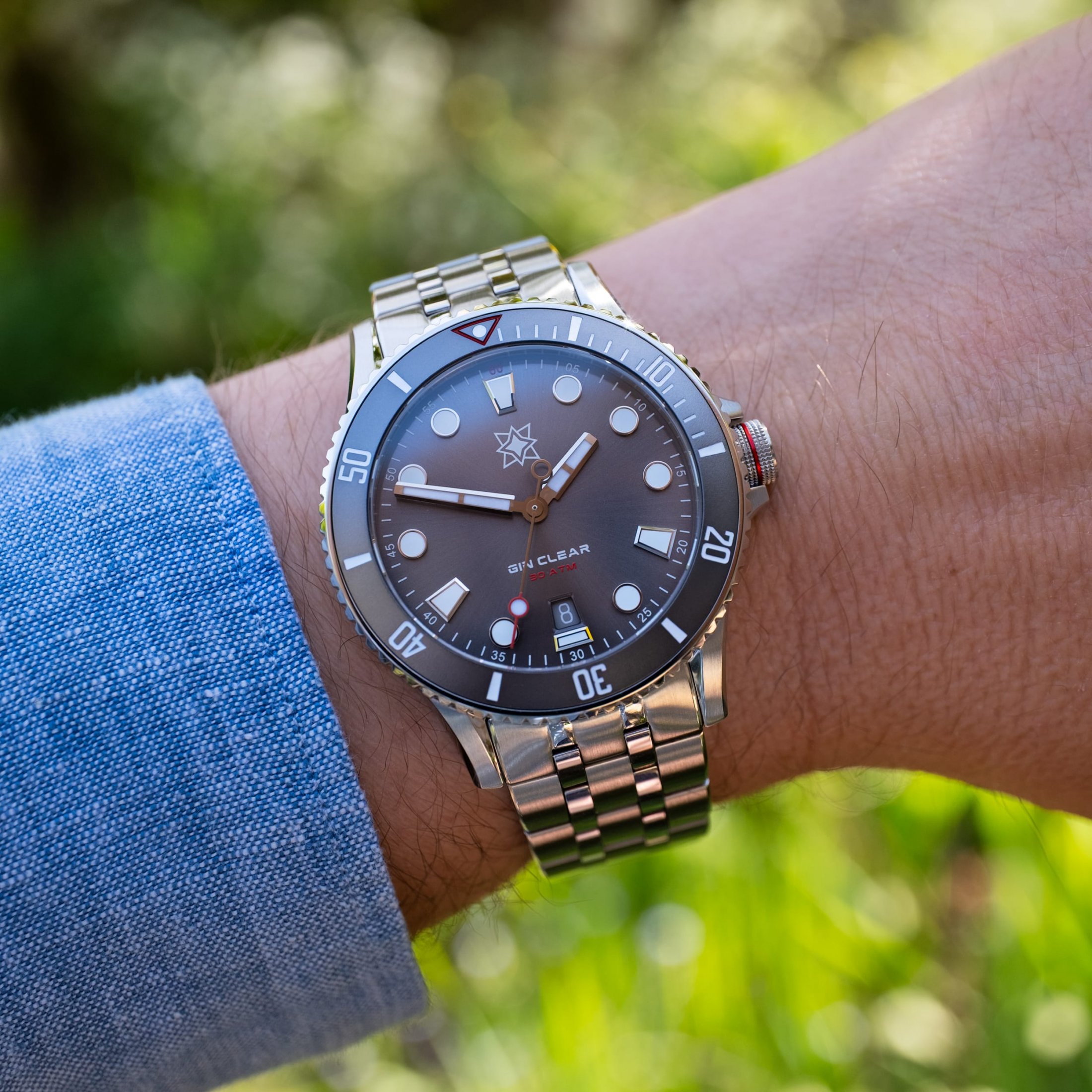
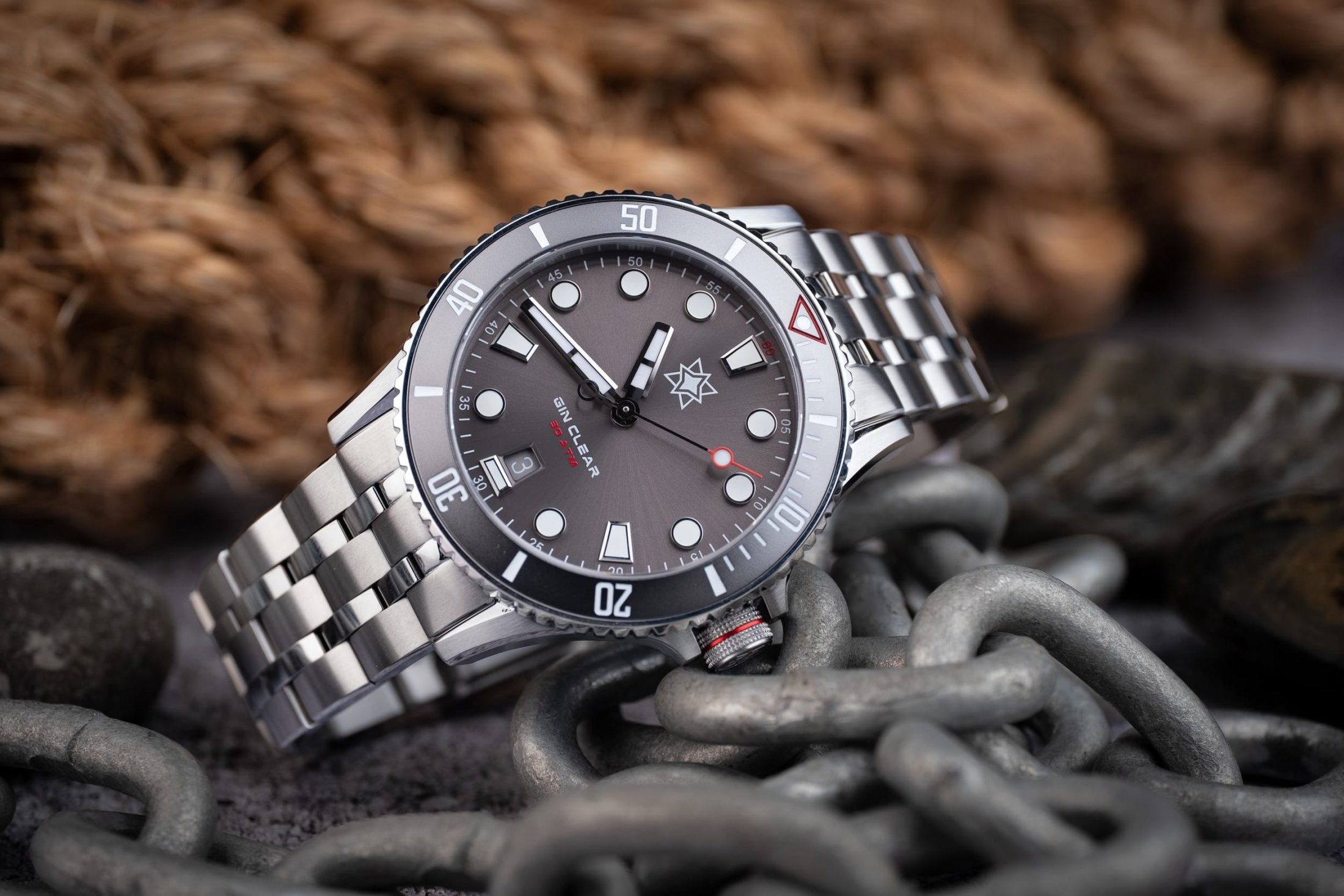
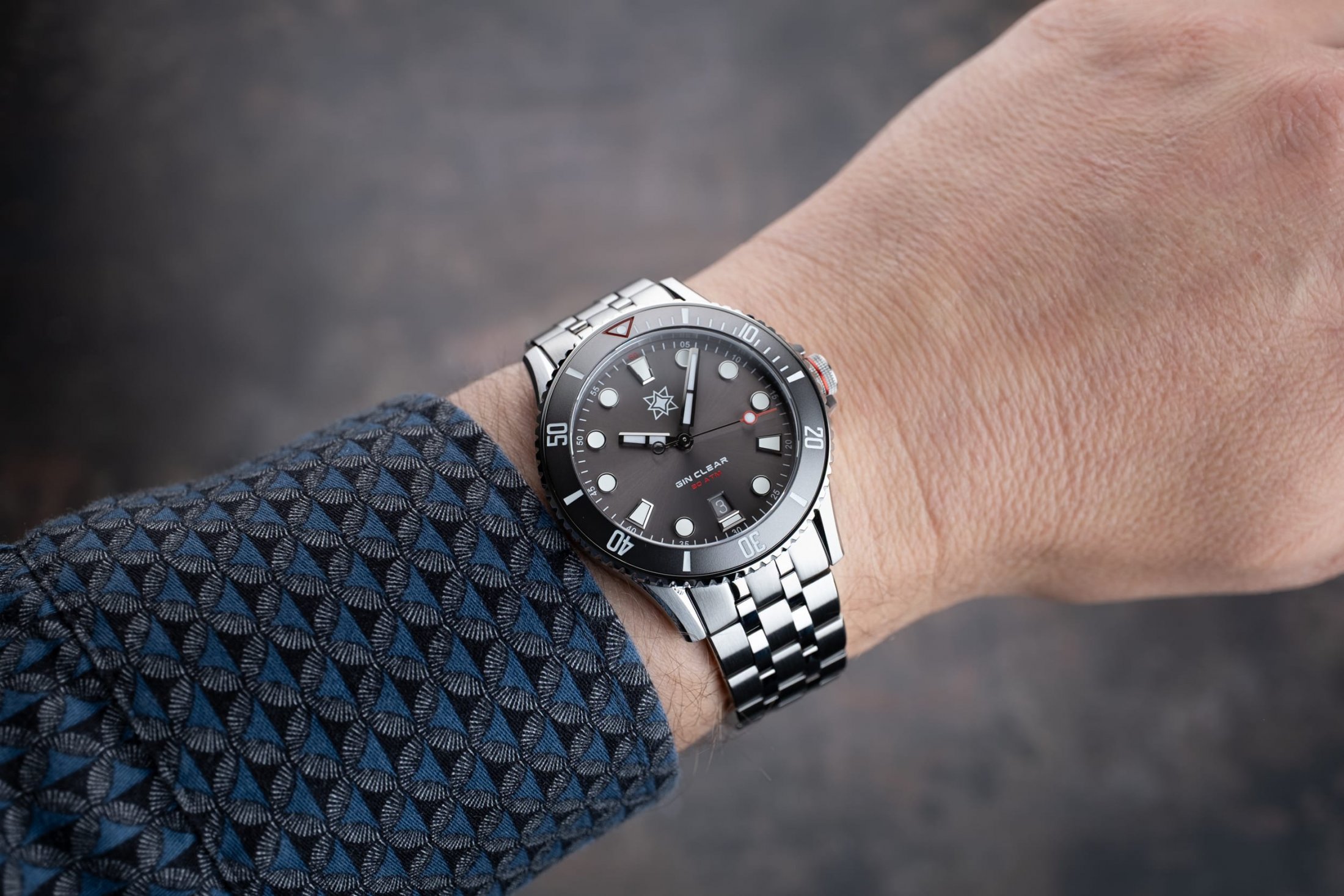
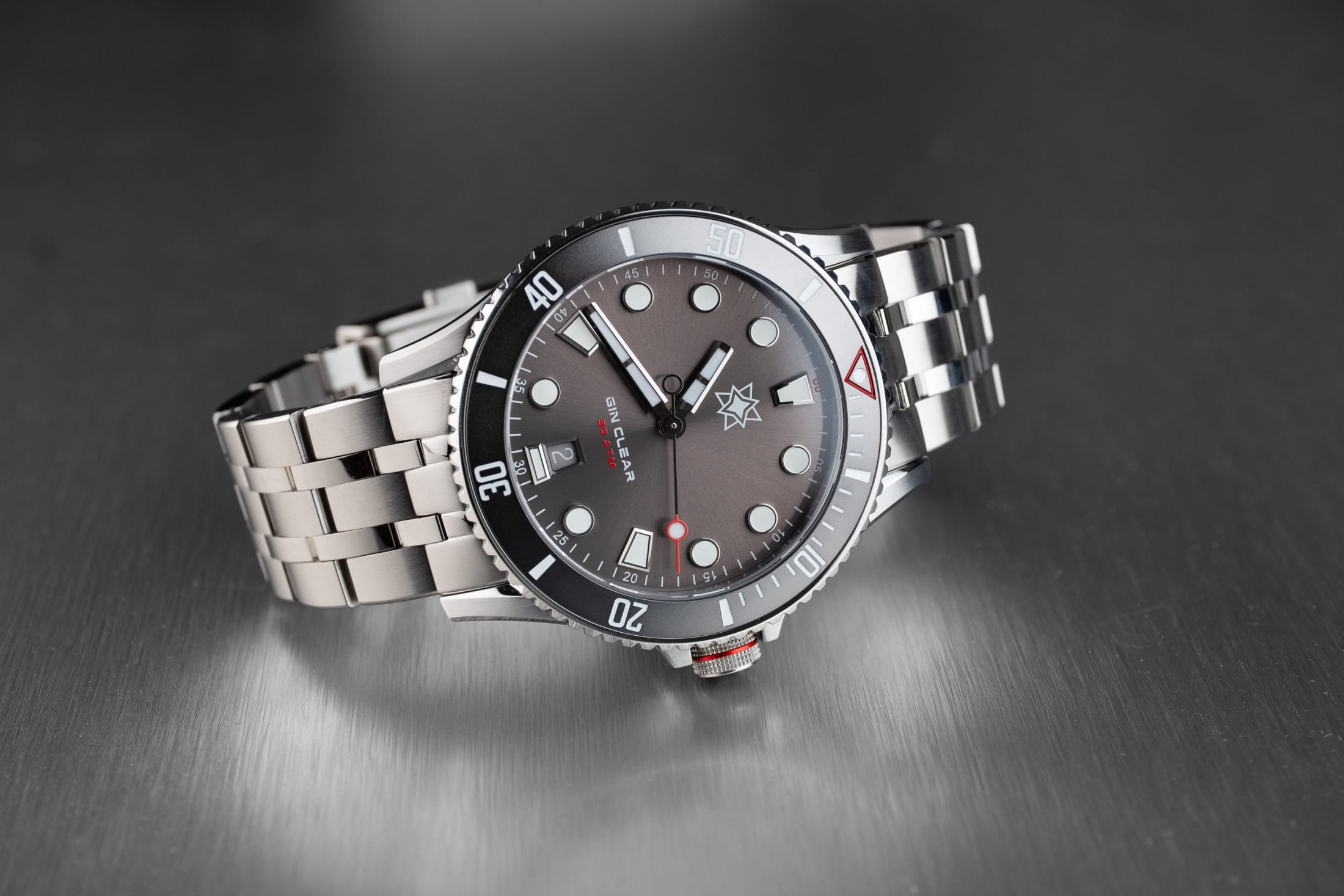
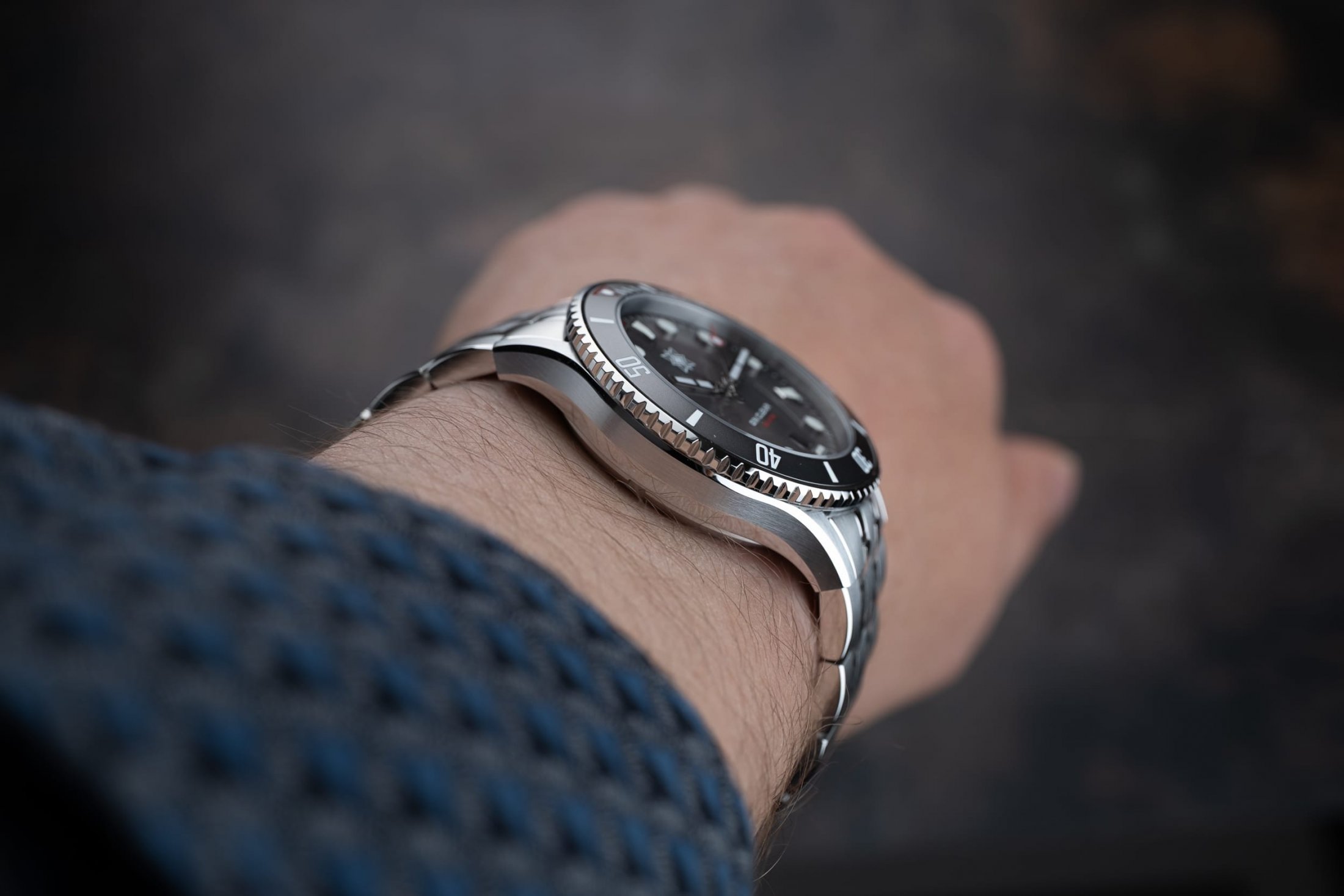
The dimensions of the 316L stainless steel case haven’t changed. The diameter is 40mm, the lug-to-lug is 47mm and the overall thickness is 12.25mm. The weight on bracelet sized to my 7.25 inch wrist is 160 grammes. As with all Second Hour watches, the case and bracelet are surface hardened to 1200 Vickers which significantly improves durability and scratch resistance.
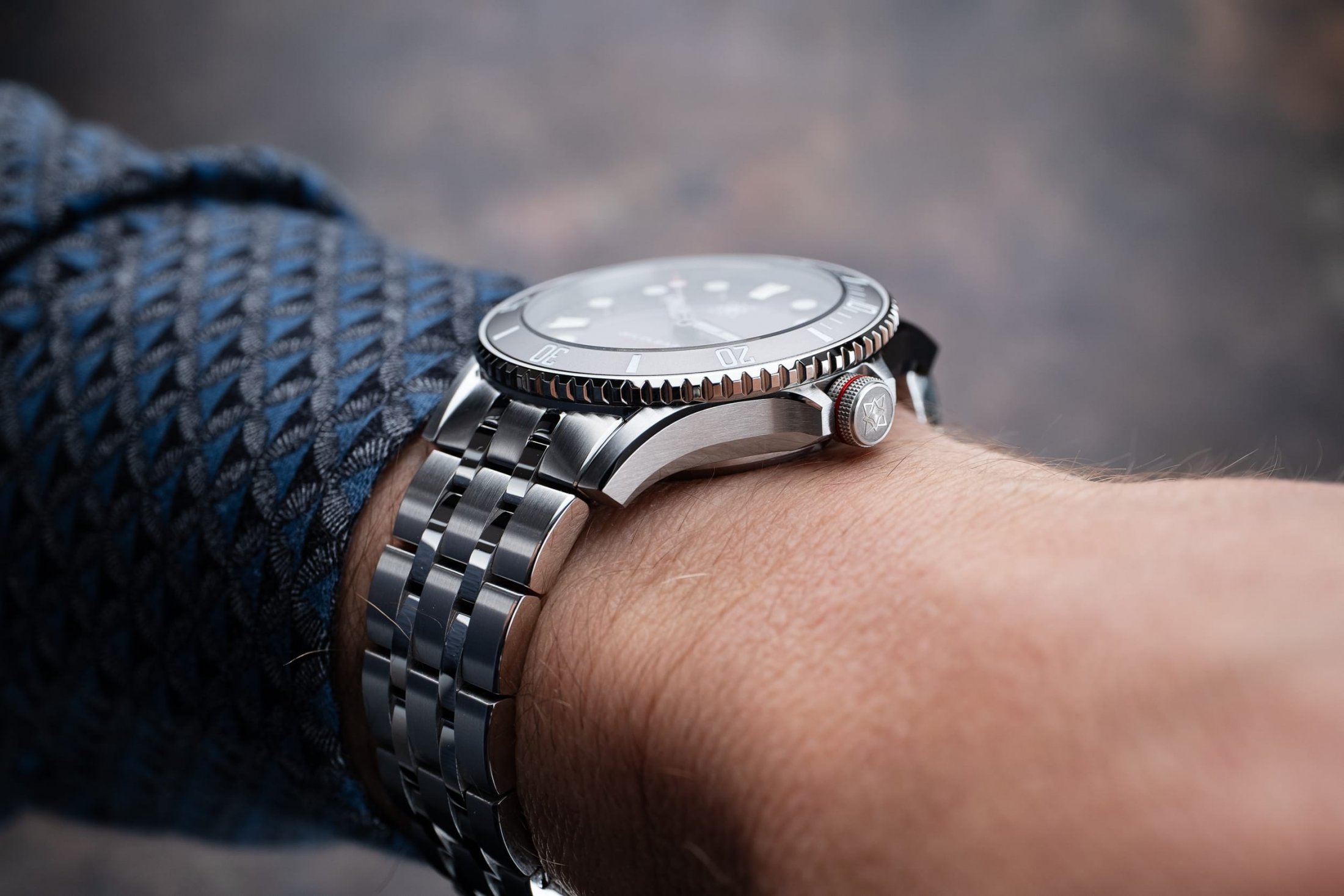
The case sides are finely brushed and flanked top and bottom by wide, polished chamfers which extend the entire length of the case, including around the crown guards, and narrow as they reach the tapered lugs. The elegant, brushed lugs feature internally polished sections somewhat akin to slimmed down versions of the lyre/twisted lugs you’d find on an Omega Seamaster.
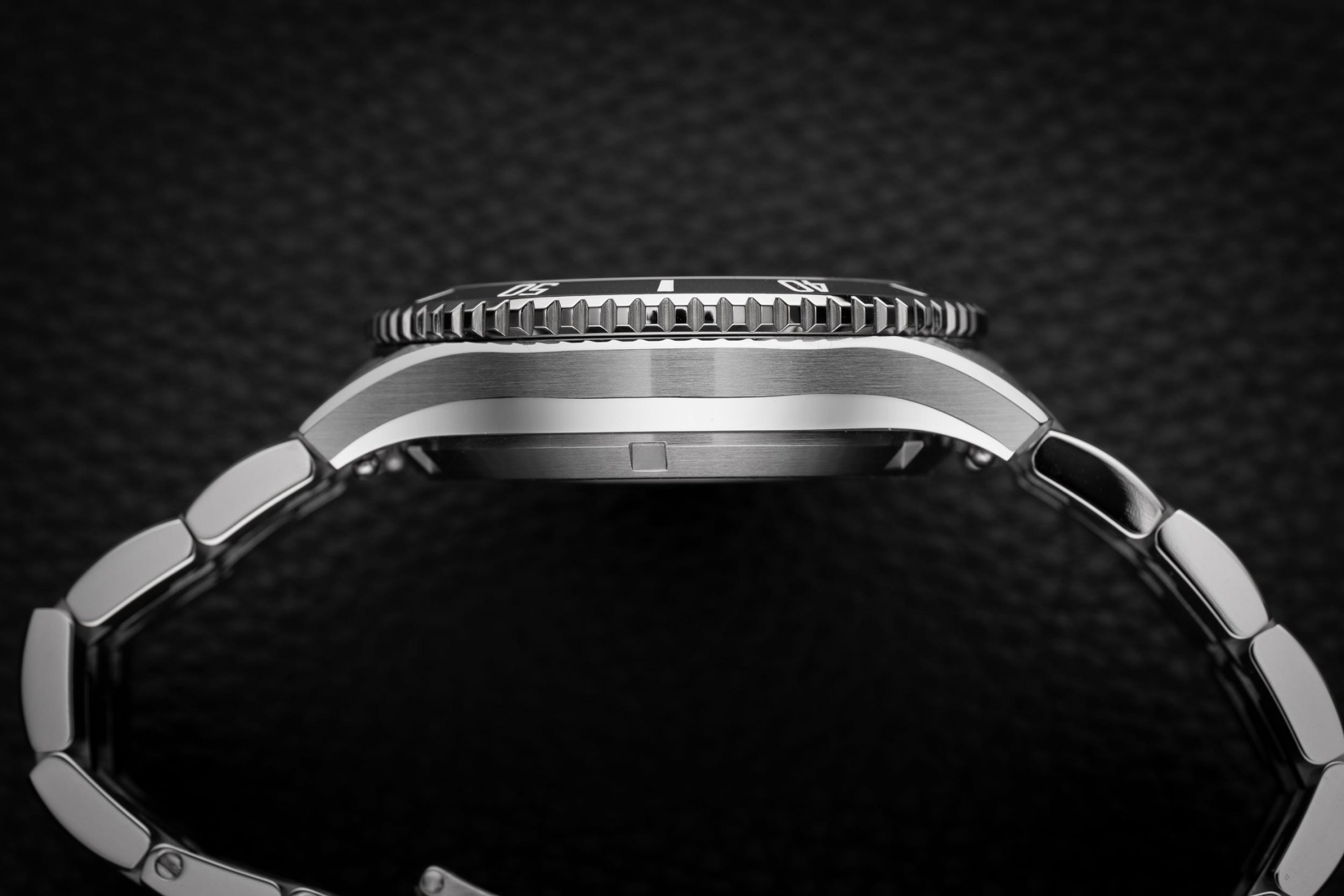
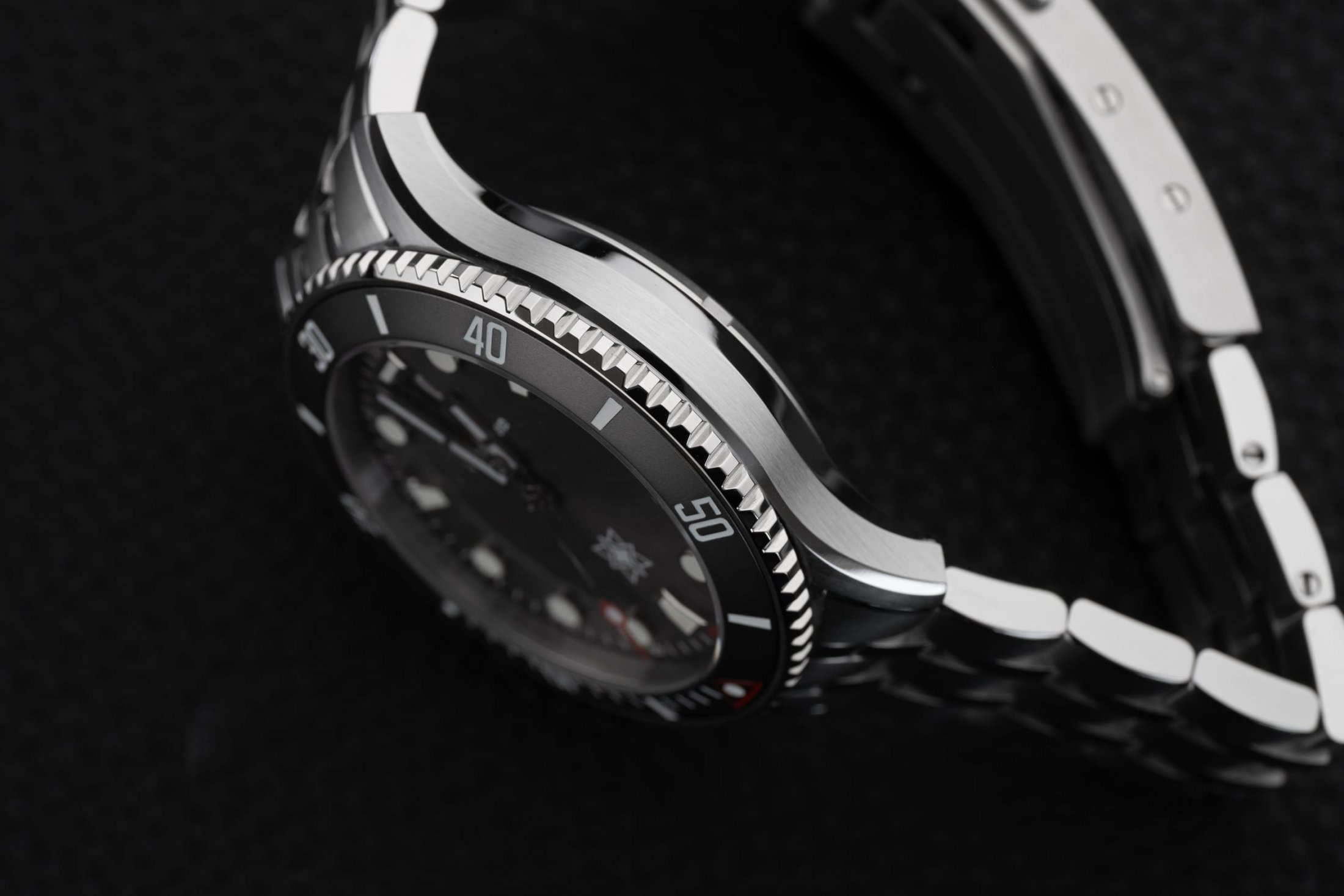
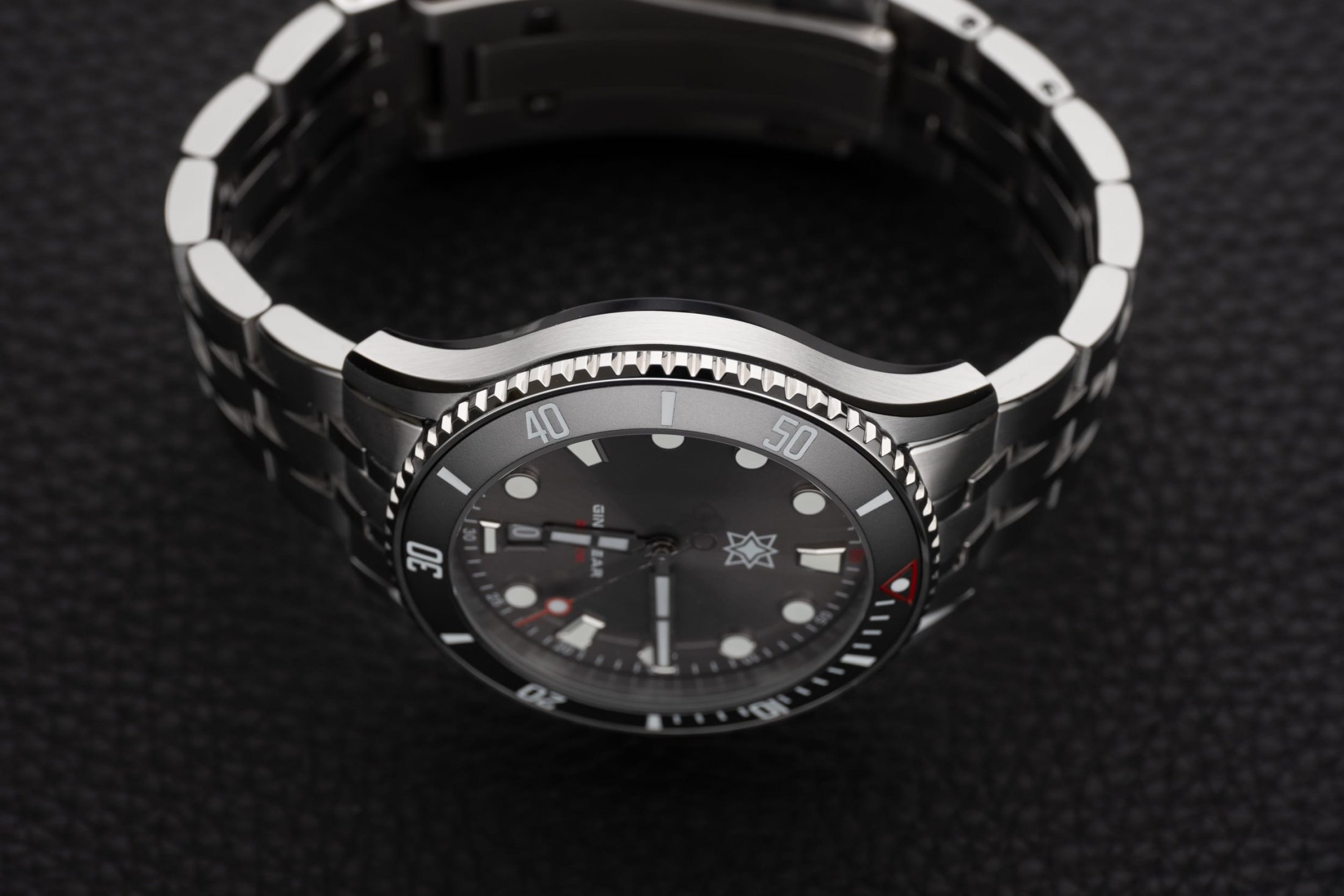
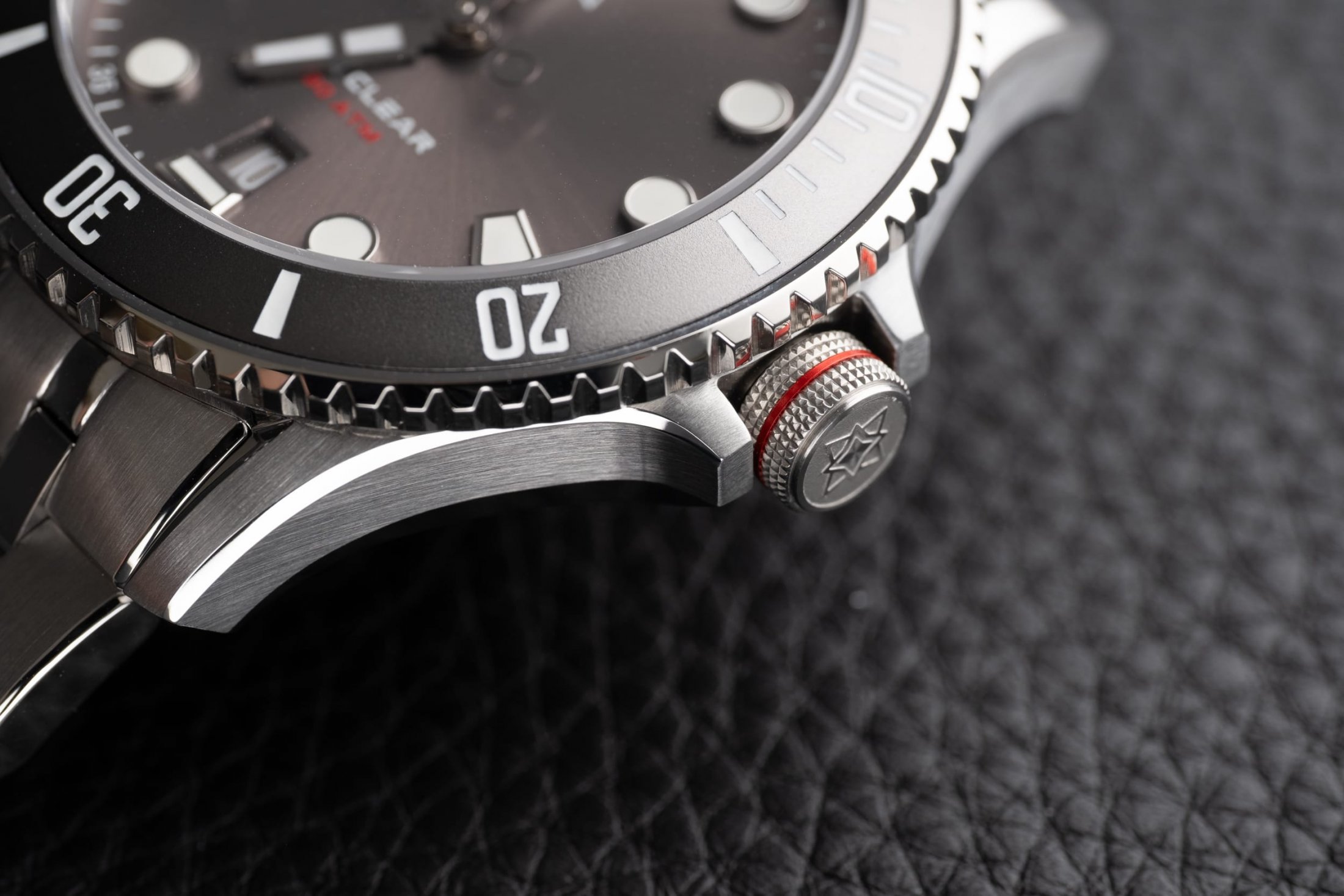
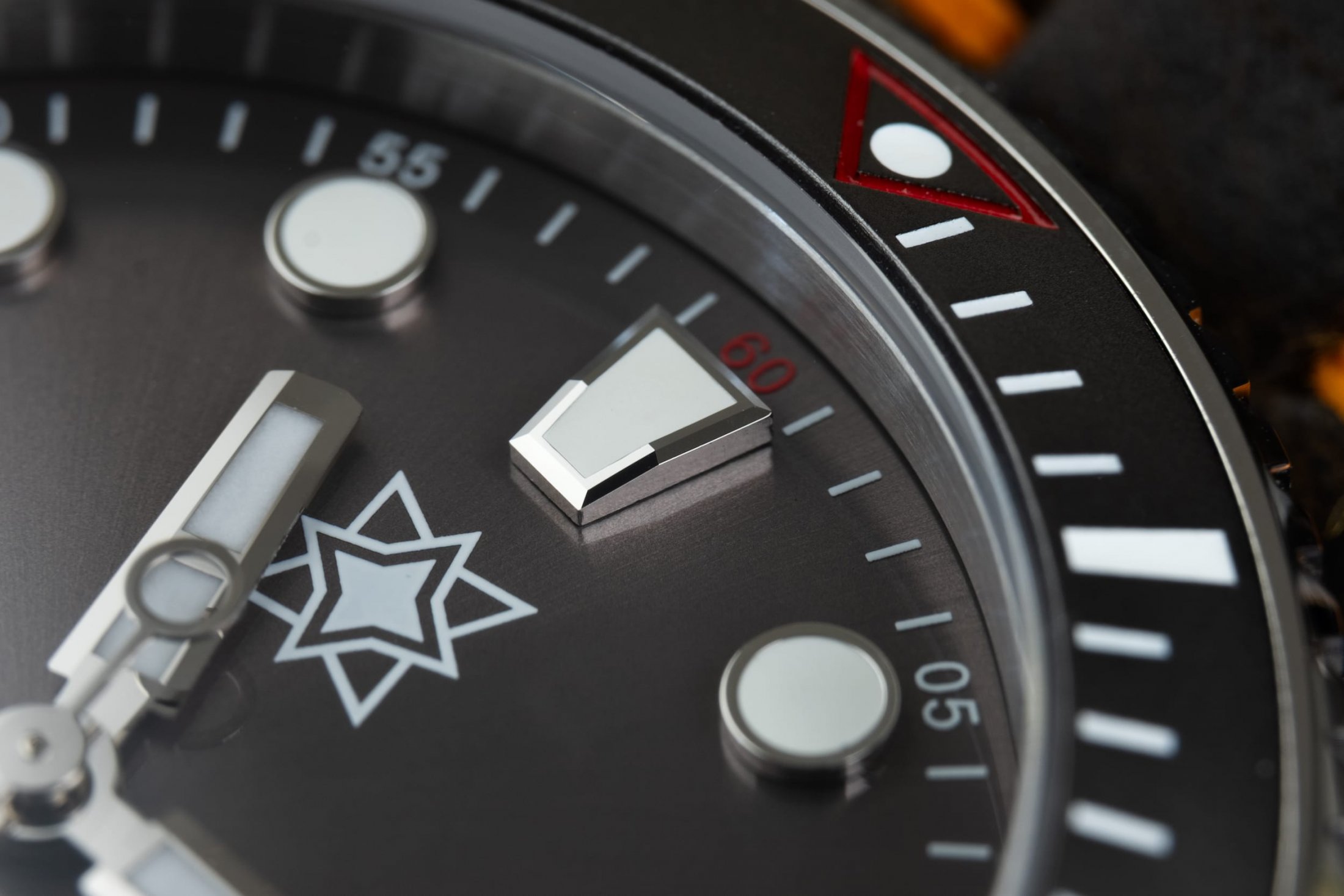
The 120-click uni-directional diver’s bezel has a Dark Rhodium-coloured anodised aluminium insert and conical square knurling. The Emerald Green also has an aluminium insert, whereas the Black and Arctic White have ceramic bezel inserts. The top side of the bezel gently tapers up to meet the scratch-resistant flat sapphire crystal, which has six layers of internal anti-reflective coating. The countdown bezel alternates between Arabic numerals placed at the ten-minute markers and hash marks at every five. A fully graduated scale is used from zero to 15 minutes, allowing easy tracking of minutes. Swiss BGW9 Super-LumiNova is used for all bezel markers bringing excellent low-light legibility. A lume pip at 12 o’clock is framed and accented by a red inverted triangle.
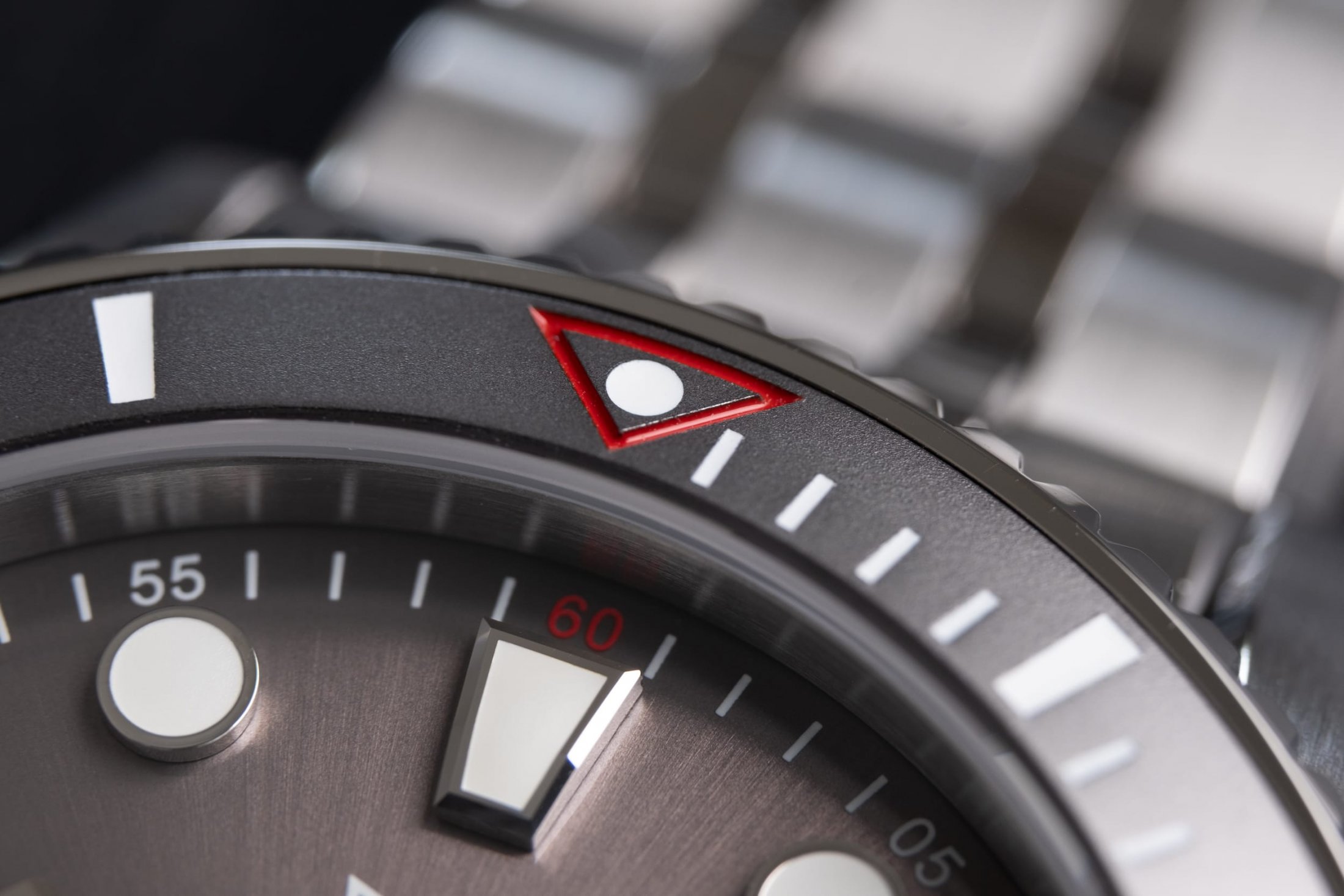
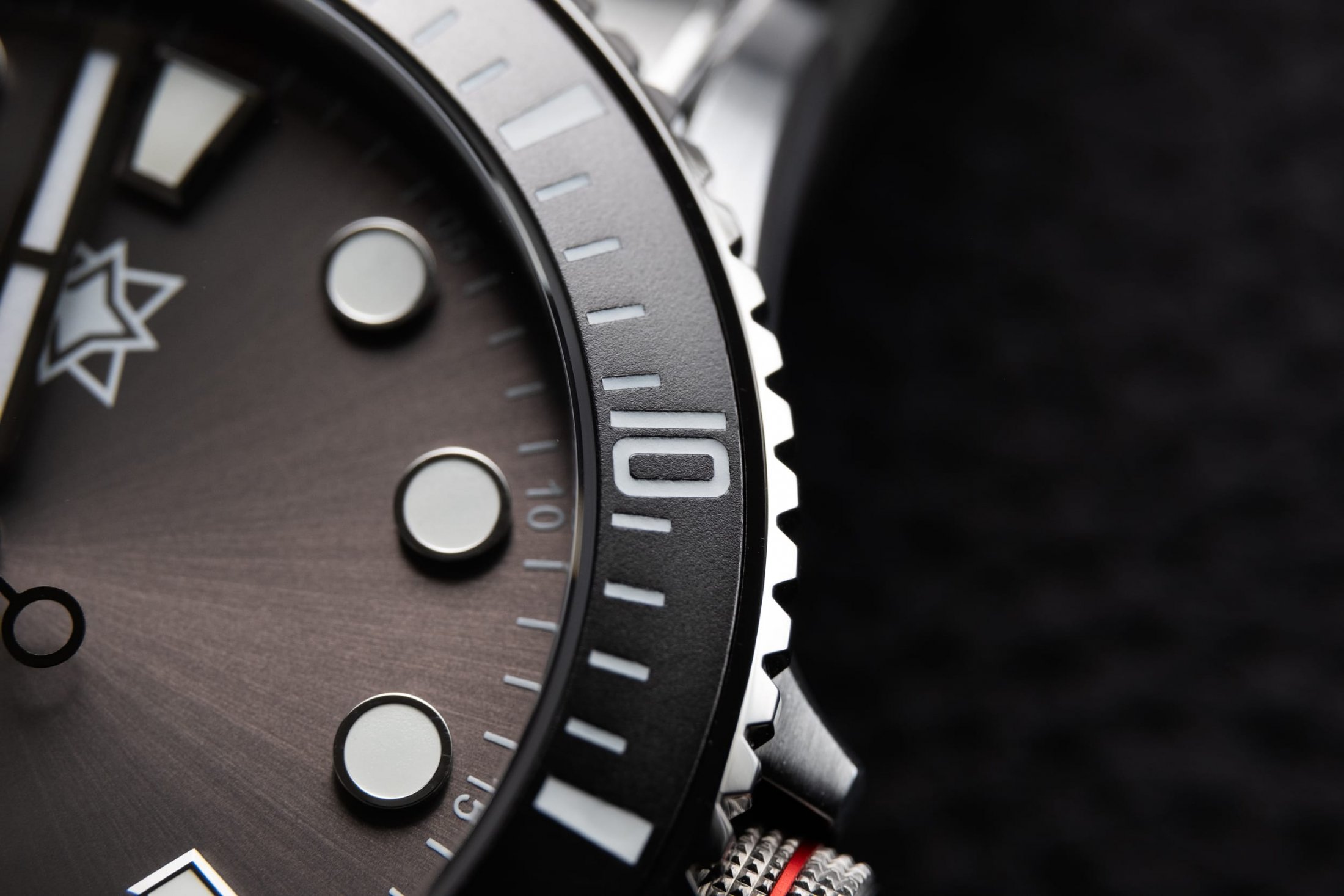
The bezel action on the Gin Clear was already great, but for the MK3, Second Hour has introduced a ball bearing mechanism said to improve the bezel action. Without having the MK2 side-by-side with the MK3 I can’t rightly say whether it’s ‘better’. What I can say is that the new bezel offers more resistance than that of the MK2. Whether that is a good thing or bad is subjective, as ‘bezel feel’ is a personal thing. I suspect that the ball bearing mechanism may also offer more durability. Either way, it’s certainly one of the best bezel actions in its price bracket. It hits the markers perfectly with just a little back-play. Grip is also pretty good for a watch with a relatively shallow bezel, aided by the fact it slightly overhangs the case by 1mm, which effectively brings overall case diameter to 41mm.
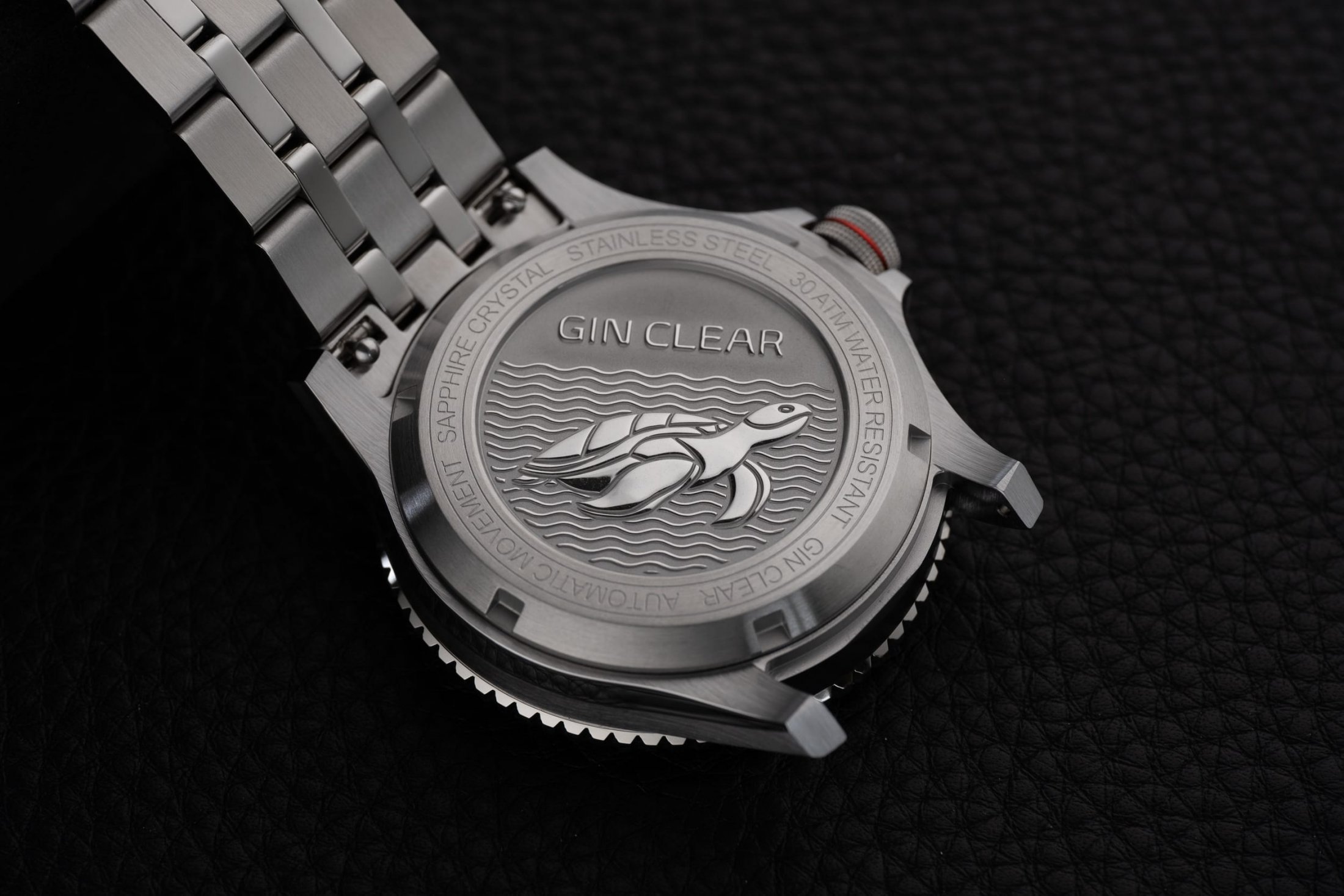
On the reverse is a solid screw-down caseback which is brushed around the perimeter with an outer band giving the key specifications. In the centre section, are the words ‘Gin Clear’ along with an oil pressed embossed depiction of a Hawksbill Turtle and wave pattern picked out in polished relief, set against a bead-blasted background. Again, it’s executed really well and the pictorial elements are very three dimensional.
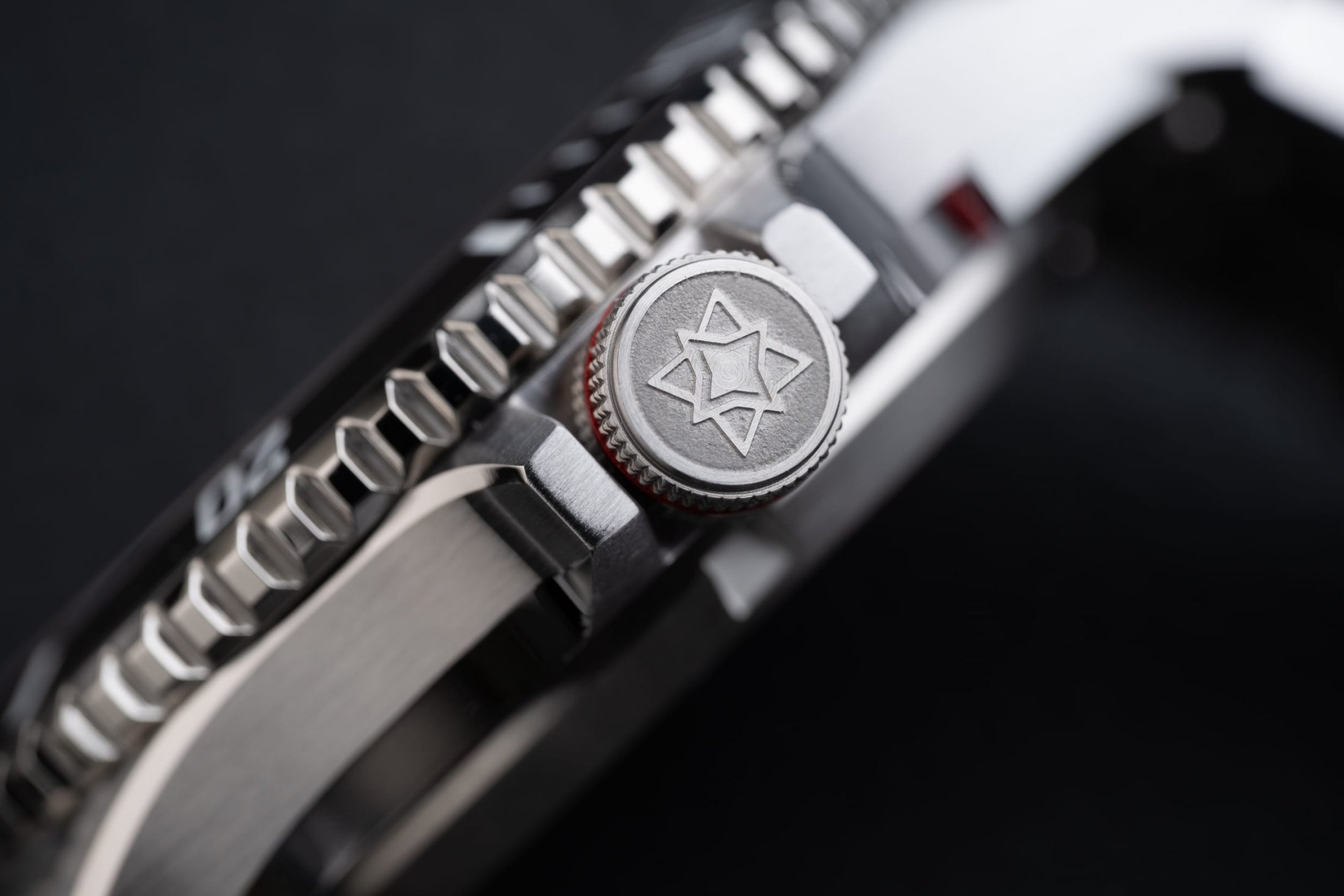
The screw-down crown is protected by beefy crown guards and helps provide the watch with an impressive 300m water resistance. The branded crown is grippy, feels confident and like most things on the watch is of bespoke design, being knurled in two sections separated by a red coloured inlay.
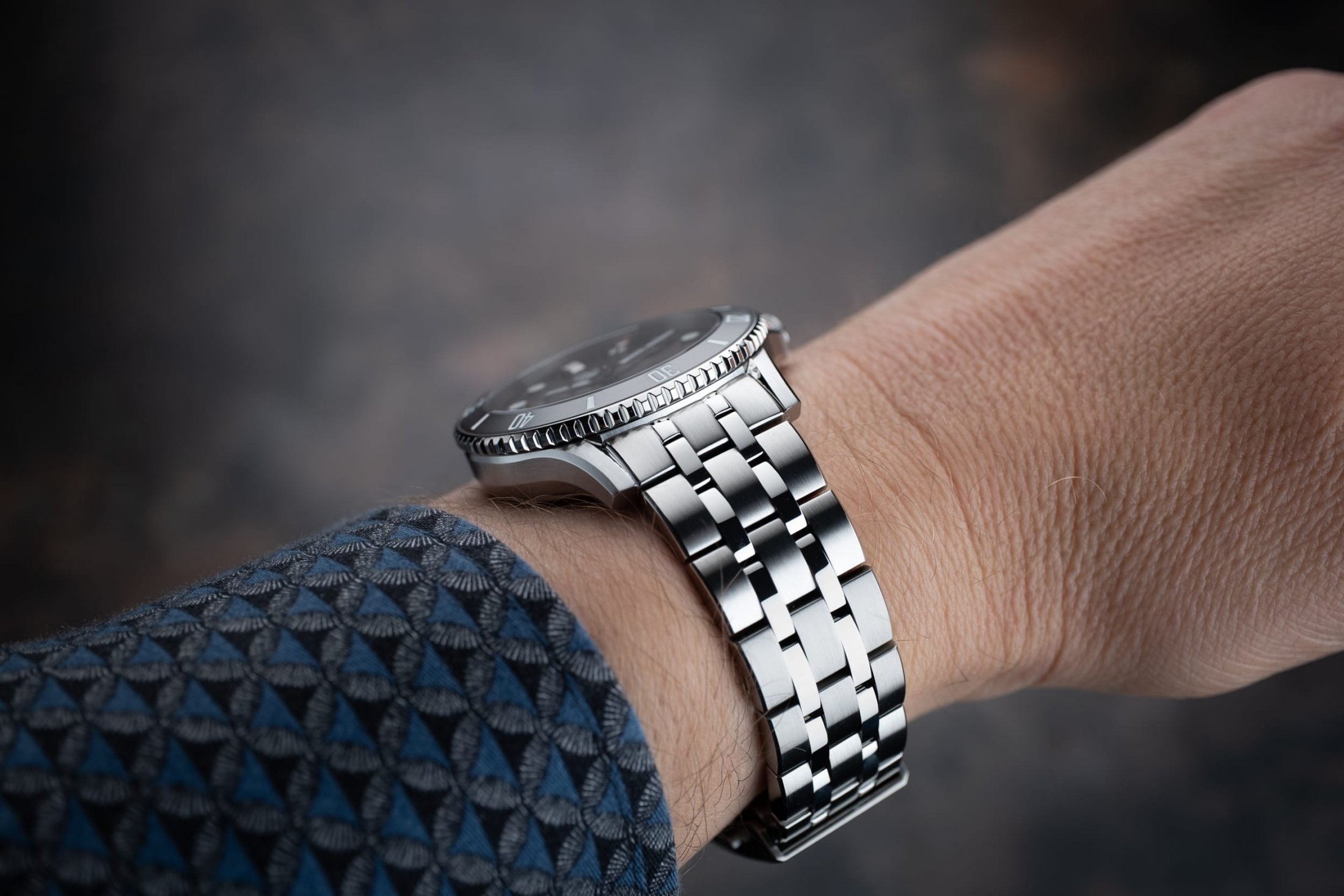
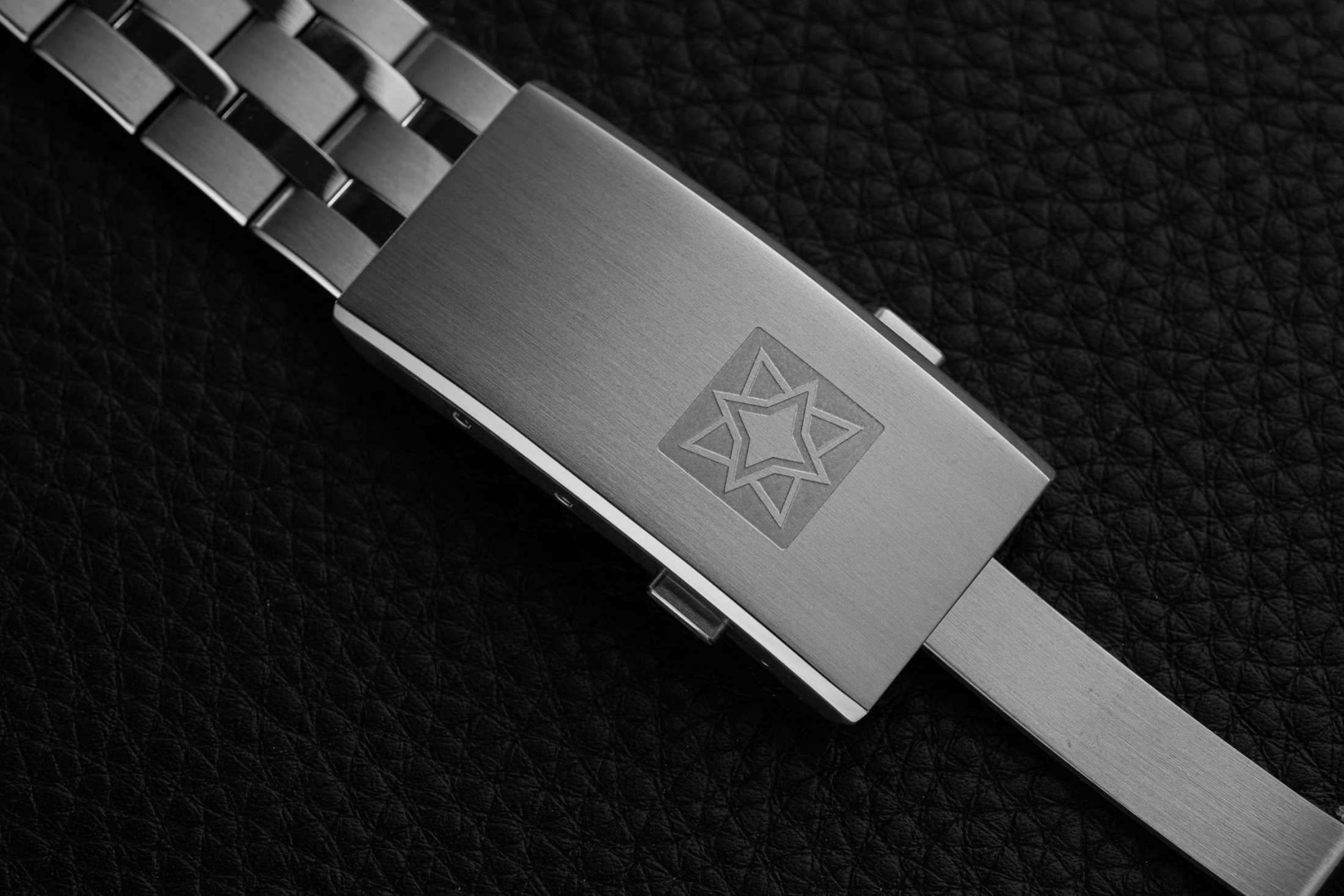
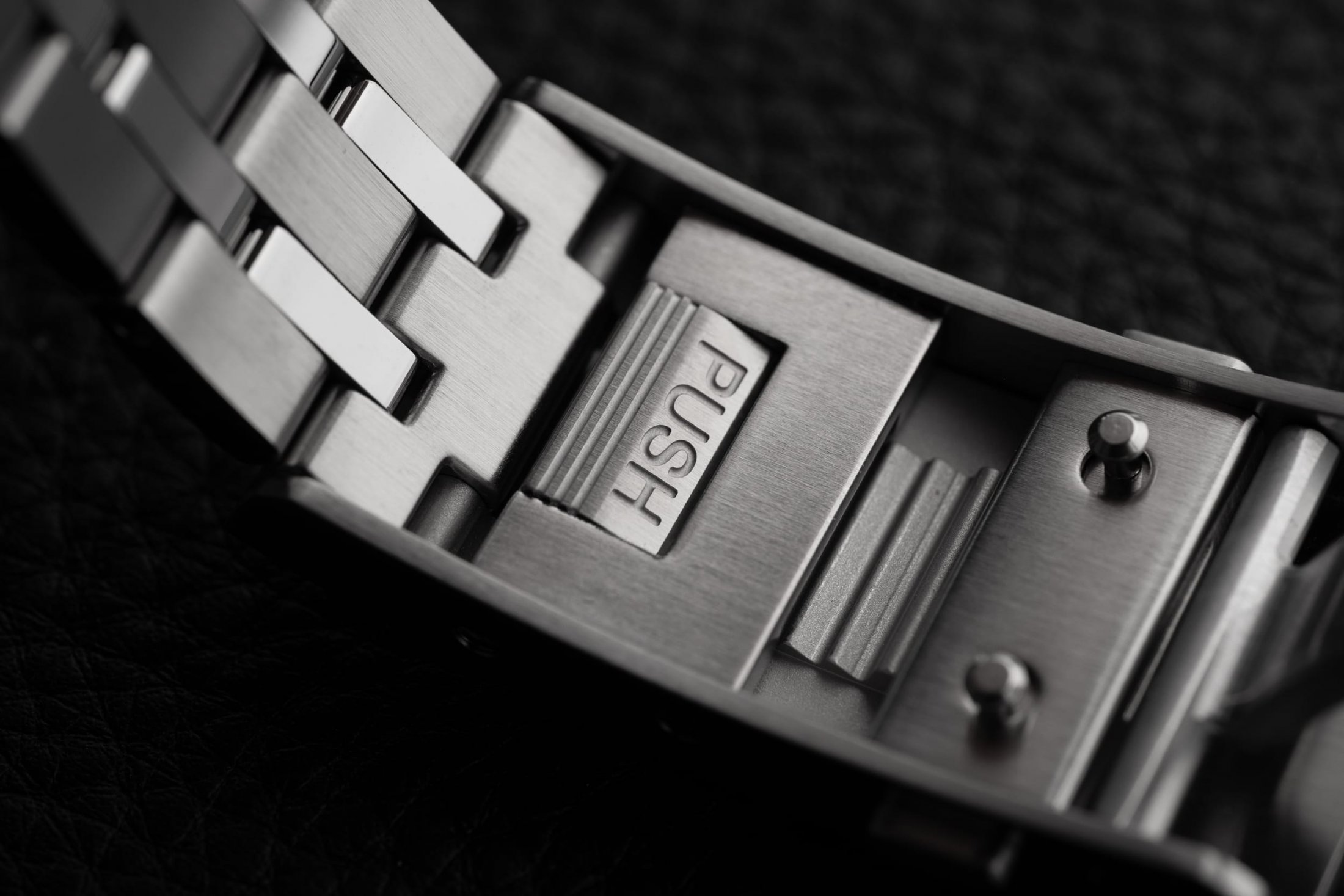
The five-link bracelet has alternating brushed and polished sections and the outer links have polished chamfers to match the watch case. It’s 20mm wide at the watch head, but tapers down to 18mm to meet the fold-over clasp with twin-trigger safety pushers. There is plenty of on-the-fly adjustment, and the bracelet is also quick-release so it’s easy to swap the bracelet out for a strap of your choice. Removeable links are secured by single-sided screws.
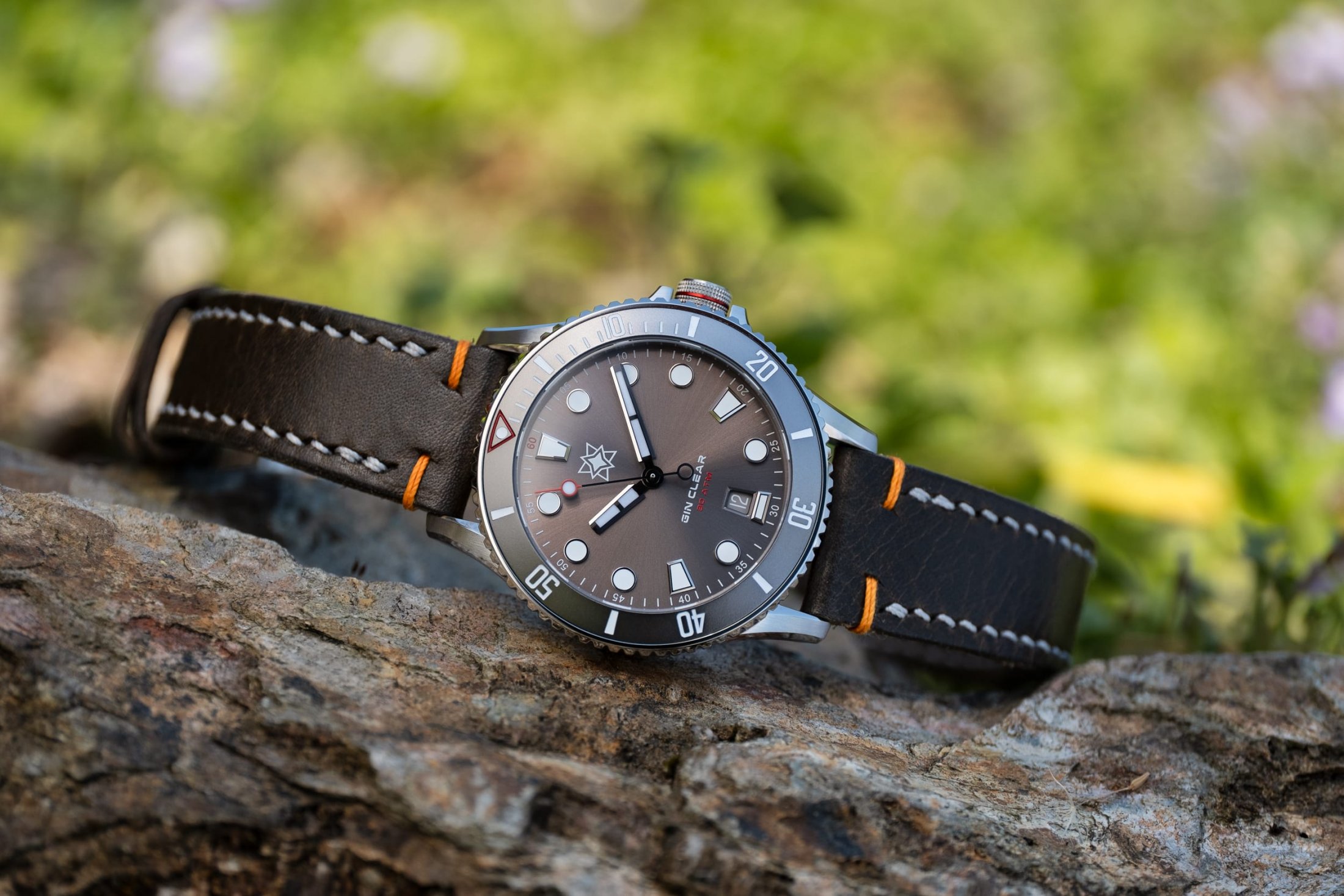
The second hour logo is engraved onto the top section of the clasp. One of the complaints about the Gin Clear MK2 was that there wasn’t enough clearance between the spring bars and the case. Second Hour has addressed this by increasing the spring bar clearance to allow it to accommodate a wide range of aftermarket straps. I’ve included a few photos of it on different straps to show how it can look.
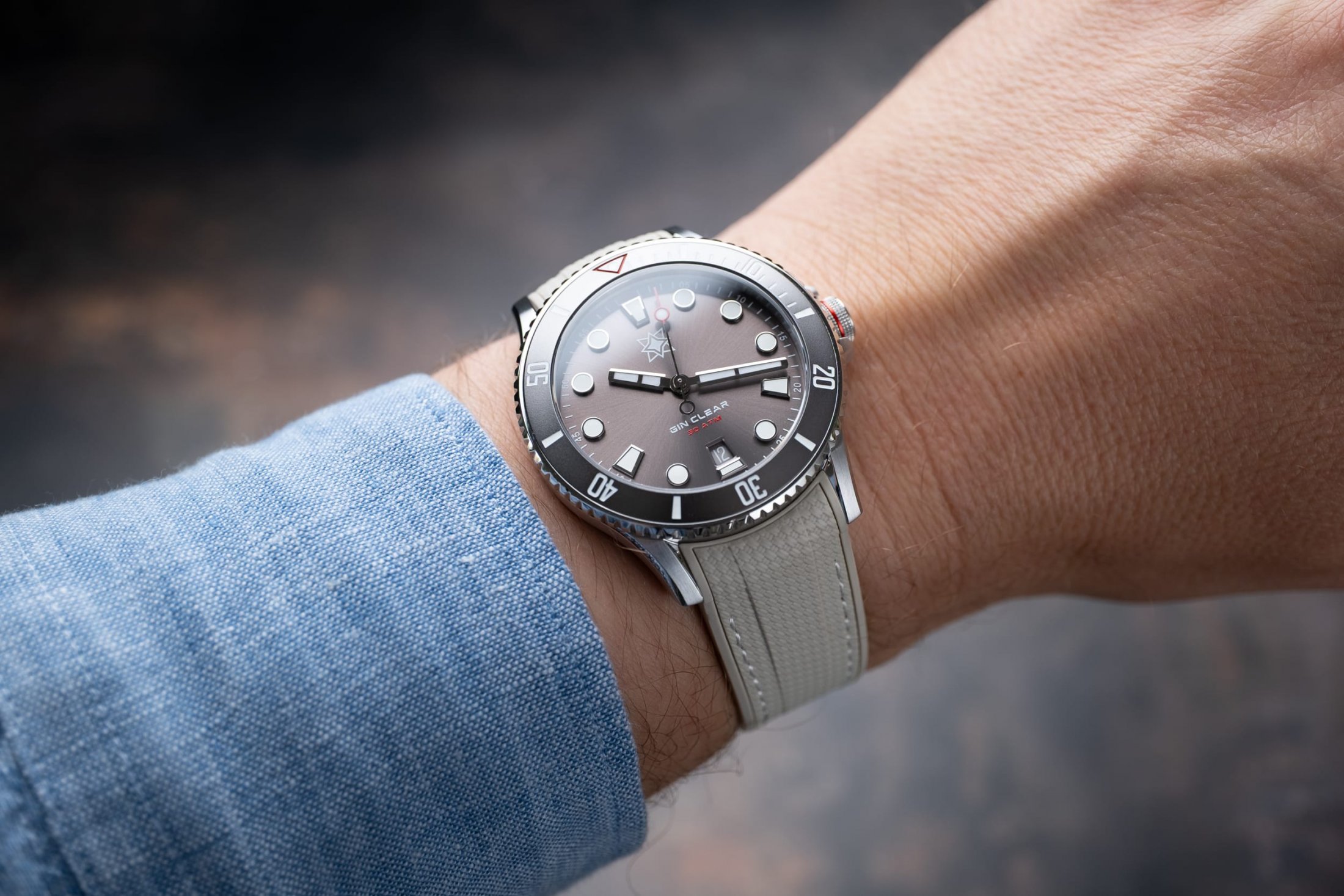
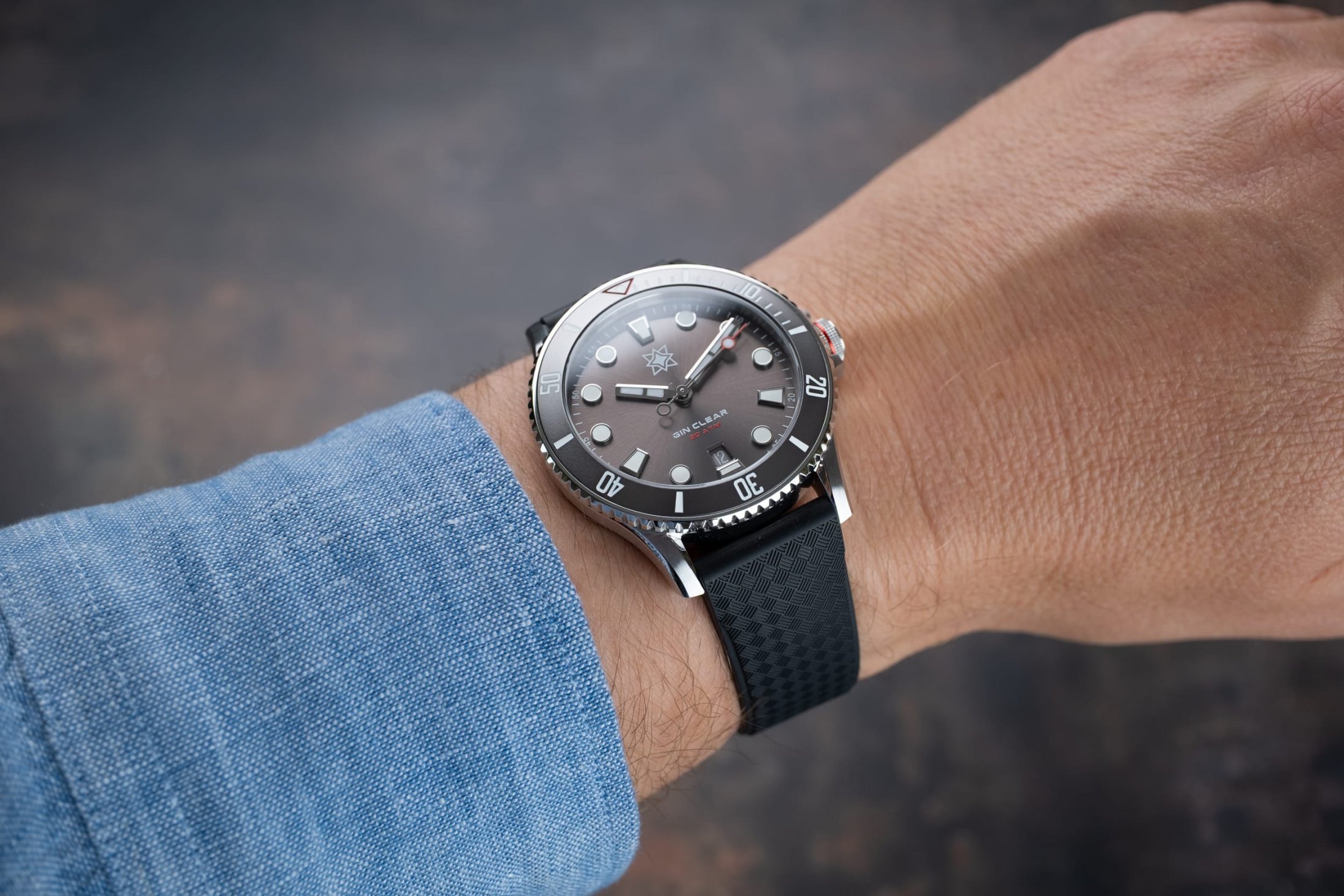
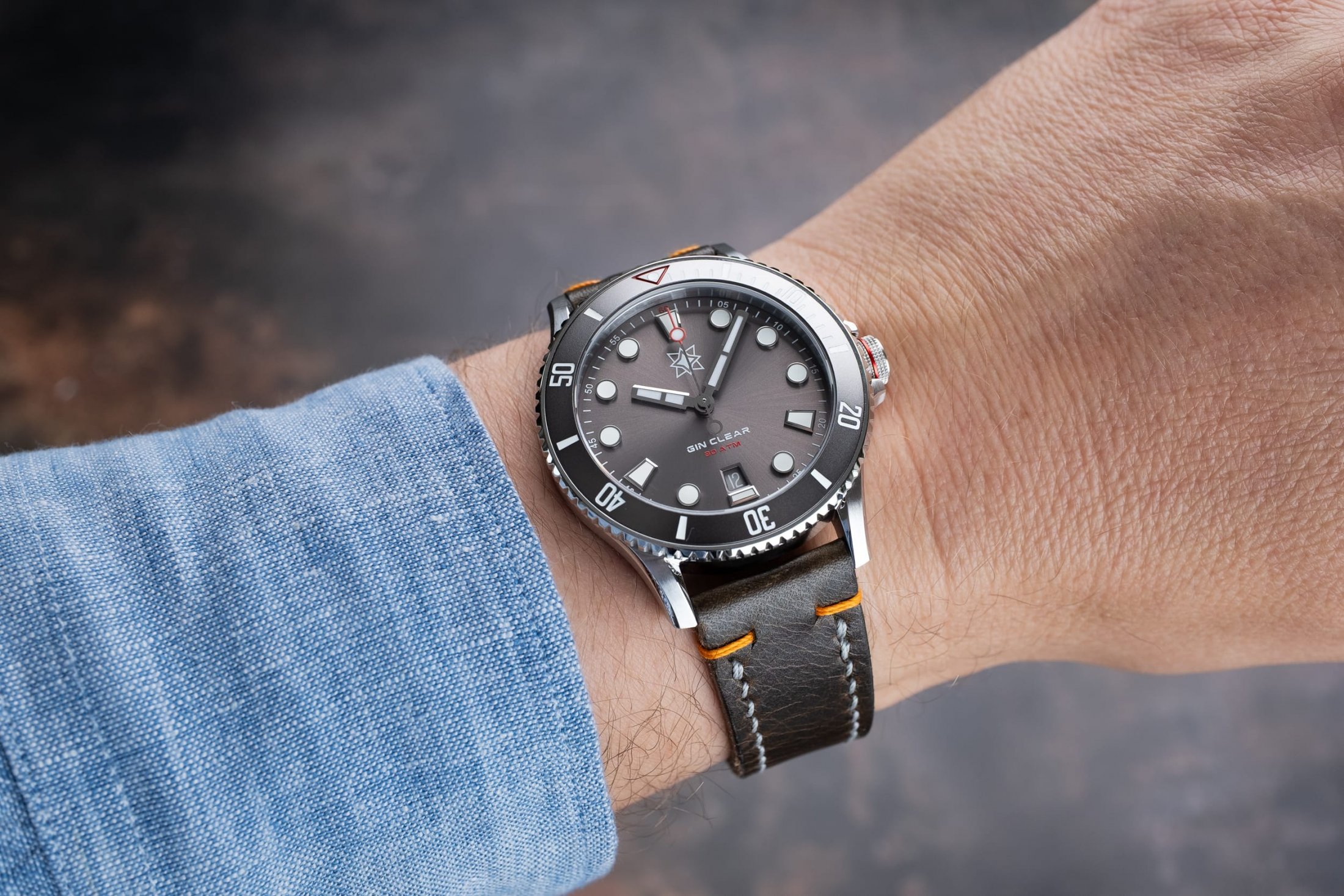
The case and bracelet feel solid and the interplay of brushed and polished elements bring a level of refinement that help make the Gin Clear a versatile watch. The stunning case profile and curved lugs help the watch conform well to the wrist, but in an ideal world I’d like to see two further improvements for the MK4. Firstly, whilst the bracelet is fluid around the wrist, more ‘reverse’ articulation would make it feel even more premium when handling. Secondly, although the Gin Clear is far from being a thick watch, I’d like to see a fraction shaved off the thickness, in the mid-case or caseback as a lot of bulk is towards the rear.
The Dial and Handset
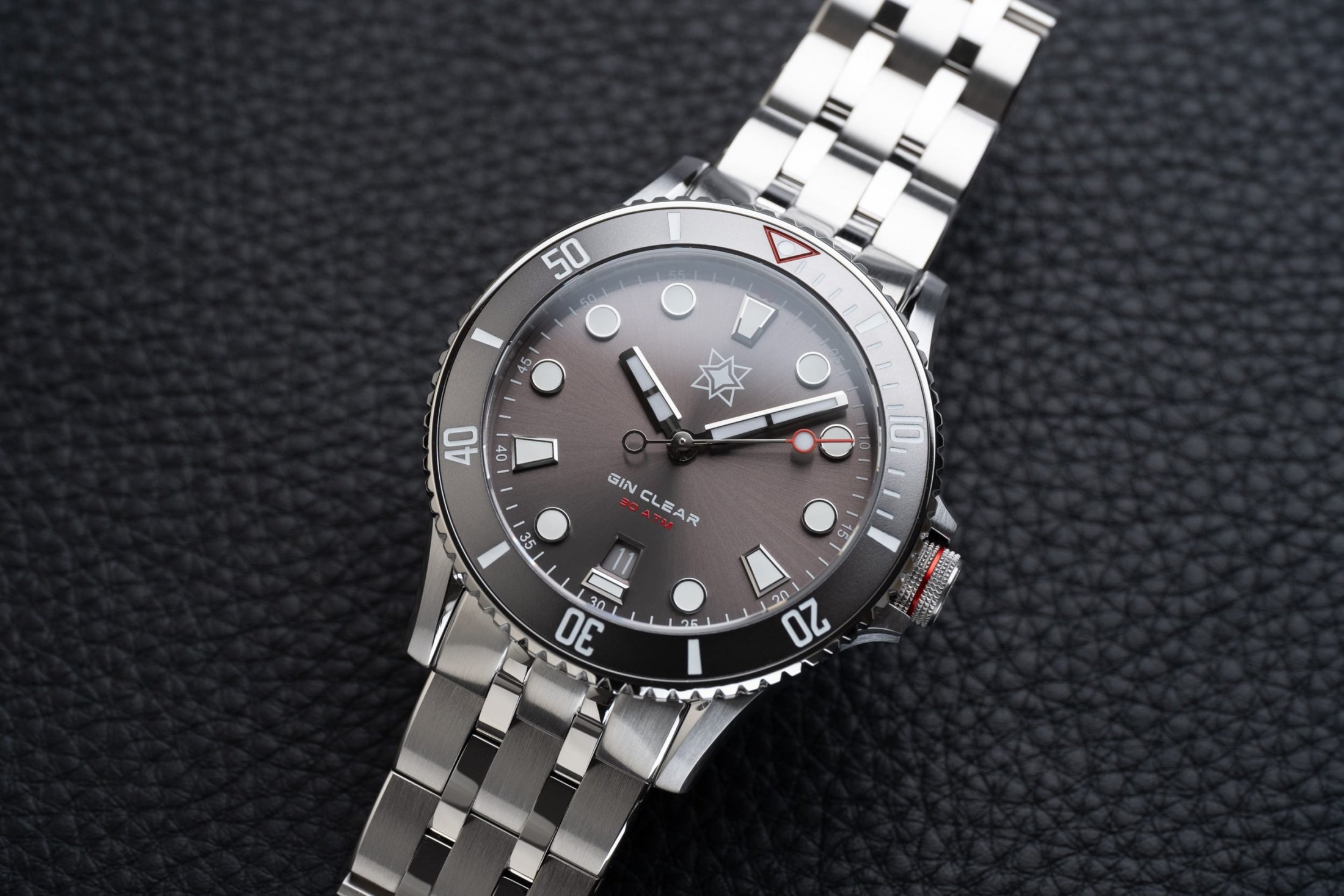
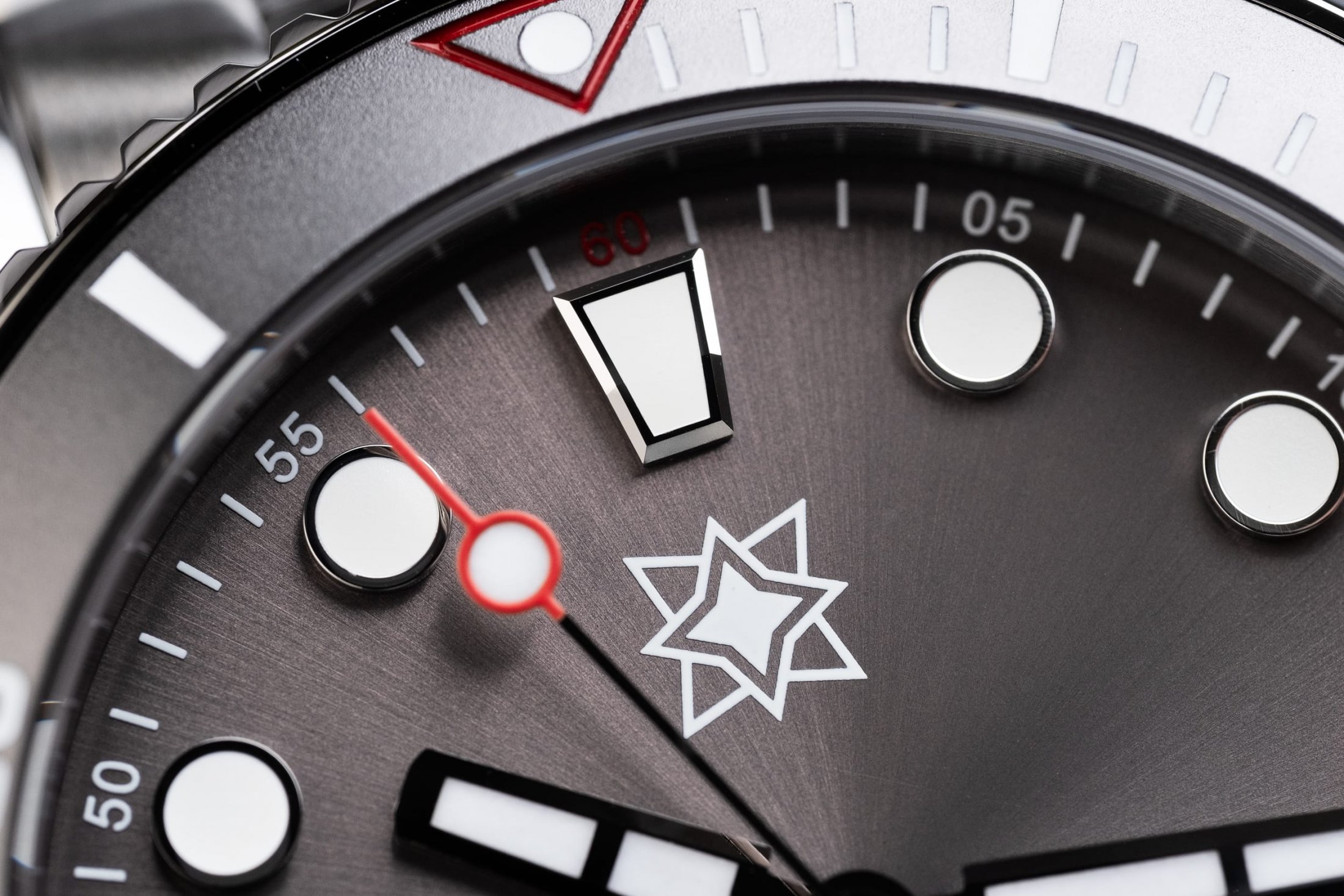
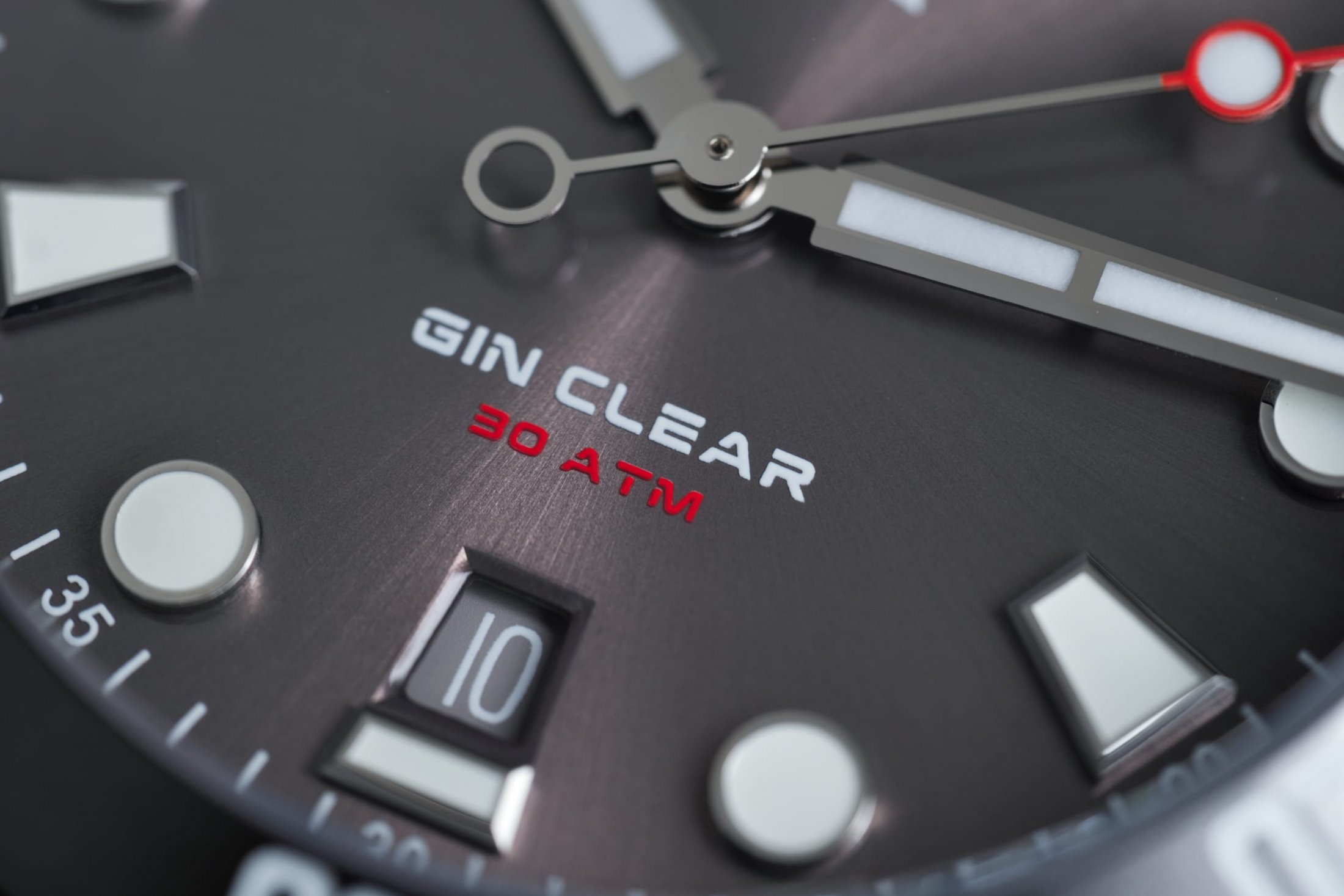
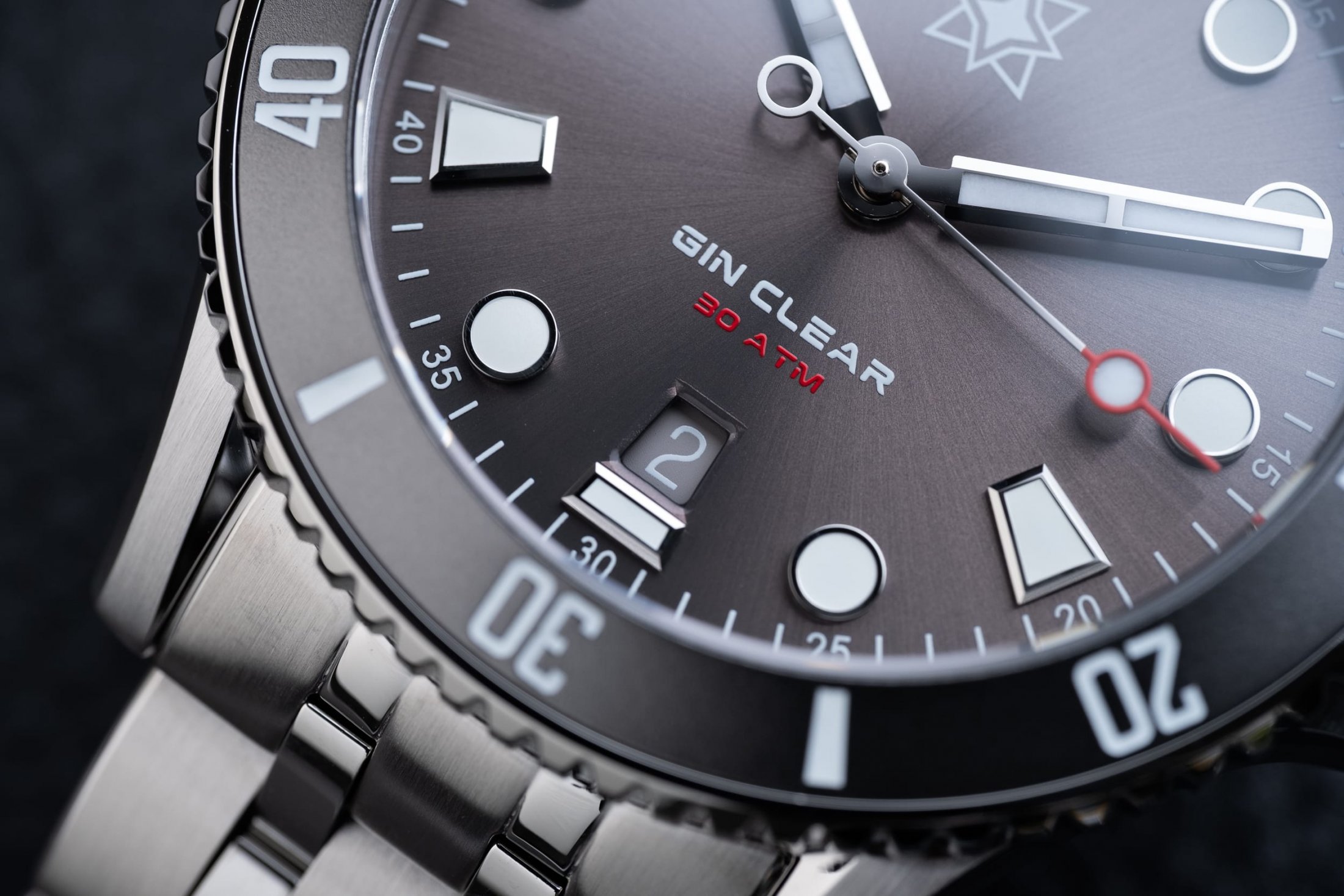
The dial has hint of mocha which brings a subtle warmth to the otherwise steely Dark Rhodium colour and the radial sunburst effect makes the dial feel alive. There is a mix of circular and custom-shaped applied hour indices, which are all mirror-polished. Second Hour’s signature trapezoidal indices at 4, 8 and 12 o’clock have been simplified for the MK3, ditching the double lume strips with steel dividing section in favour of a framed single block of lume. This simple change shows that improvements aren’t always the result of addition. Instead, this reductive design successfully tightens up the Gin Clear’s design language. The signature indices have bevelled edges on every side and like the round indices are generously filled with Swiss BGW9 Super-LumiNova,which glows strongly.
A lovely little touch that goes unnoticed unless the light hits just right, or you look really hard with a loupe/macro lens, is that the 12 o’clock hour marker reduces in height towards the centre of the dial, thanks to a couple of additional sloped bevels on the longest sides. A shortened index sits beneath the colour-matched date window at six o’clock and also benefits from lume. At the outer edge of the dial is a simple minute track printed inwhite, with Arabic numerals at each five-minute mark and ‘60’ printed at 12 o’clock in red.
The diamond-cut hour and minute hands have been redesigned for the MK3 and I have to say, they look fantastic. The MK2’s hands were well executed, but the MK3 hands are bolder and more unique, again indicative of a brand that is becoming more confident in its design language, whilst not throwing out the baby with the bath water. The hands are diamond cut and split into two sections, each filled with Swiss BGW9 Super-LumiNova. The MK2’s skeletonized logomark counterbalance is now gone from the seconds-hand, replaced instead with a simple skeletonised circle, a nice ‘echo’ of the painted red lume pip. The hour and minute hands now narrow near the centre pinion and are bevelled along both outer frames, instead of being creased along the centre line. The stick seconds hand is painted red toward the tip and has a circular lume pip, framed in red.
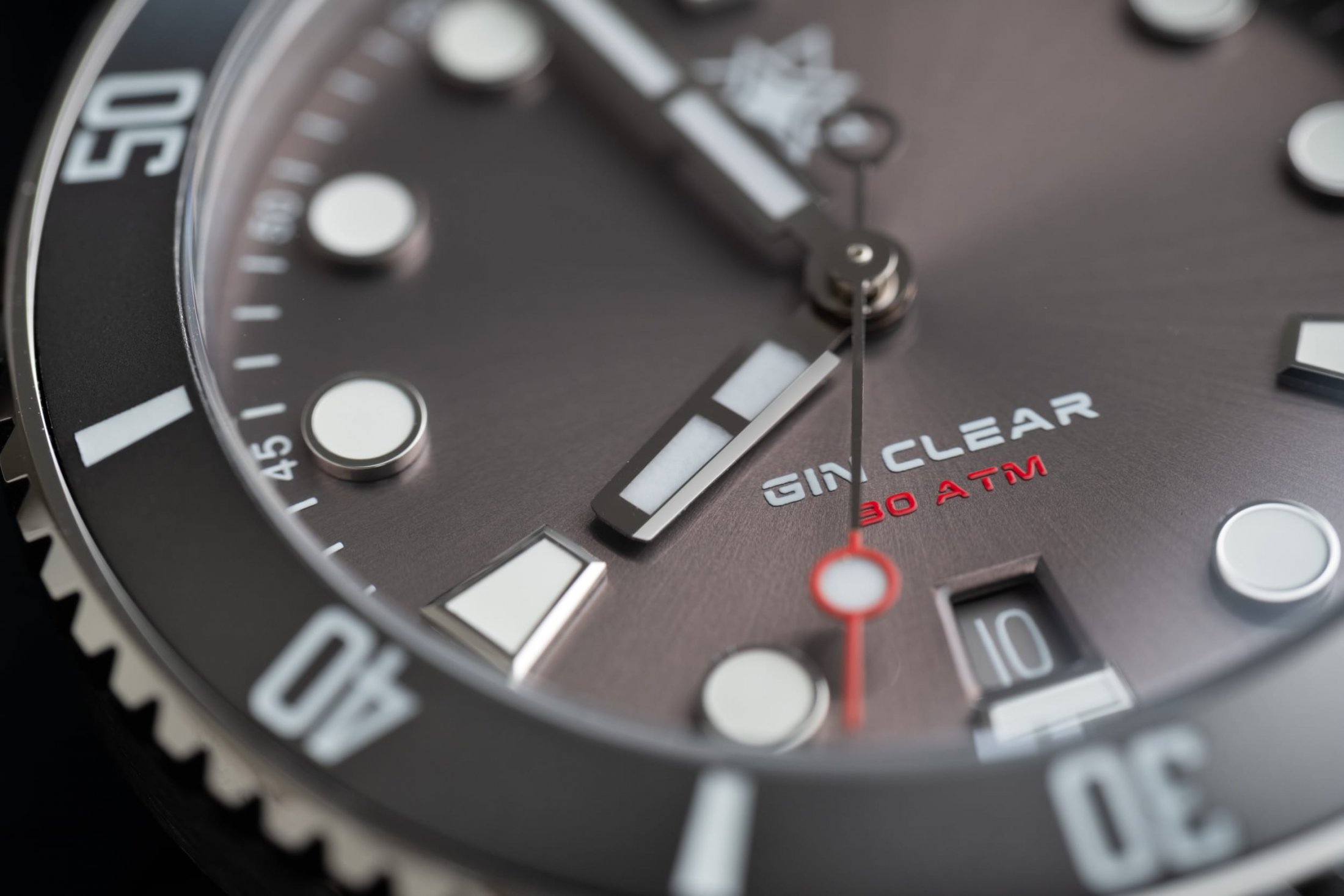
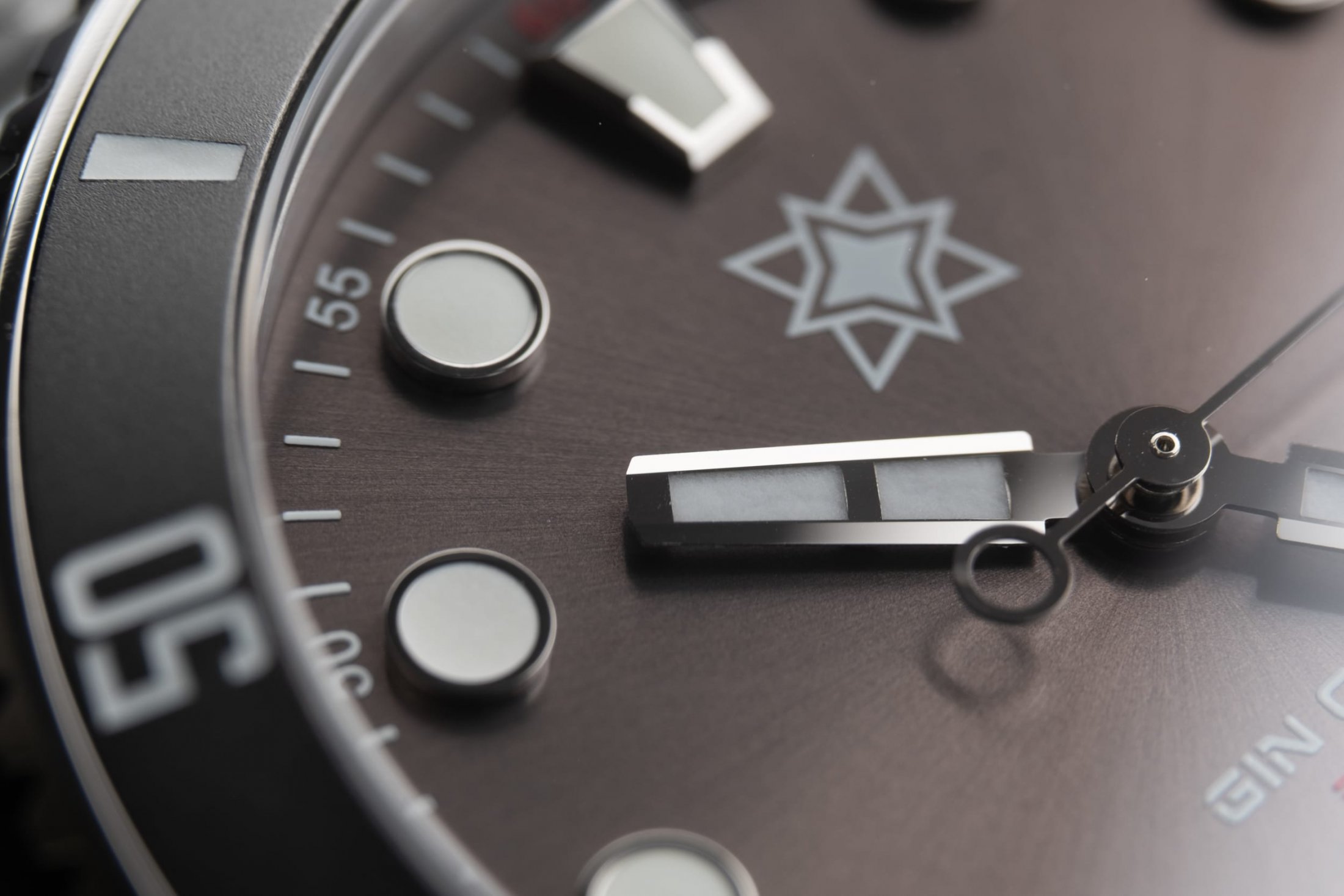
The logomark features on the dial at 12 o’clock. The only other dial text is ‘Gin Clear’ printed in whiteand ‘30ATM’ printed in red at the six o’clock above the colour-matched date wheel with bevelled frame. Legibility is exemplary both day and night.
The Swiss Movement
The only slight downside for me when comparing the MK3 to the MK2 is that instead of the ETA2824, the Gin Clear now uses the Sellita SW200. Whilst for all intents and purposes, this is the same movement, I (like others), have always felt that the ETA2824 is the better movement, being marginally more reliable and refined. However, to be fair to Second Hour, the ETA is very difficult to get hold of for microbrands and costs more, so using the SW200 has probably helped to keep the cost down. Also, this negative is balanced by a plus! The SW200 is now regulated to an impressive four positions (compared to two for the MK2’s ETA). Out of the box accuracy of the SW200 is xxx, but the Gin Clear brings accuracy to single digits. The movement is hackable (stop the seconds hand to set precise time) and can be hand wound. It beats at 28,600vph and has a power reserve of 42 hours.
Final Thoughts on the Second Hour Gin Clear MK3
Anyone who has read my review of the MK2 Gin Clear will know that I was mightily impressed. What the Gin Clear MK3 offers for only a small increase in the asking price is unreal and for the most part the updates make the MK3 the best iteration yet. Whilst the improvements are relatively minor, each one plays an important part in the evolution of the Gin Clear. The refined bezel improves the engineering, the new dial colours keep things fresh, whilst the redesigned hands and indices bring more focus and a stronger identity. The feature-rich Gin Clear has become a watch that is recognisable from a distance, not easy in the saturated dive watch segment!
I only really have three minor negatives. Firstly, given that Second Hour has gone to the trouble of repositioning the spring bar holes, I’d like to see a custom rubber strap with fitted end links offered (at least as an optional extra) at time of purchase. Secondly, I’d love to see a millimetre or so shaved off the case thickness, taken from the mid-case or caseback. Finally, whilst I’m fine with a closed caseback, some readers might prefer to see an exhibition caseback considering the premium movement ticking away inside.
I said in my review of the MK2 that the Gin Clear wouldn’t look out of place in a head-to-head with watches from mainstream brands and this point is even more relevant now. With the exception of maybe the Christopher Ward Trident Pro 300, the Second Hour Gin Clear MK3 is pretty much unbeatable within the sub-£1000 dive watch category. And at around £300 cheaper than the equivalent CW, the Gin Clear should certainly be on your shortlist, particularly if you’re looking for a dive watch on the dressier side, but with the specification of a real tool watch. Bravo Second Hour. I’m already eagerly awaiting the MK4!
Let us know what you think of the new Gin Clear MK3 below and if you already own the MK2, do you think it’s worth upgrading to the MK3?