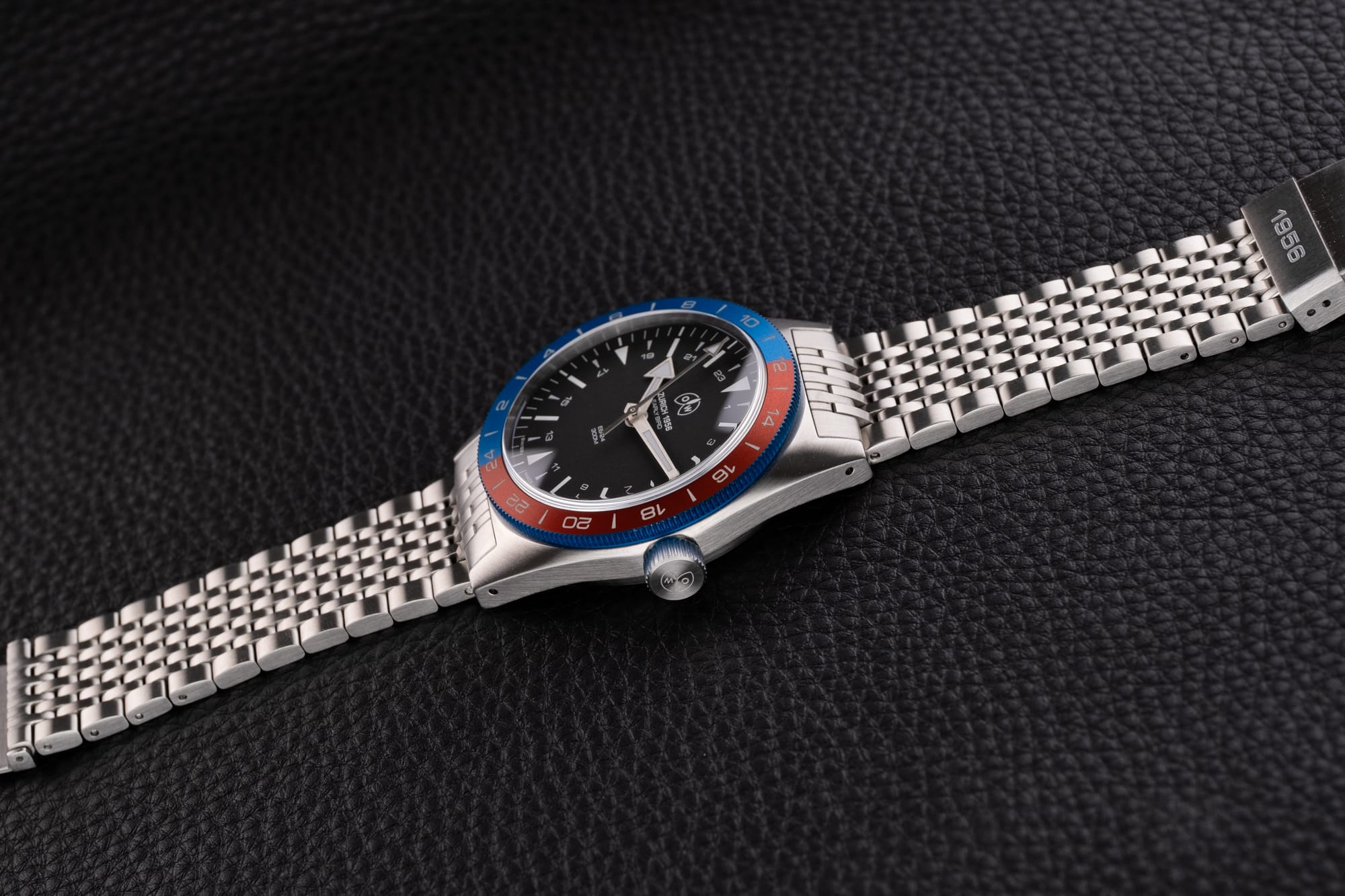
Watch enthusiasts and collectors are often looking for a unique take on a wristwatch, one that ticks a box none of their other watches do. Enter the Ollech & Wajs Early Bird, a 24-hour tool watch pulled from the archives, where the hour hand only completes one rotation each day.
Early Bird Overview
The Early Bird of 2026 is for the most part a faithful recreation of a watch resurrected from Ollech & Wajs’ back catalogue, although there are a few design changes and specification improvements which I’ll point out as we go through the review. The Early Bird sits within Ollech & Wajs’ Pilot Watch collection and is priced at 1956 CHF (approx. £1792 GBP / $2418 USD / €2092 EUR at time of press), a far cry from the $39.95 USD that military personnel bought the original Early Bird for back in 1965!
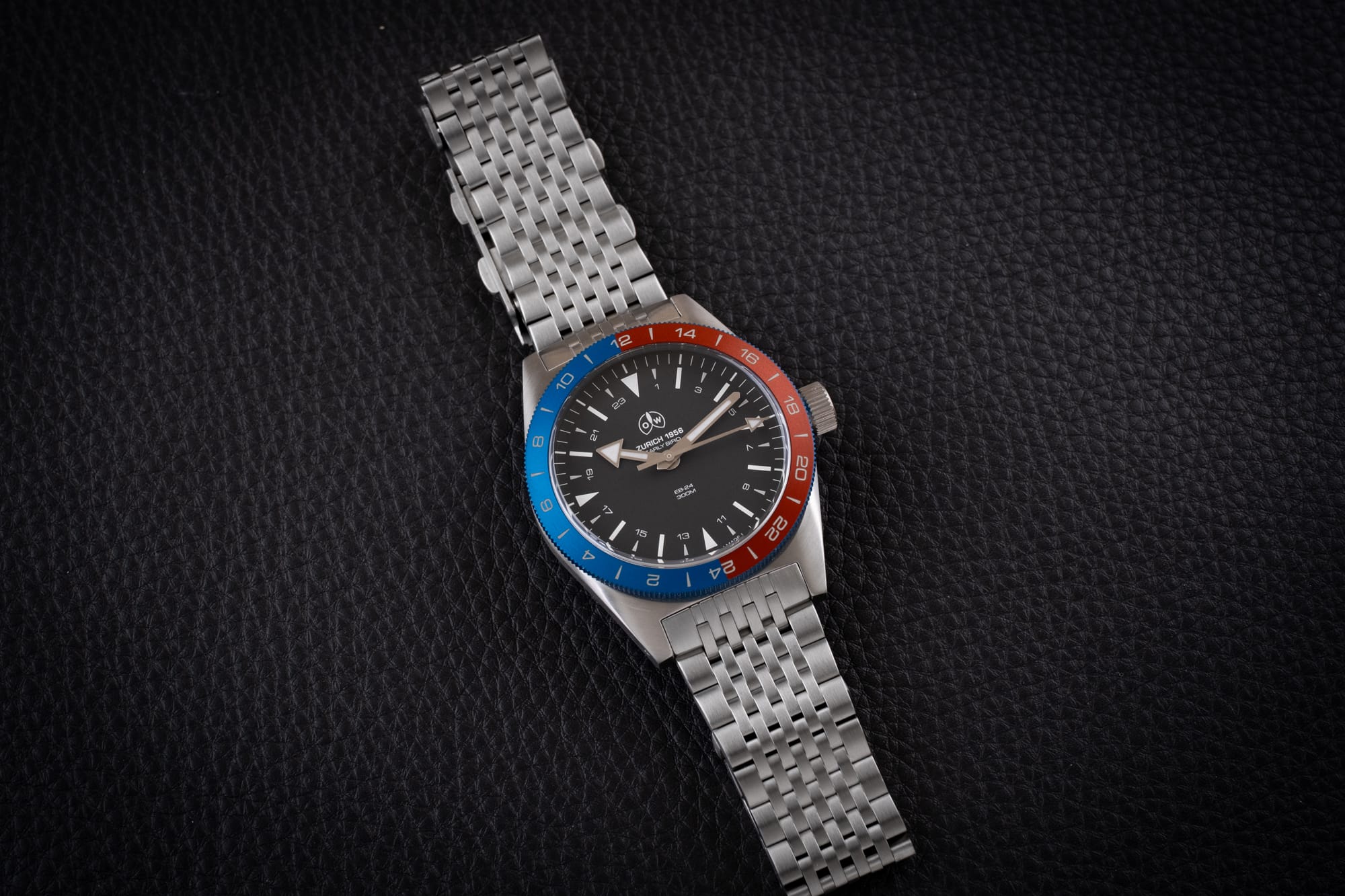
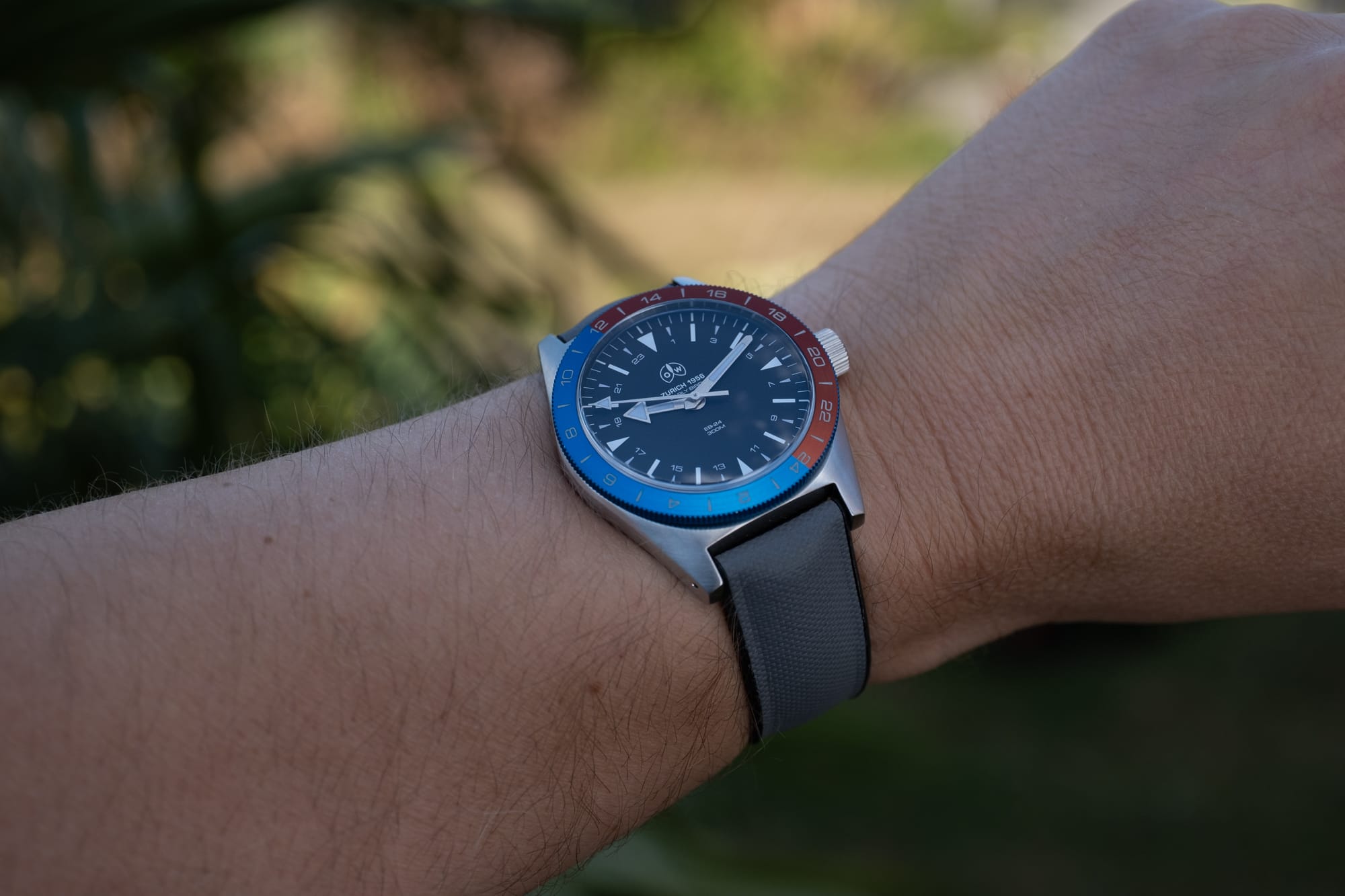
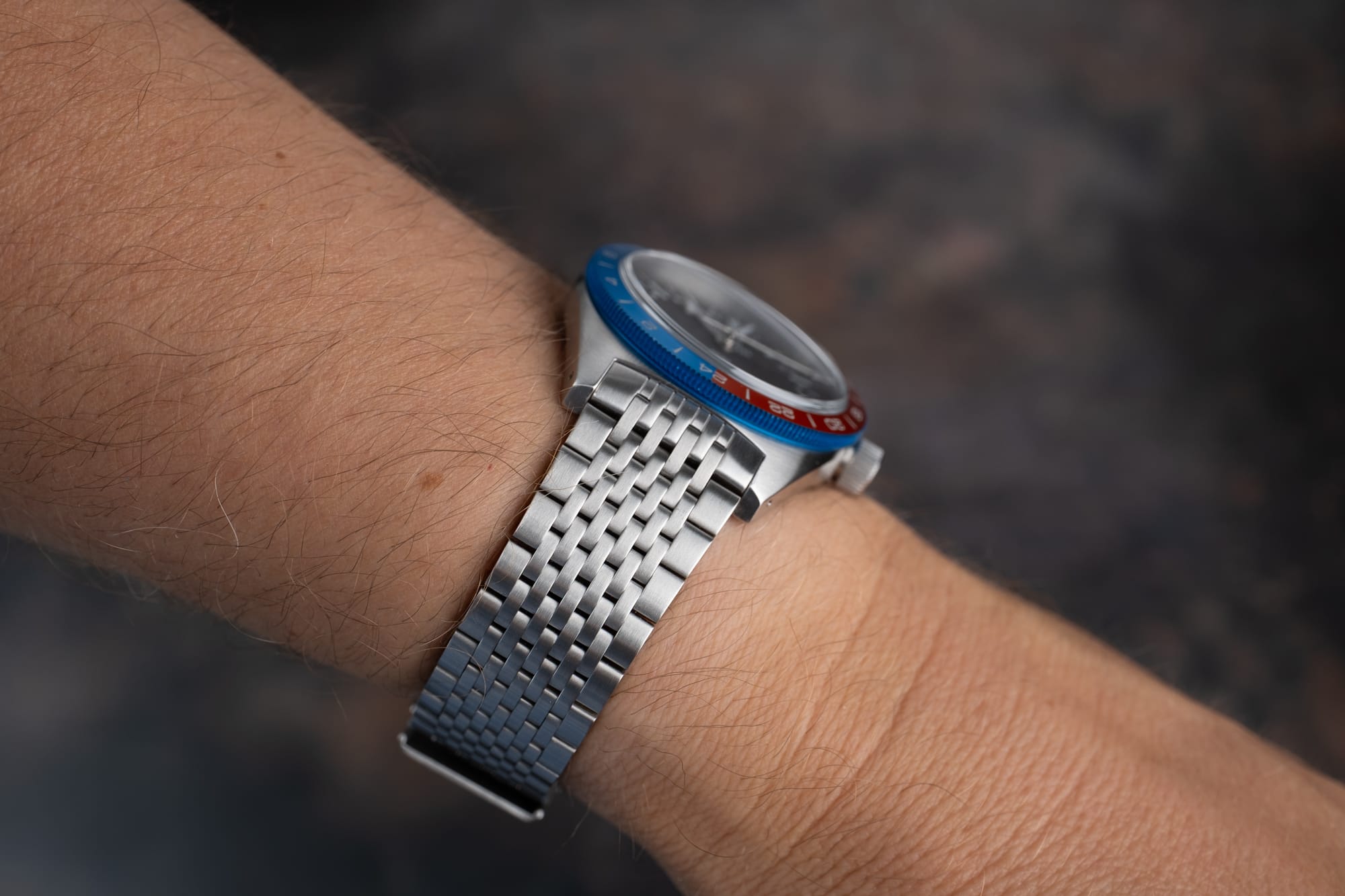
The watch is made in the same Swiss-Jura workshop that all Ollech & Wajs (OW) watches have been made at since 1972 and comes fitted with a black Italian leather strap as standard and has a three-year warranty. Other strap options are available for additional cost, including the M-Link bracelet as pictured on my review watch, priced at 296 CHF (approx. £270 GBP / £360 USD / €320 EUR). What makes the Early Bird substantially different from most watches is the 24-hour dial and hour hand that completes a single rotation of the dial each day. It’s driven by a modified GMT movement and is a true tool watch with a frankly incredible 300 meters of water resistance, 100m up on the already impressive original. As is usual for Ollech & Wajs watches, the first 56 will be numbered, and if you get in early, you can request your number of choice.
Background
The original Early Bird watch was launched back in 1965 as a tribute to the Intelsat I, nicknamed ‘Early Bird’, the world’s first geosynchronous communications satellite. The satellite handled all commercial telecommunications transmissions between Europe and North America between 1965 and 1969. This included the live transoceanic TV coverage of the Gemini 6 splashdown; footage of the Apollo 11 moon landing; and the first ever performance of ‘All You Need Is Love’ by The Beatles, live to a global audience of 700 million people. Early Bird changed humanity’s relationship with distance. It made the Atlantic feel smaller by enabling cable-free, near-instantaneous communications between continents. Albert Wajs wanted to pay tribute to this pioneering engineering by creating a watch in its honour. The 24-hour ‘military-time’ dial reflects the time taken for the satellite to complete one orbit of the Earth. The blue-and-red metallic bezel echoed the colours of the satellite itself.
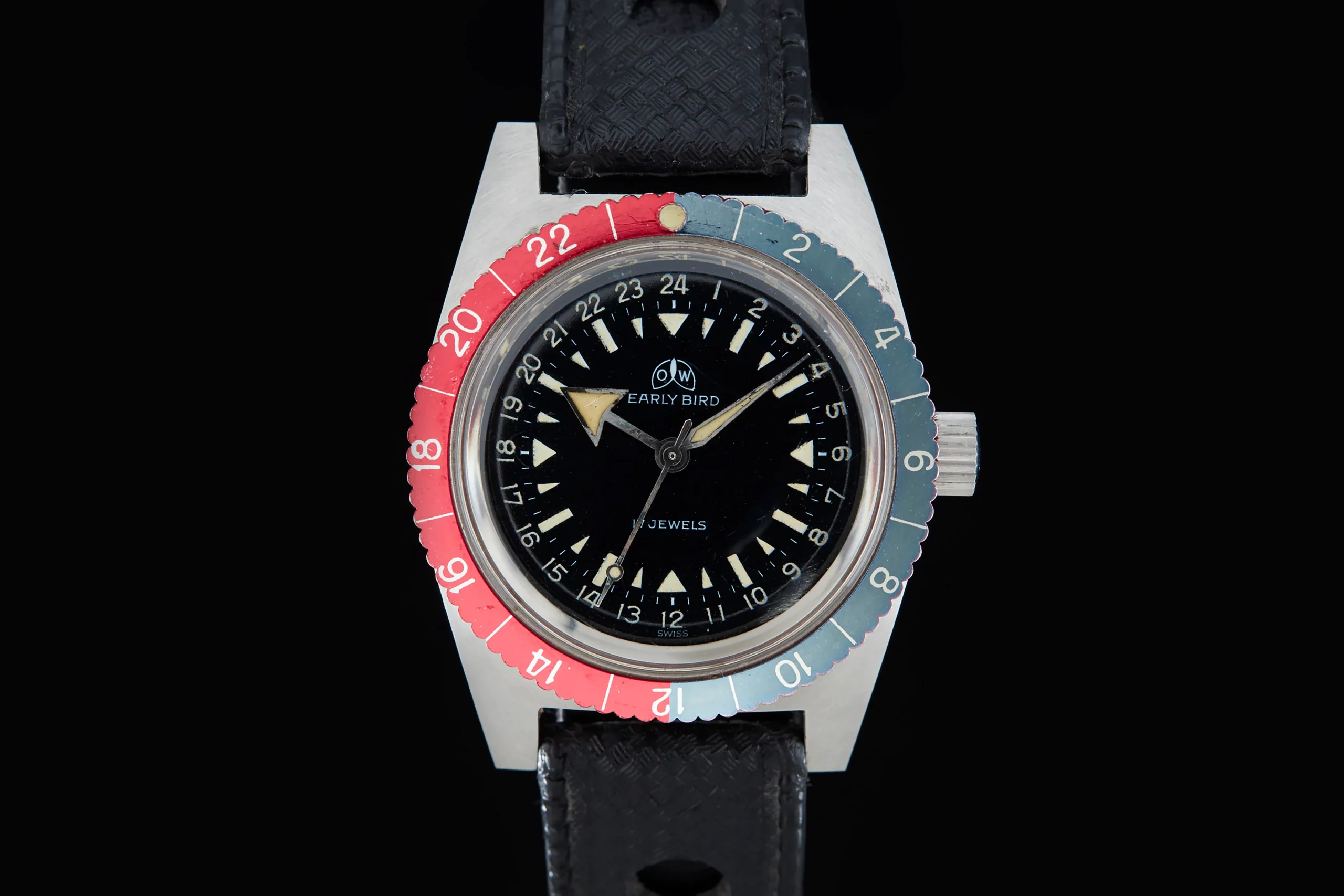
The Early Bird watch was created specifically for military personnel, particularly pilots and radio operators, for whom a 24-hour ‘military-time’ dial would be invaluable. Most of the original Early Birds were ordered direct from Zurich via adverts in black-and-white newspapers like the Army Times. Fewer than 500 were made!
The Case and Wearing Experience
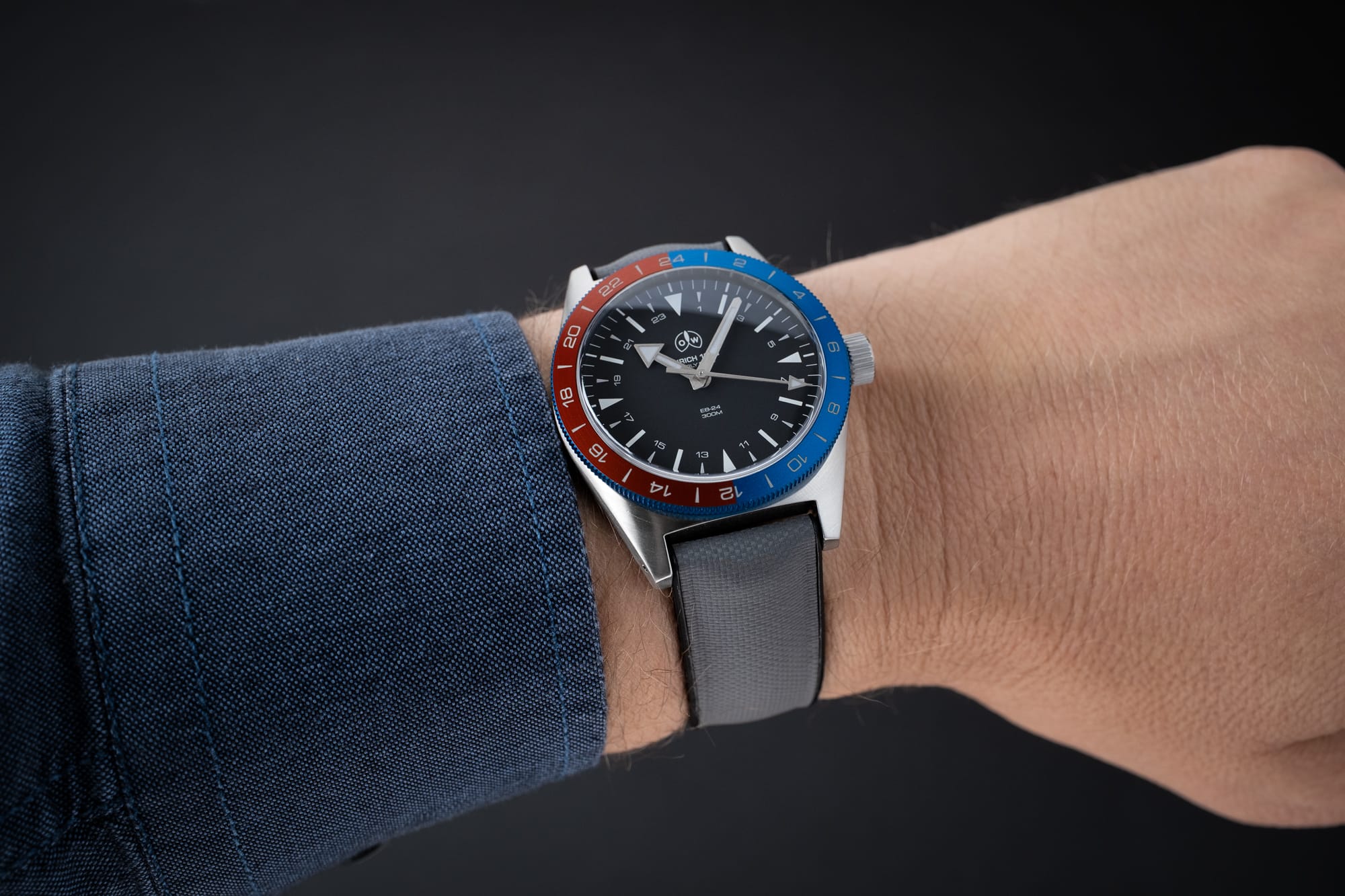
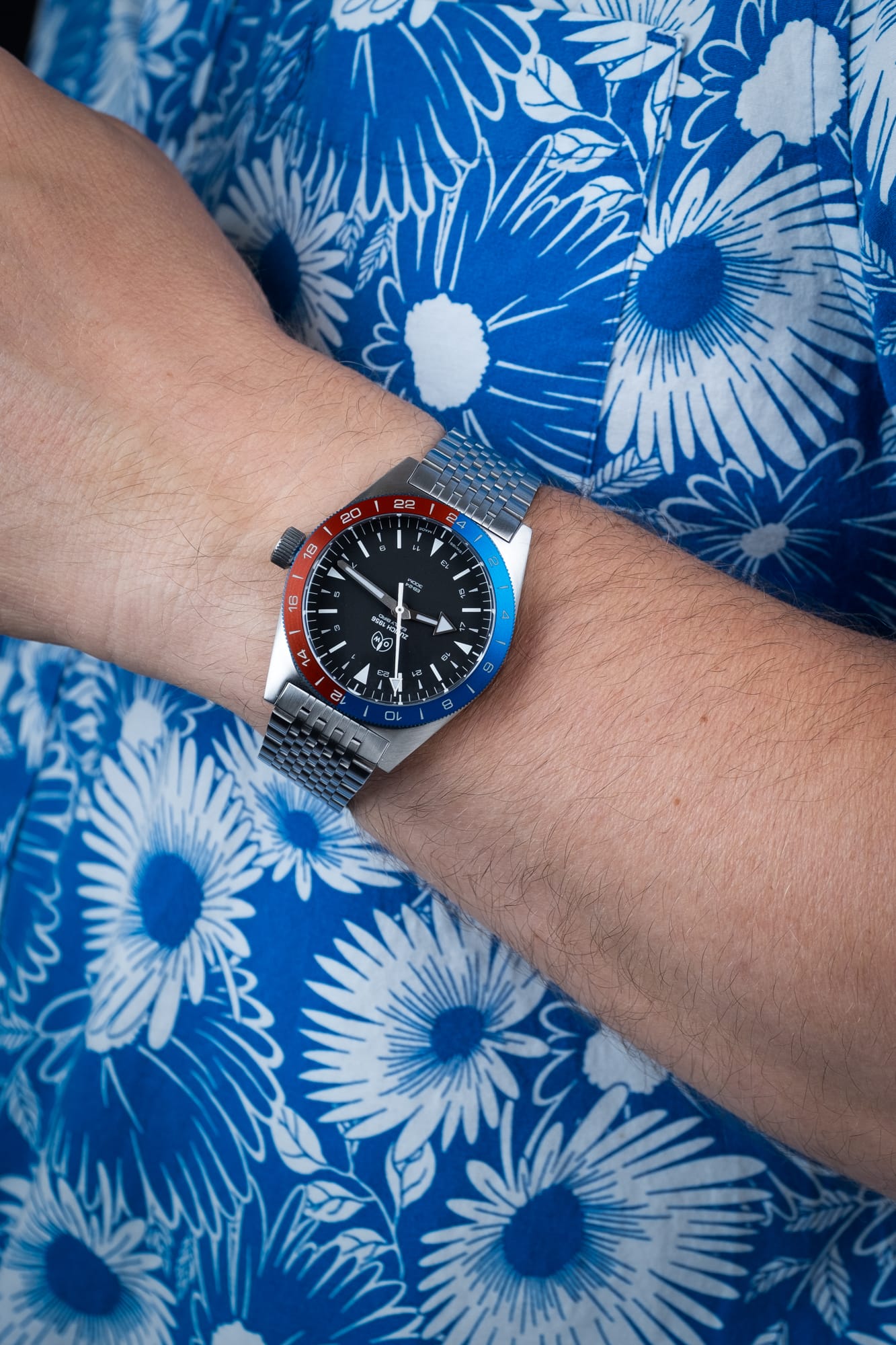
The geometry of the 316L stainless steel case is shared with several other OW watches and will be broadly familiar to anybody who has been hands-on with an Ollech & Wajs before. Distinctive and charming but simple, it’s straight-cut between the lugs with a sloping dial-side surface that seamlessly transitions to the stubby lugs. It has a relatively flat side profile with the gentlest of downturns through the lugs. Measuring 39.5mm and with a lug-to-lug measurement of 48mm, it’s relatively slim at 12.5mm (Most Ollech & Wajs watches are chunkier due to thicker cases, taller crystals or higher water resistance). The ‘true’ lug-to-lug is 52mm if you include the bracelet end links that don’t fully articulate, but it wears closer to the 48mm measurement. The watch weighs 145 grammes on the bracelet sized to my 7.25-inch wrist. For comparison, the original was 38mm and just 10.5mm thick. The extra thickness on the reissue is more than likely due to two factors, the increased water resistance and the fact an automatic movement is used, rather than a manually wound calibre.
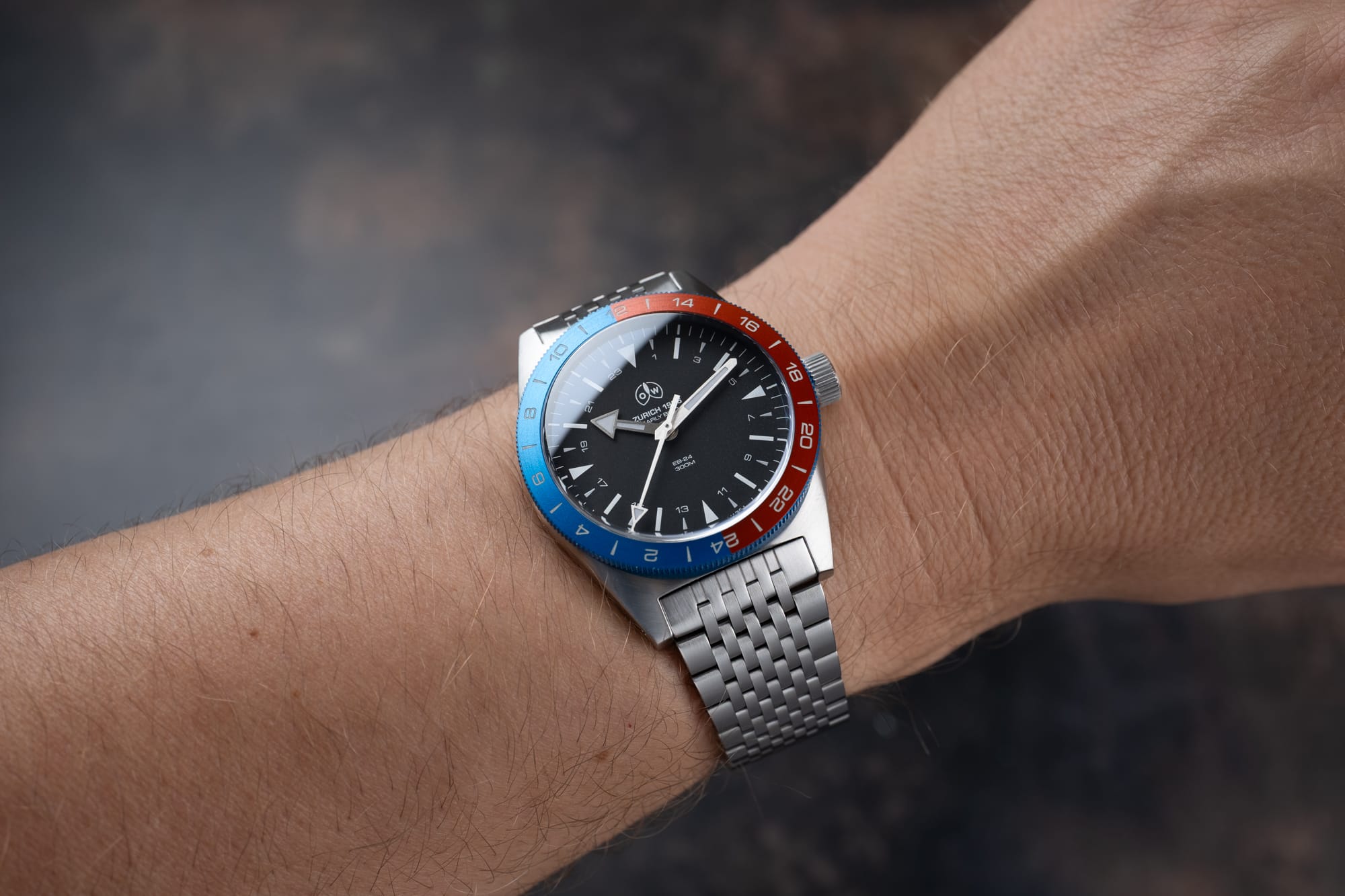
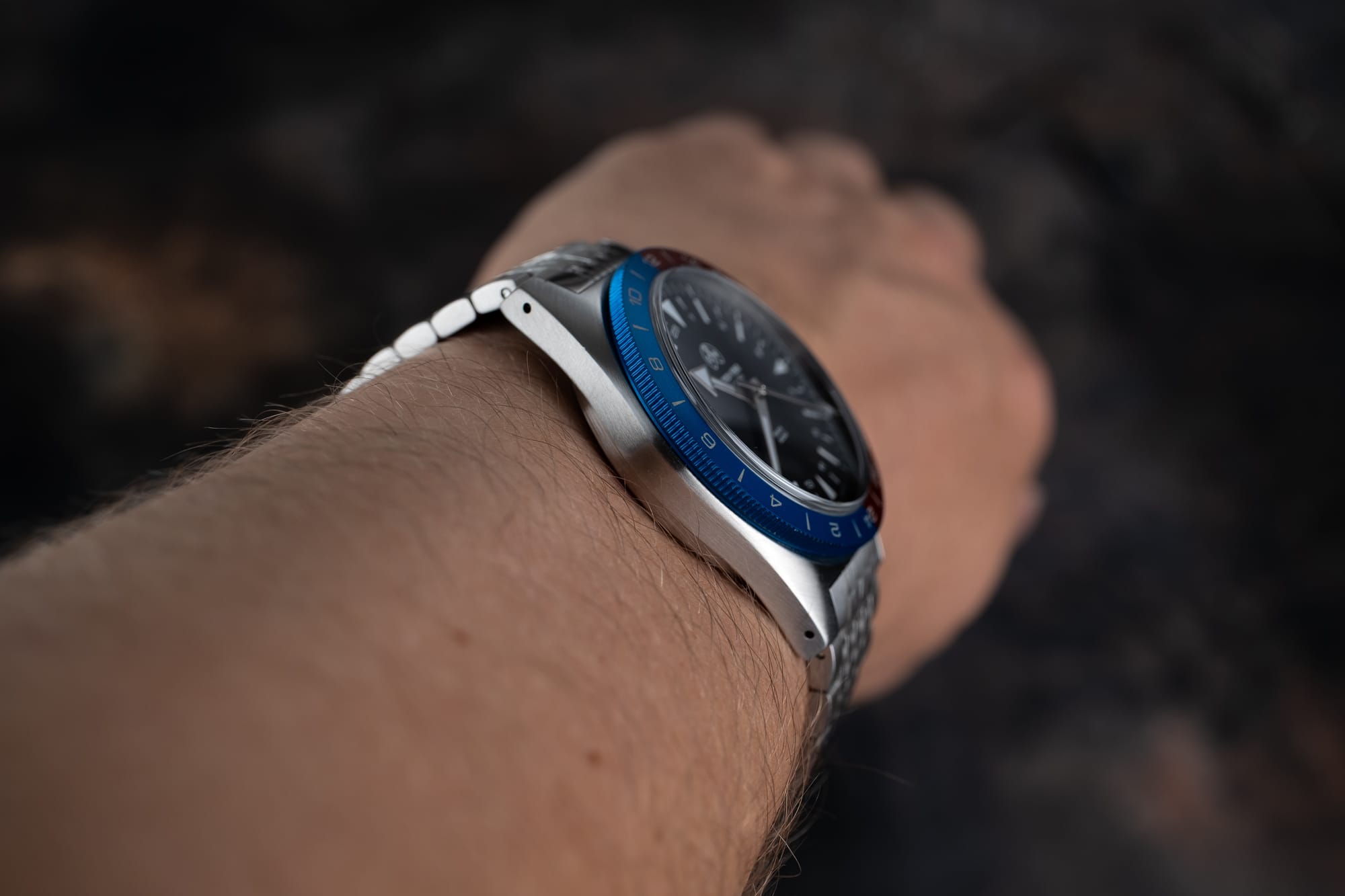
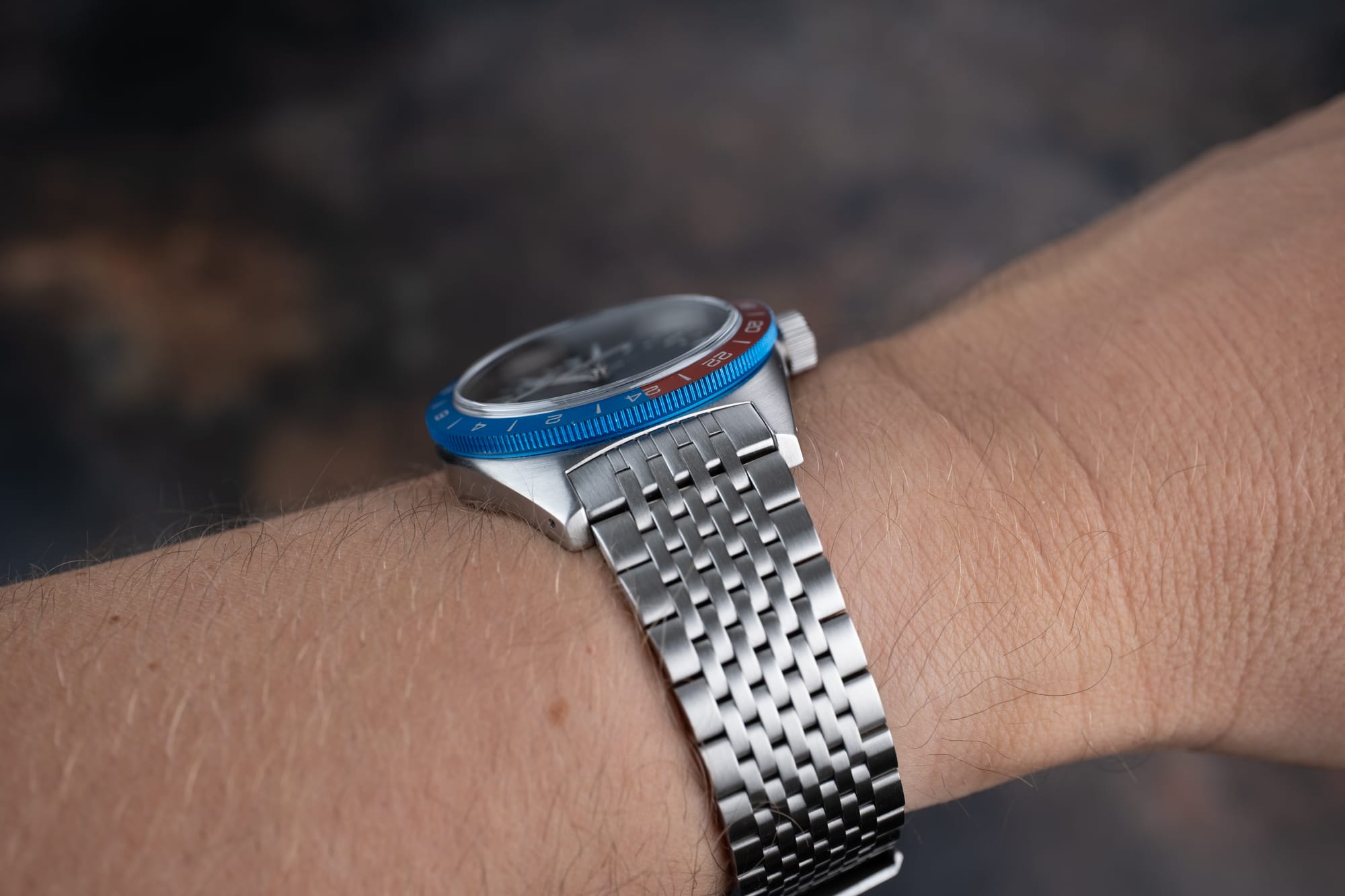
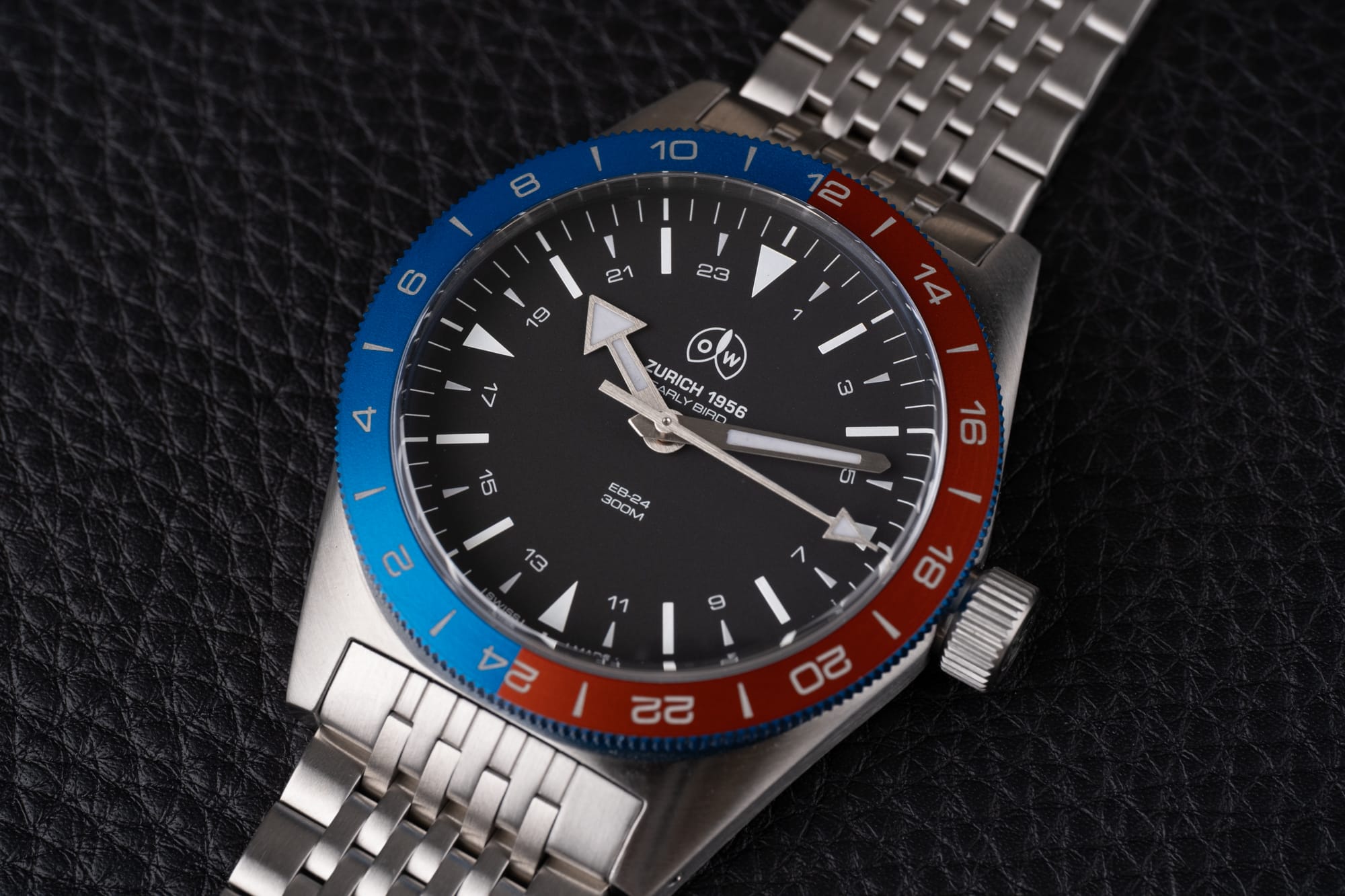
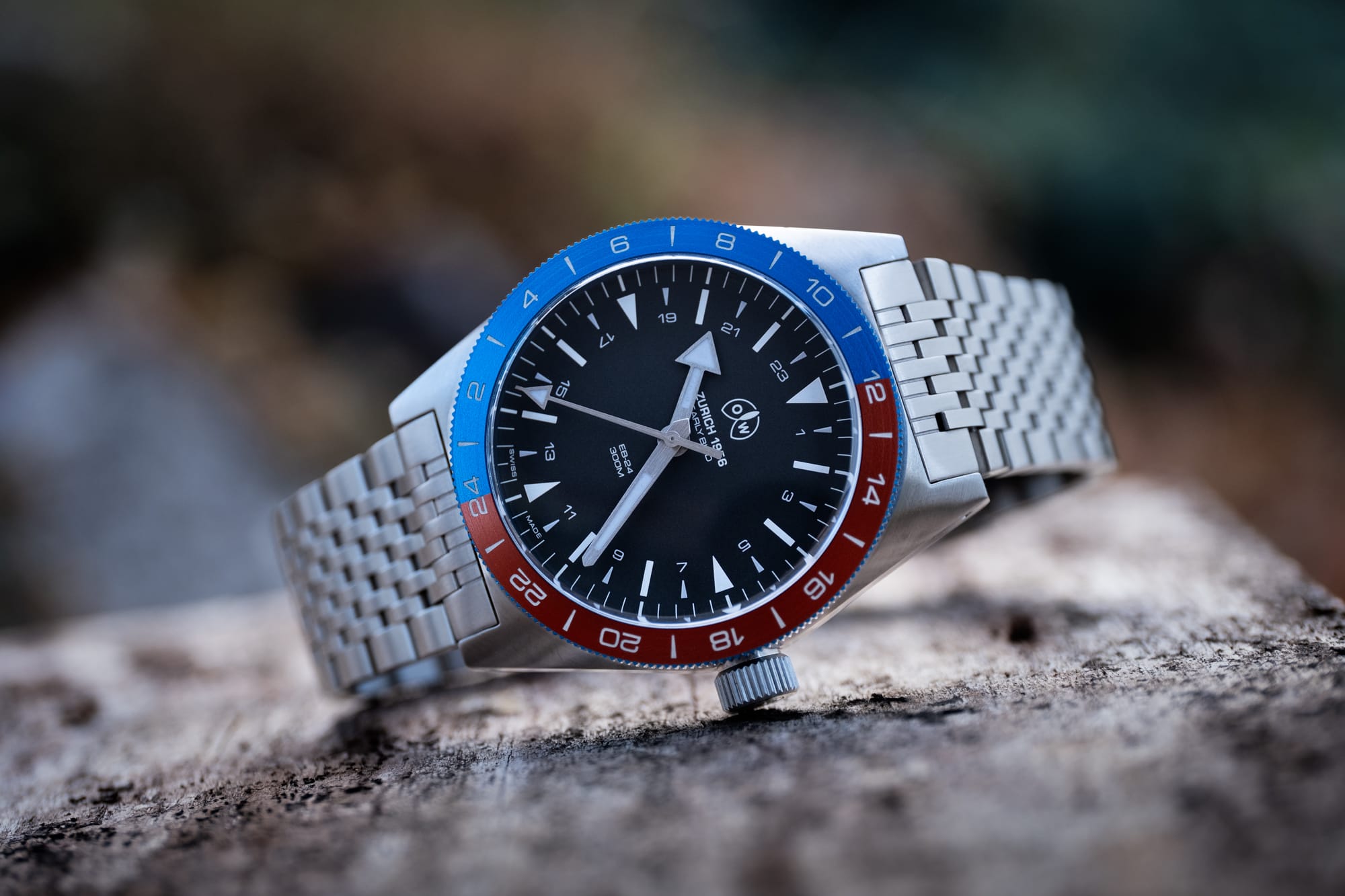
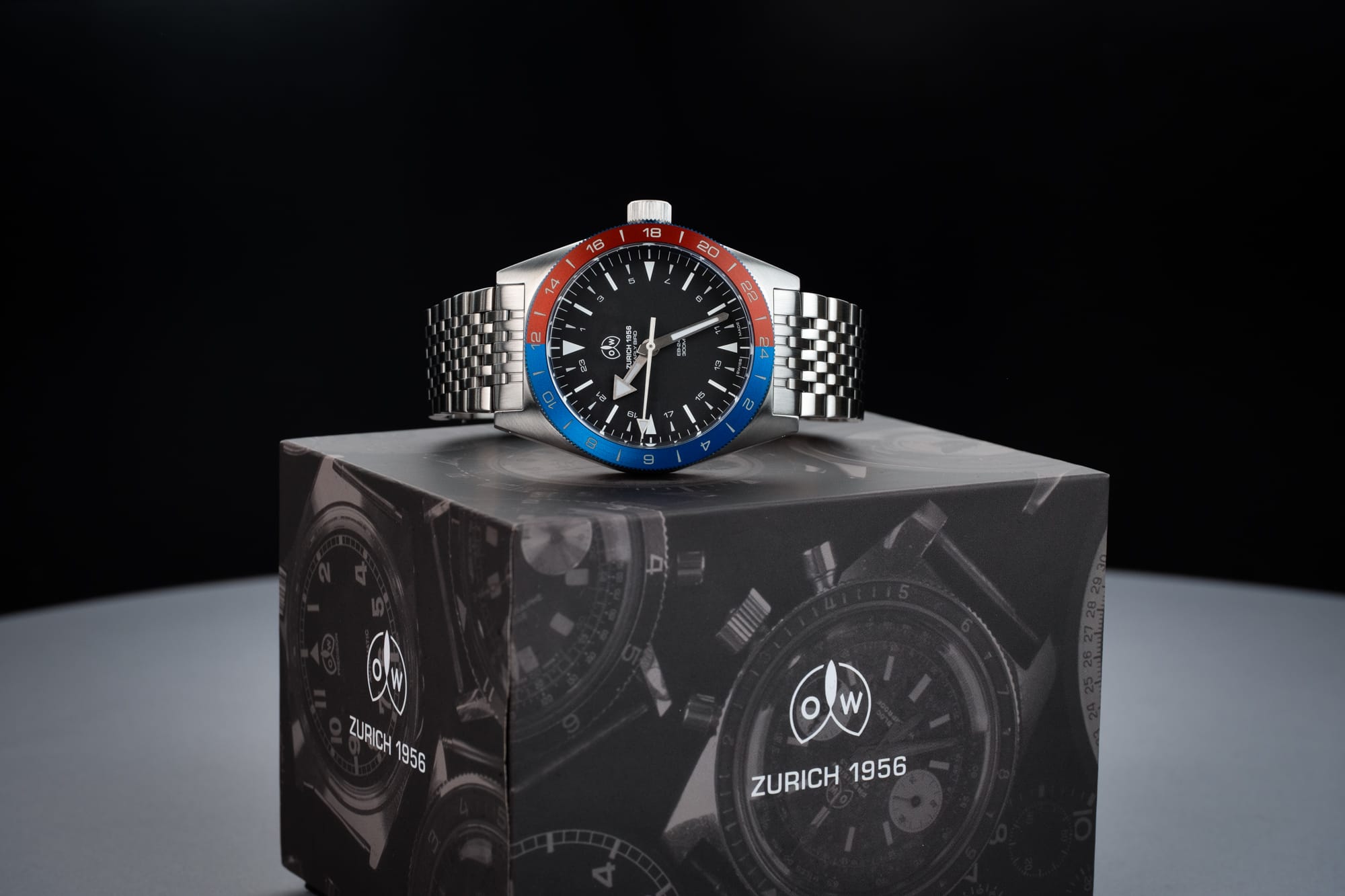
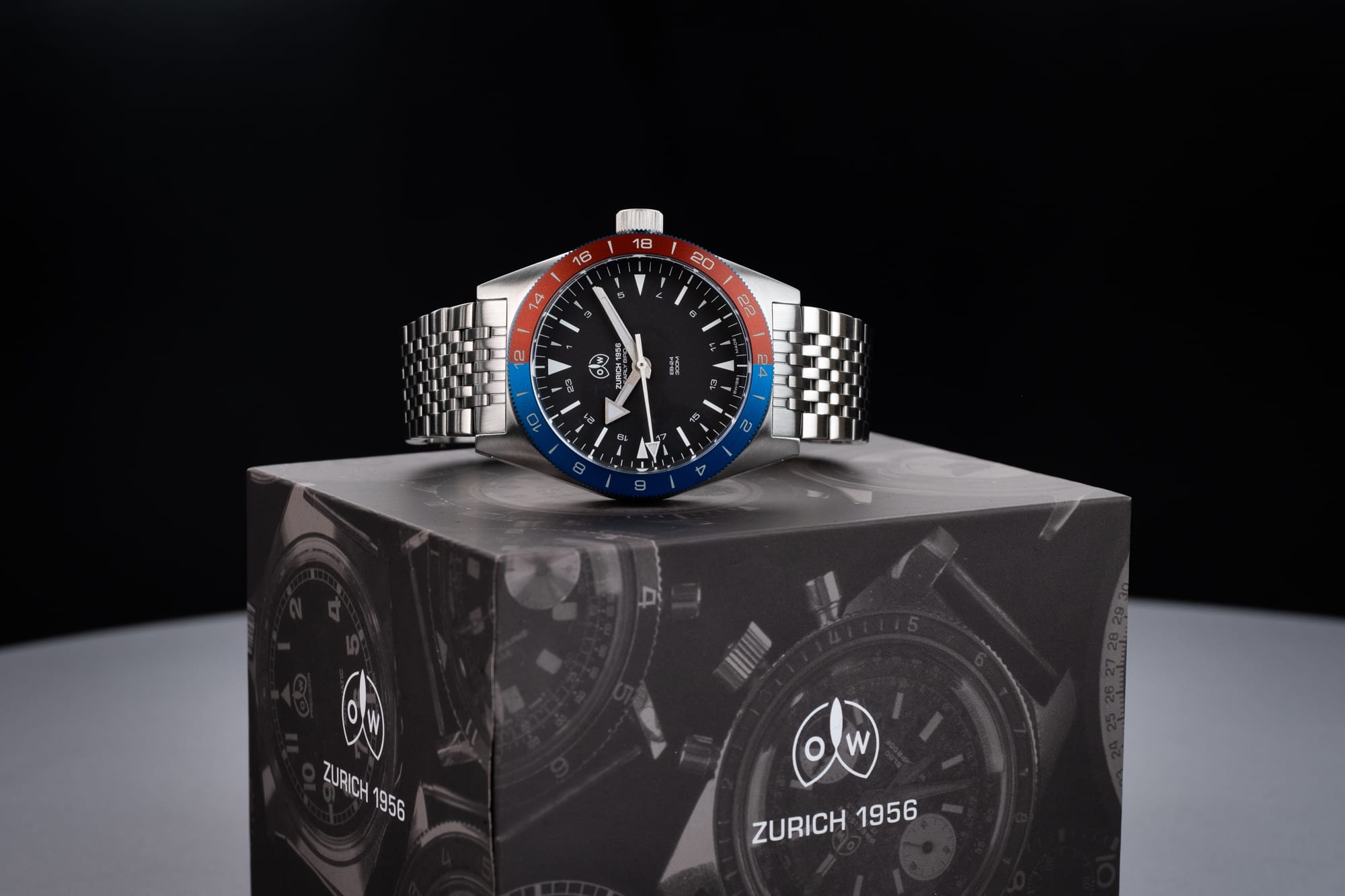
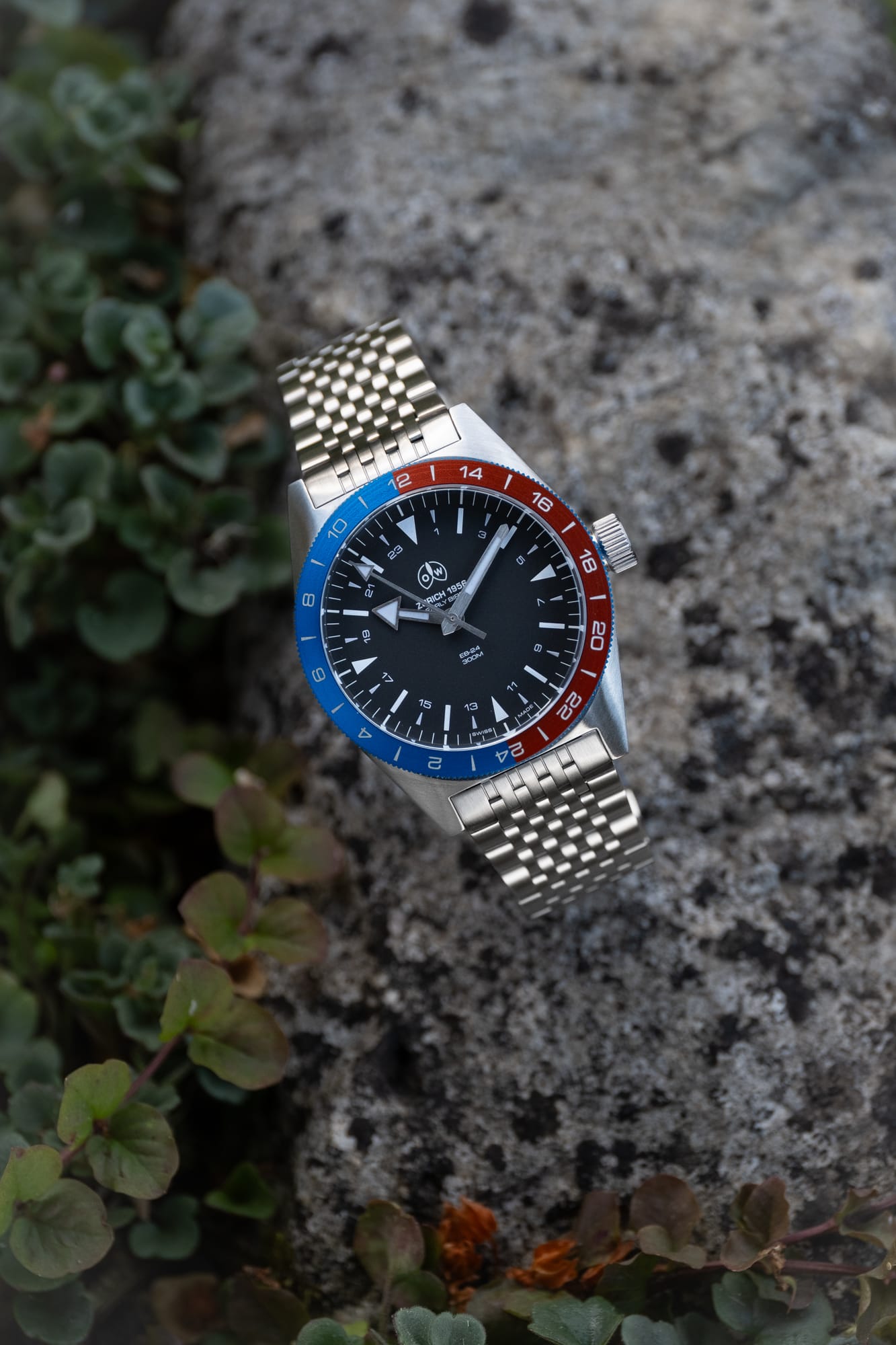
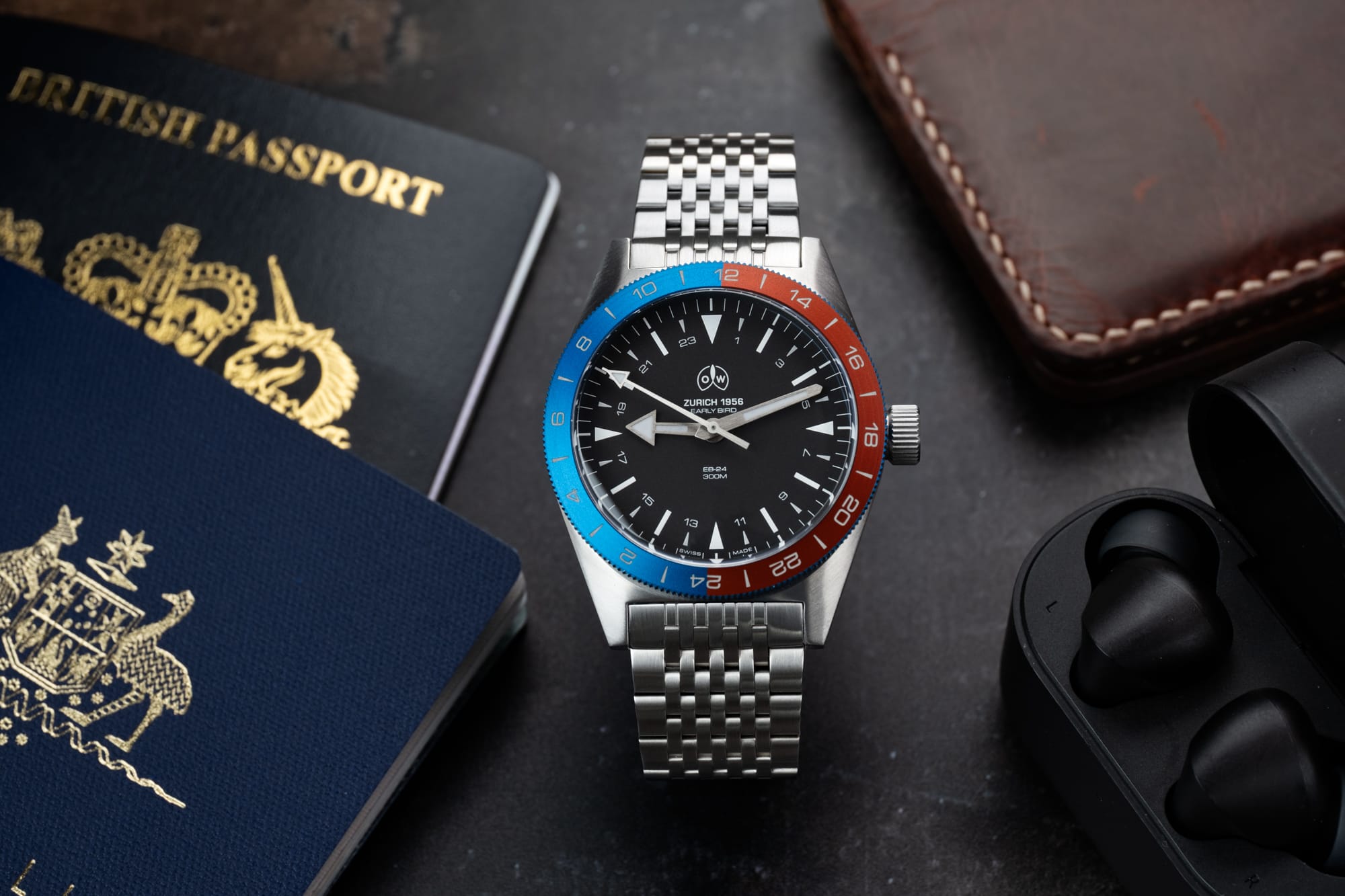
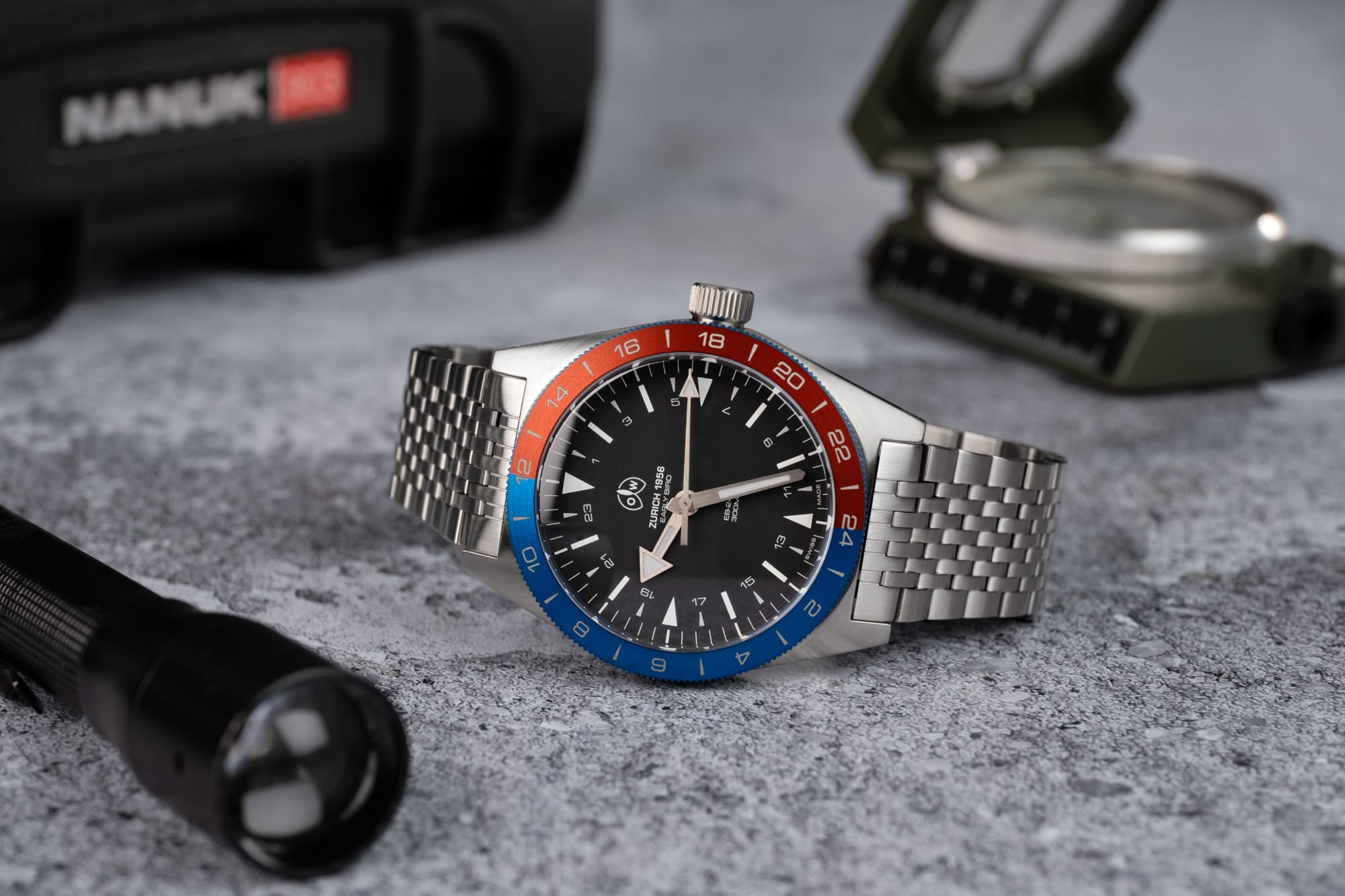
The Early Bird strikes a suitably purposeful pose, sporting an entirely brushed finish, a generously proportioned, unguarded crown and drilled lugs to make strap changes easier. The rotating world time bezel is made of blue anodized aluminium with a bi-colour insert, split vertically down the middle, comprising an electric blue section for 0-12 hours (matching the bezel itself) and an orangey-red section for 12-24 hours. The metallic bezel colours are quite bright and tonally cold, but they are said to emulate the colours of the satellite. However, I do wonder if a stainless steel bezel would have been more cohesive, as the blue base clashes somewhat against the red.
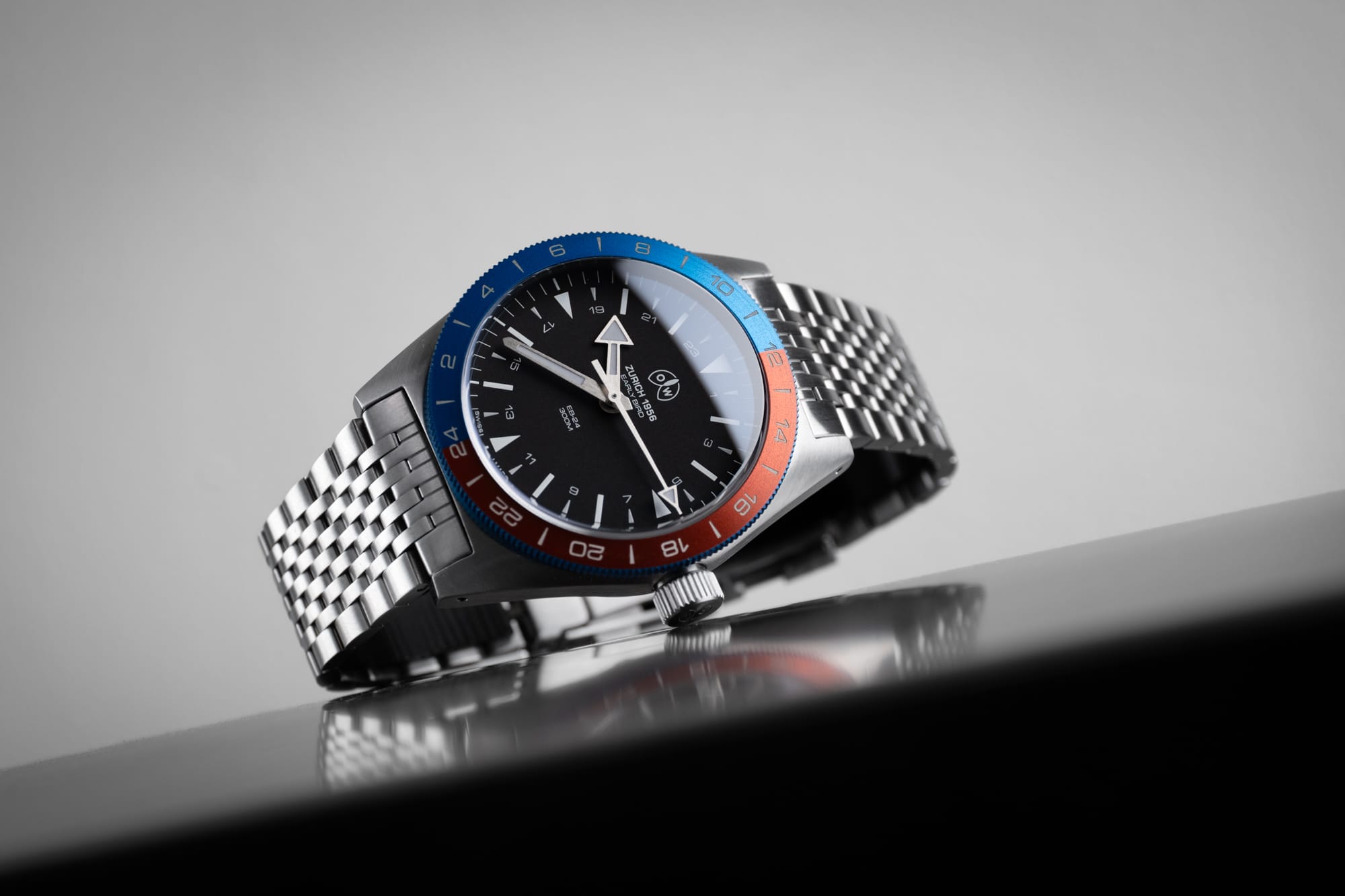
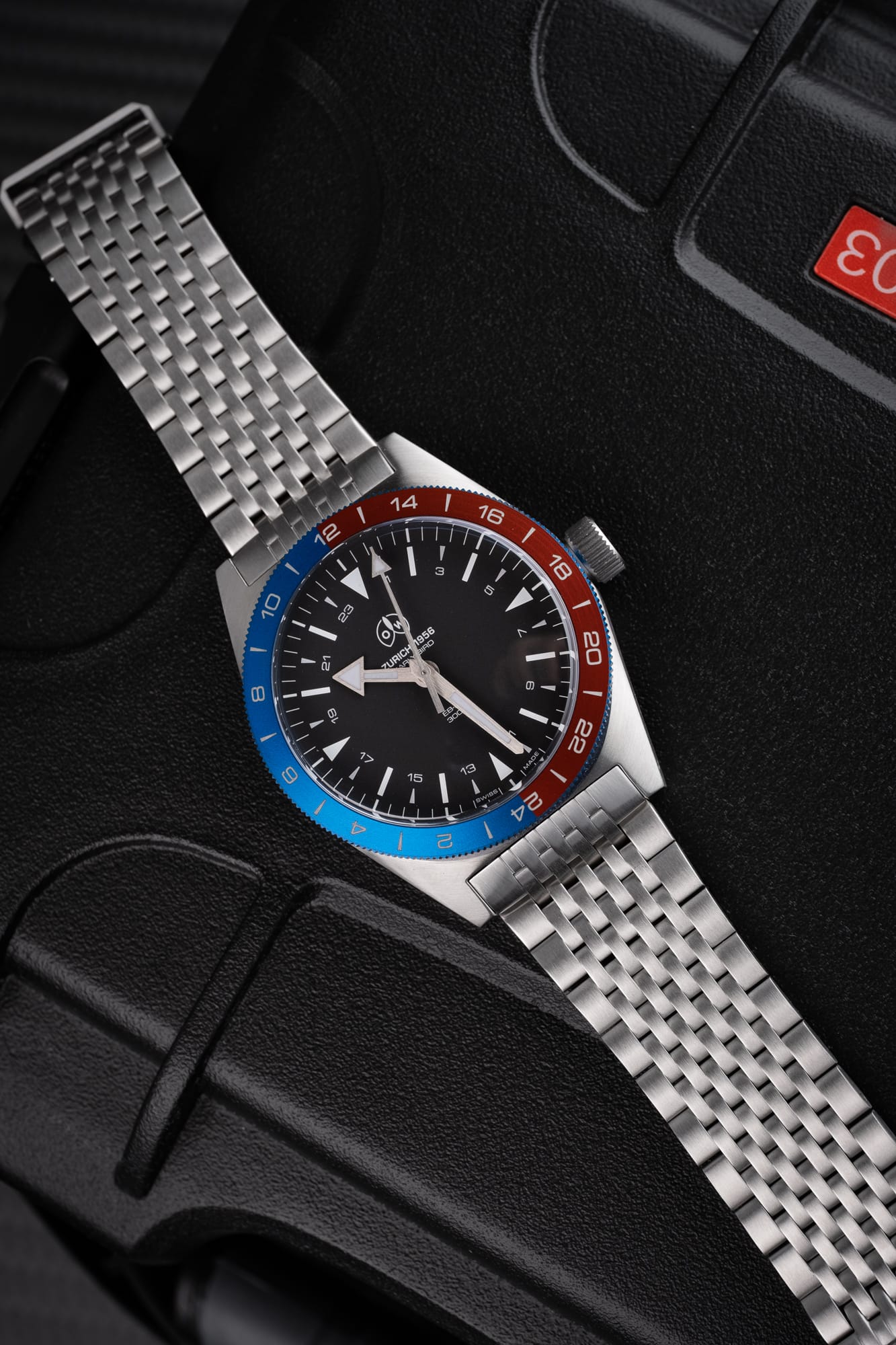
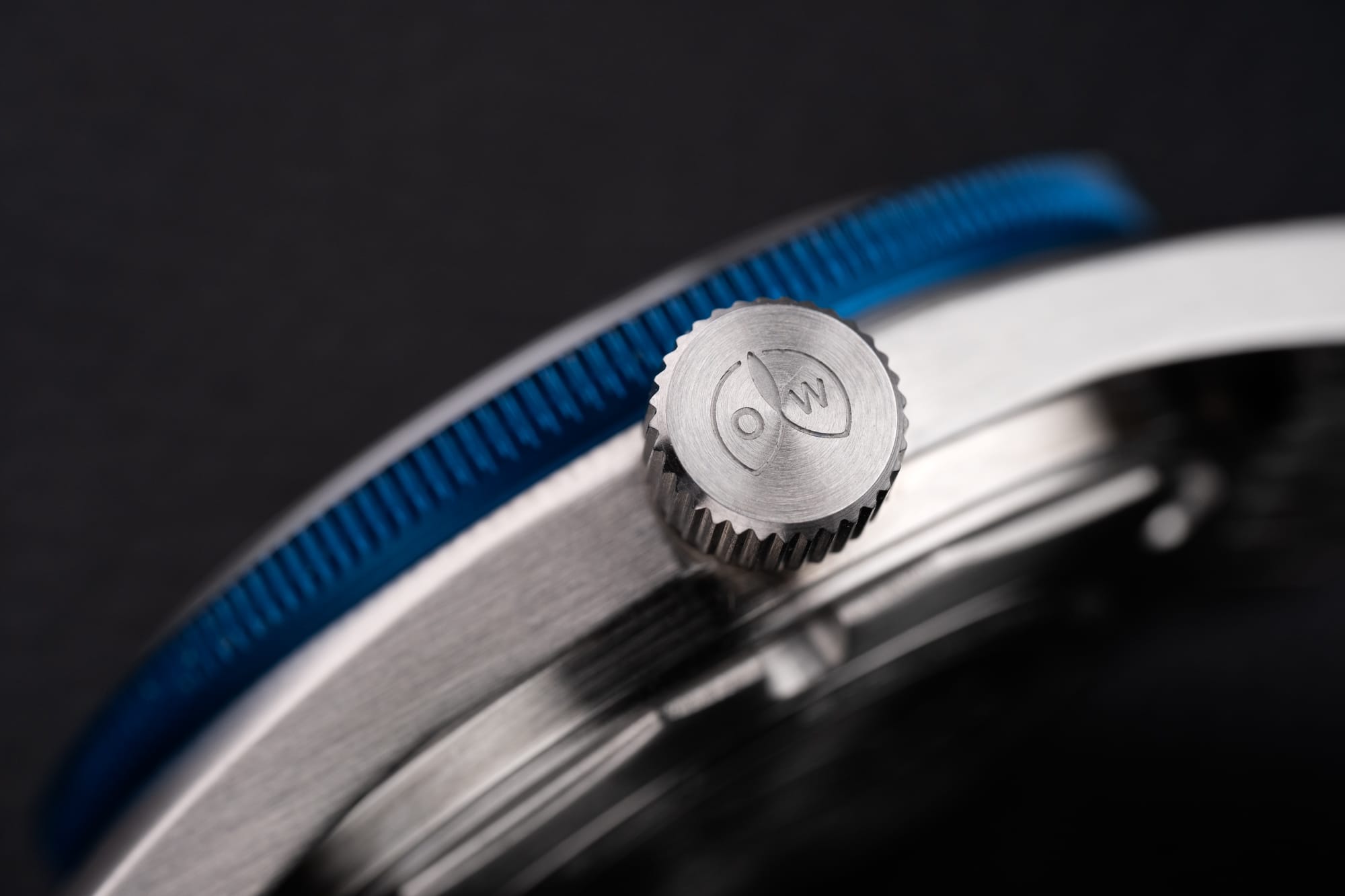
The 24-hour bezel markings are white, with Arabic numerals on the evens and ultra-slender triangles for the ‘odd’ hours. The original 1965 watch featured a lume pip at 12, but on the new MK2 it has been replaced by the ‘24’ Arabic hour marker. The branded 7mm screw-down crown is very solid feeling, and easy to grip and operate. The simple friction-fit bezel feels smooth and nicely weighted, but it’s not as satisfying to use as a click-spring or ball-bearing bezel. However, it’s more authentic to the original, so whether it was a good choice to go with it for the new Early Bird is very much subjective.
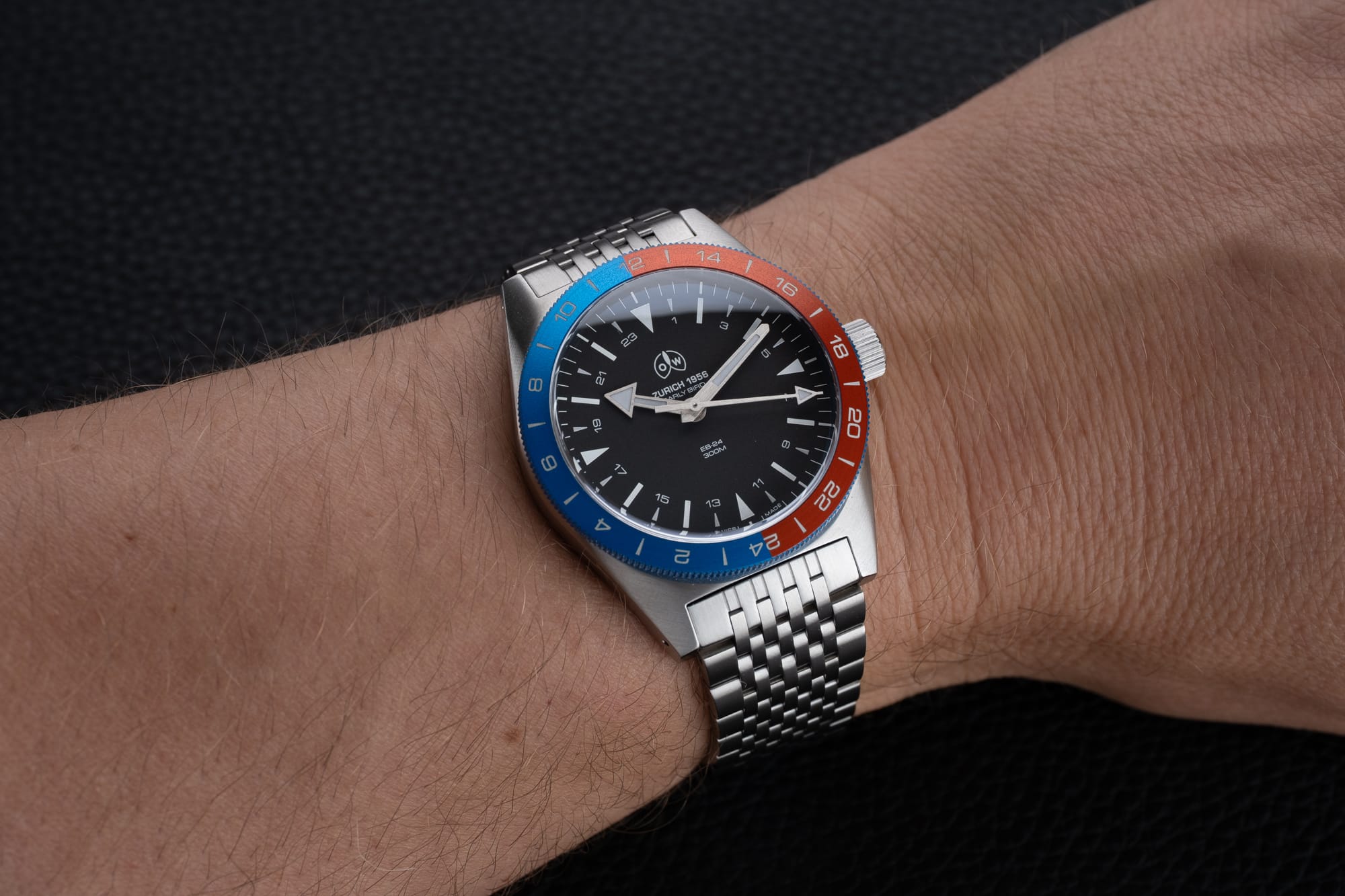
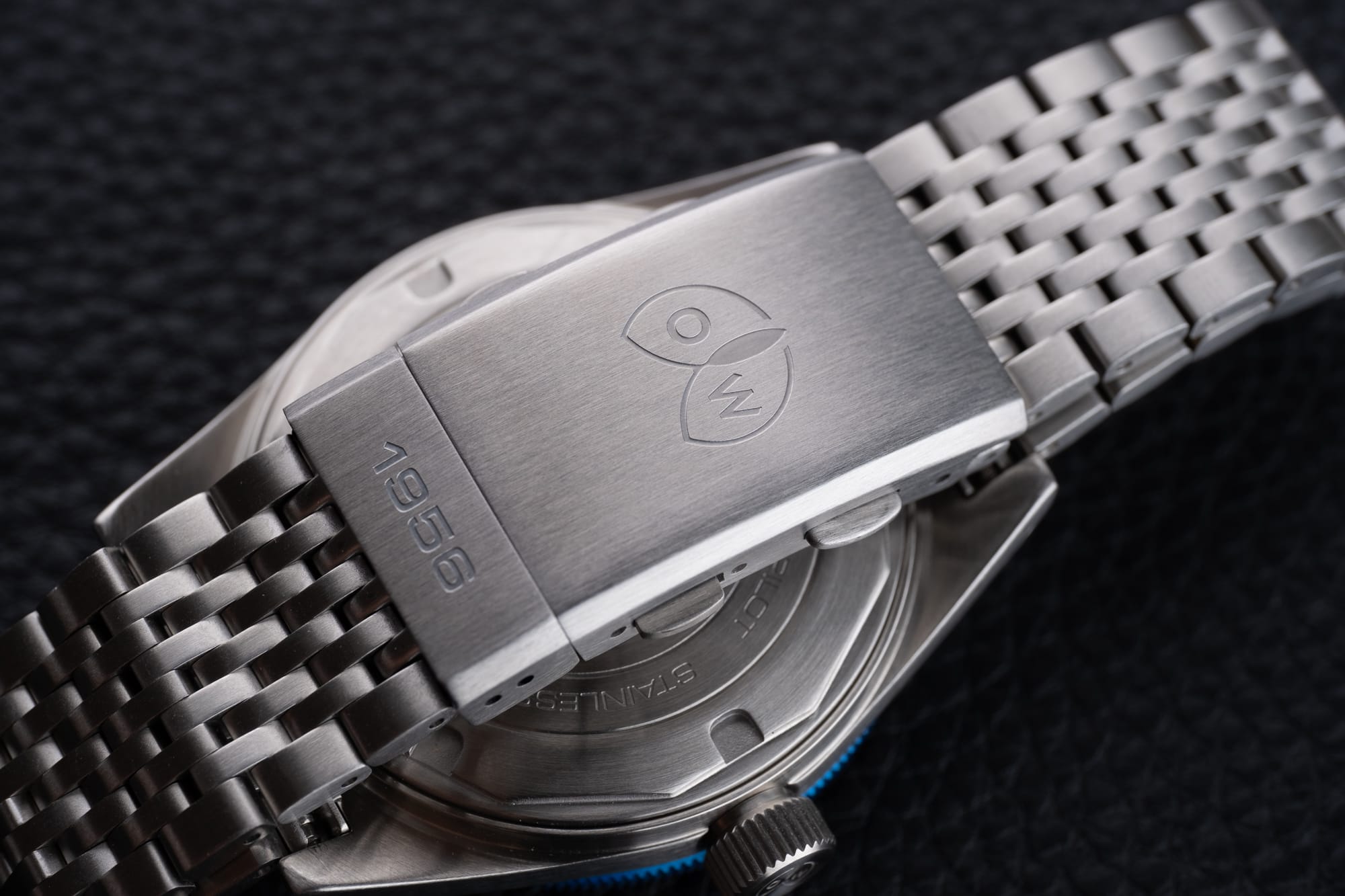
Radial brushing is used for the dial side of the case and a scratch-resistant sapphire crystal with internal anti-reflective coating protects the dial. The mid-case is attractive, very thin, and has continuously flowing lines from the case to the squared-off lugs. However, the thickness for a watch with such a high water-resistance rating must go somewhere! In the Early Bird case, it’s the caseback. This means that the watch does sit slightly on top of the wrist, rather than truly bedding down, resulting in a little bit of ‘air’ between the case and your wrist. This doesn’t hamper the overall enjoyment of the watch though, as the downturned lugs help minimise this. The radially-brushed caseback is simple with just the OW logo surrounded by some key specifications for the watch.
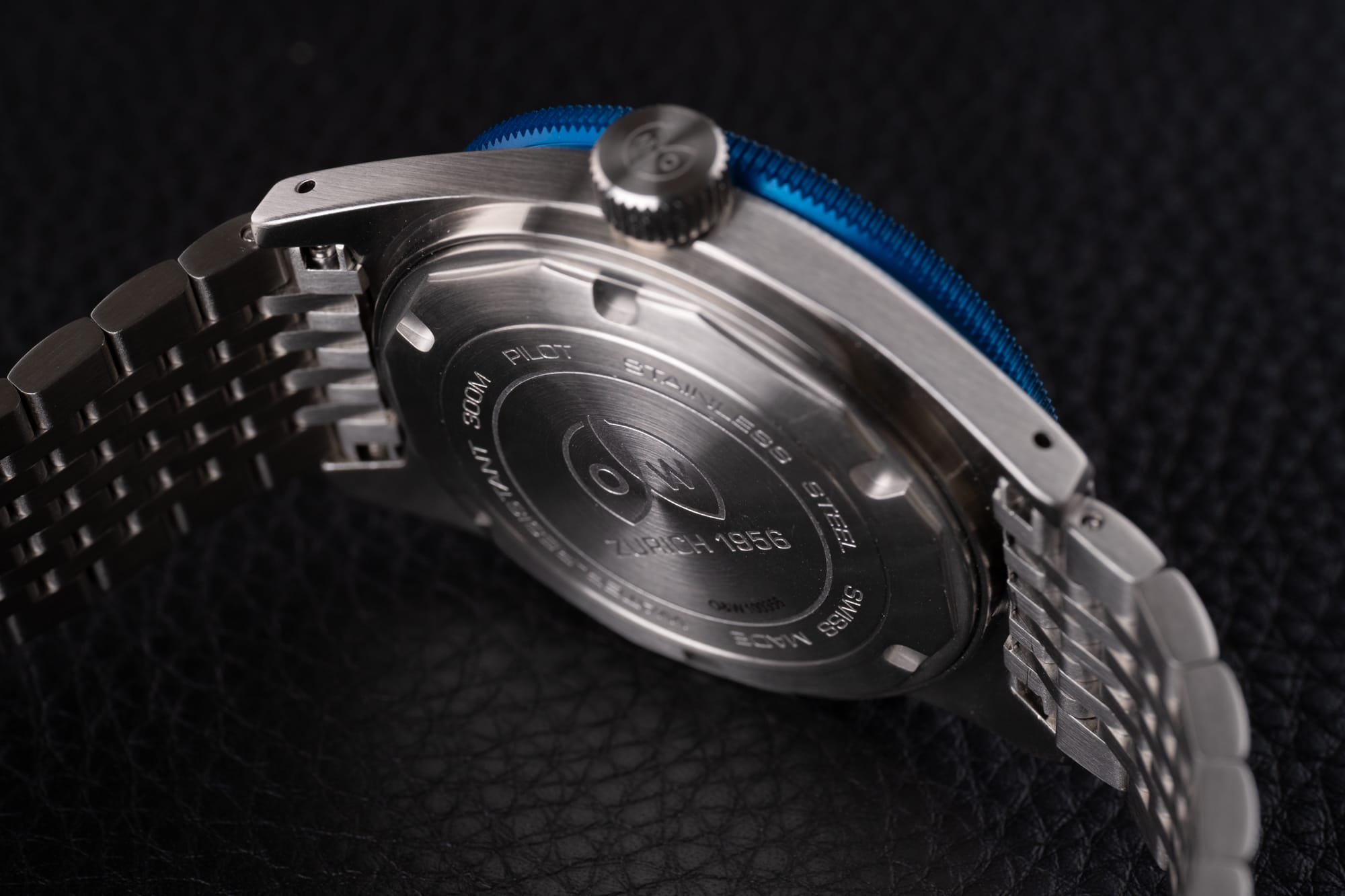
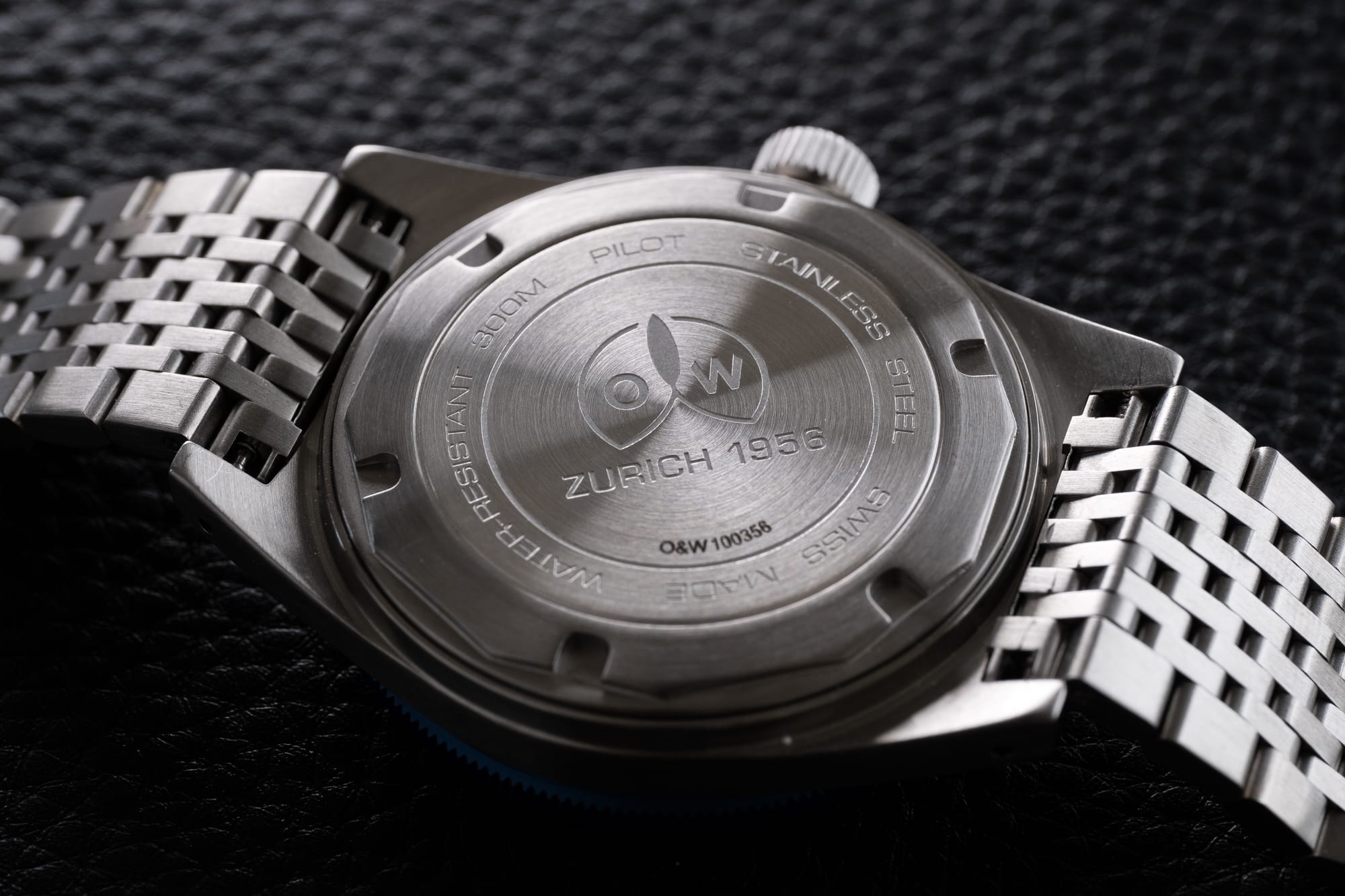
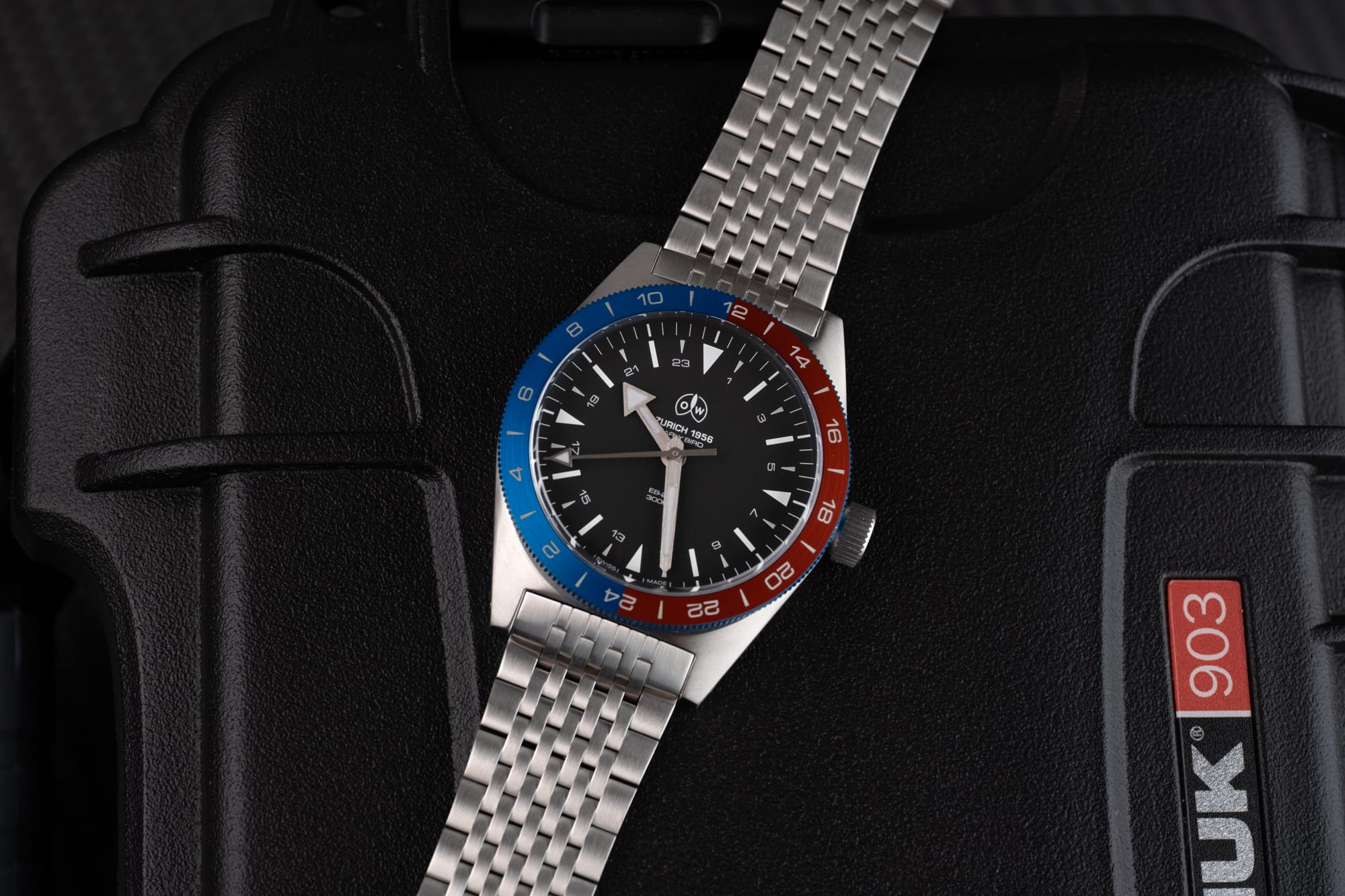
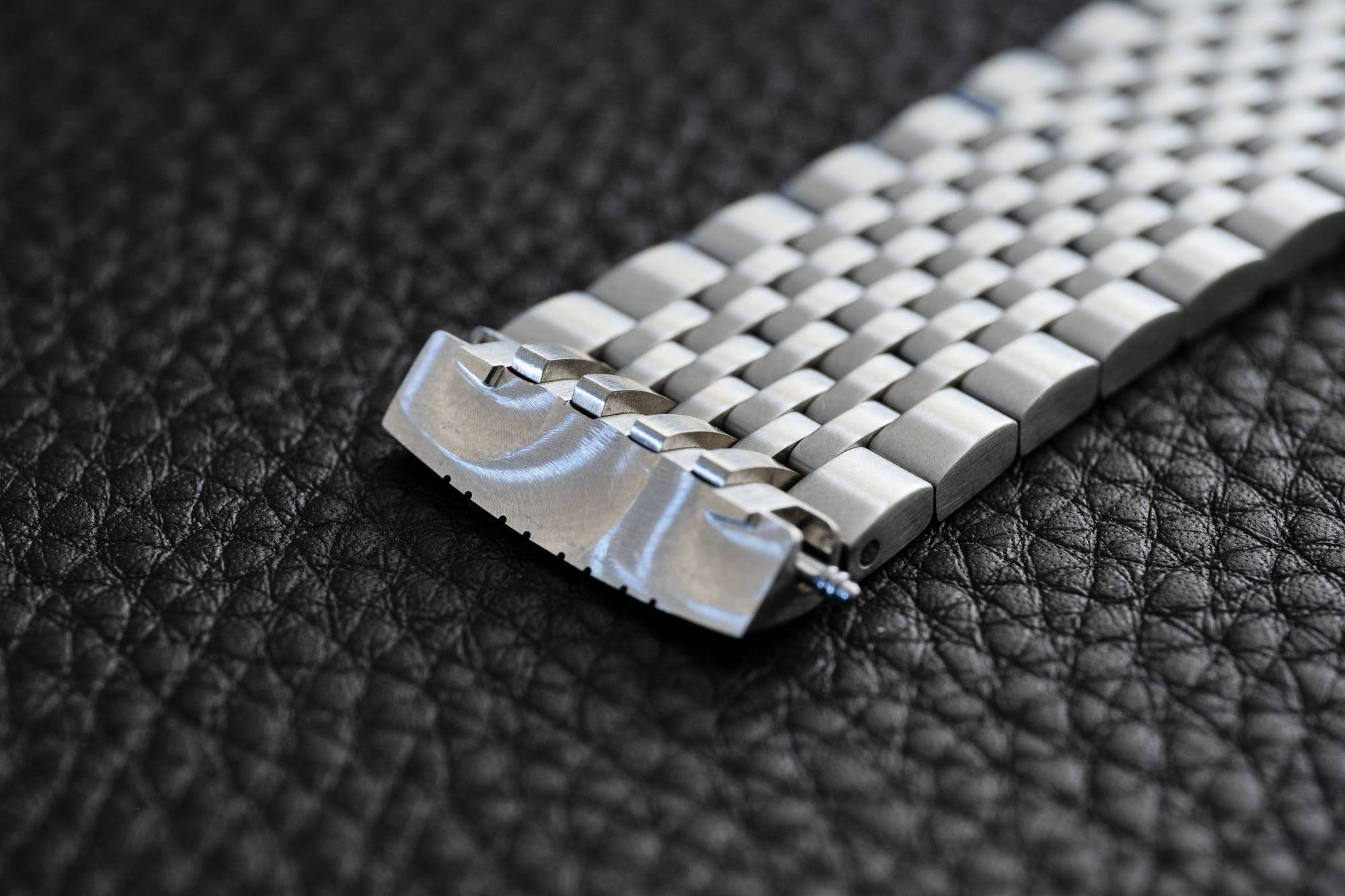
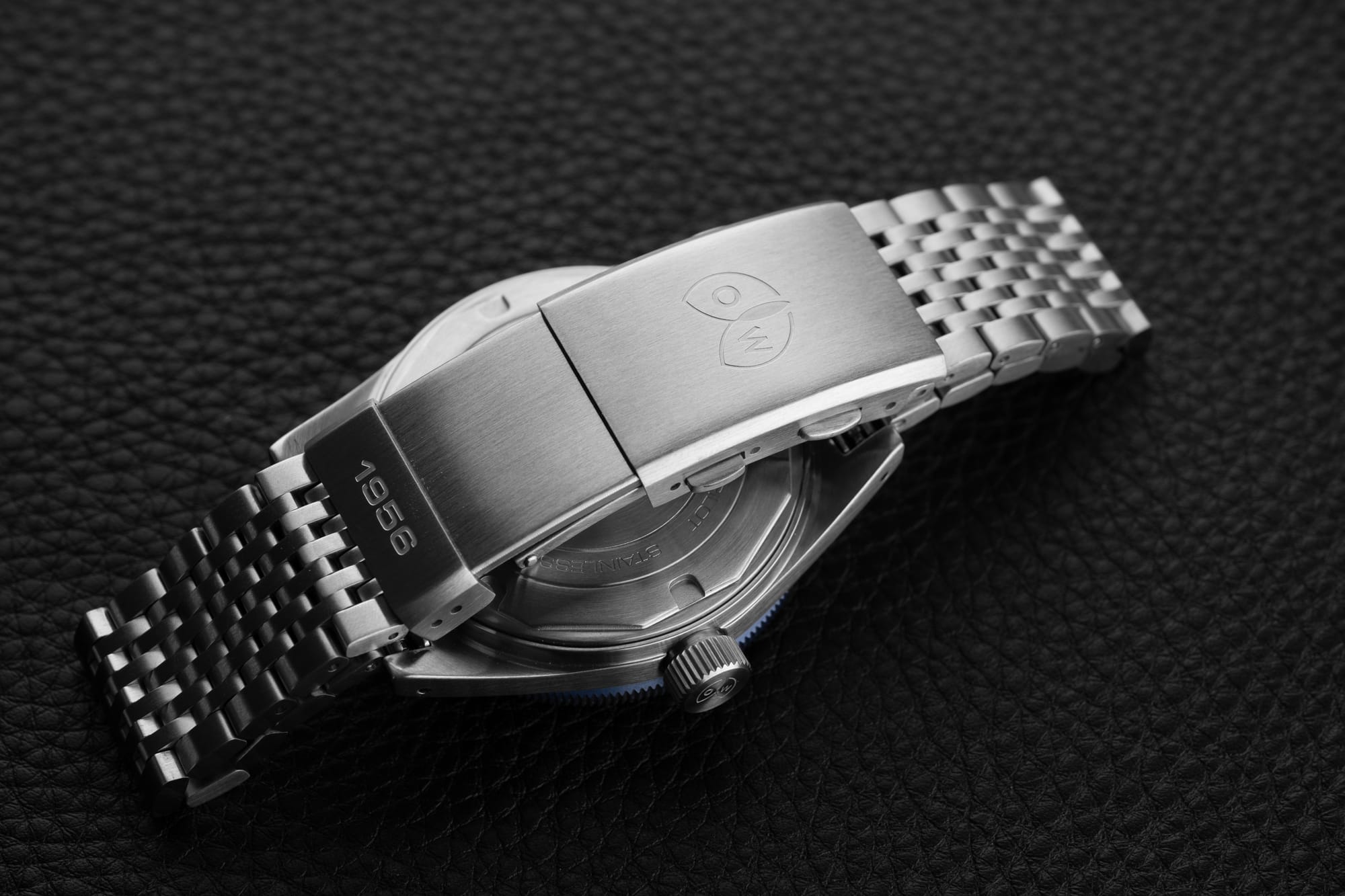
The watch bracelet looks good but isn’t quick-release and the overall quality and level of finish isn’t great for this price. It has crudely machined end-links (which admittedly you don’t see, so I’ll forgive) and an unrefined clasp with sharp edges that I found to be quite uncomfortable. The rudimentary ‘on-the-fly; micro-adjustment system, is also more akin to a diver’s extension. Thankfully, with the lugs being drilled, changing straps is relatively quick and painless. The 20mm lug width means it’ll be easy to add your own quick-release strap should you wish, and with a squared-off case between the lugs this thing will absolutely be a strap-monster. That said, colour choices will need to be carefully considered due to the very distinctive shades of red and blue used for bezel! My advice would be that, unless a bracelet is a must-have, opt for one of the leather or fabric strap choices, which from experience, should be decent quality with nice buckles. If a stainless steel bracelet is a must-have, then you have a choice of three; the 316 M-Link (nine-link) as pictured, the M-Heritage (a medium gauge brushed mesh), or the S-Type (Beads-of-Rice).
The Dial and Handset
In-keeping with the Ollech & Wajs ethos, the printed dial is practical, legible and unadorned. Hours are indicated by three different markers. Elongated triangles can be found at the four cardinal points (3, 6, 9, 12) with large rectangular batons on the ‘evens’. Small Arabic numerals in 24-hour format are paired with smaller, slender triangles at the ‘odds’, which helps keep the hour sector nice and symmetrical. The minute track runs around the perimeter of the dial, with bolder hash marks used at every ten minutes. The dial elements are all the same as on the original watch, but just in a different order. On the original watch, the Arabic numerals were at the permitter, with the minute track and other hour markers being inwards of the 24-hour scale. The brand’s propeller monogram, ‘Zurich 1956’ and ‘Early Bird’ is printed above the pinion at 12 o’clock, balanced by ‘EB-24’ and ‘300m’ below the pinion at six. Finally, ‘Swiss Made’ is proudly printed above the minute track at six. The hour hand is less prominent than on the original watch but still features a large arrowhead, and unlike the MK1 also benefits from a lumed shaft. The original dauphine minute hand has been swapped out for a more prominent tapering baton with pointed end and lume strip that spans three quarters of its length. The arrowhead seconds hand has a syringe style tip, whereas its predecessor had a round lume pip.
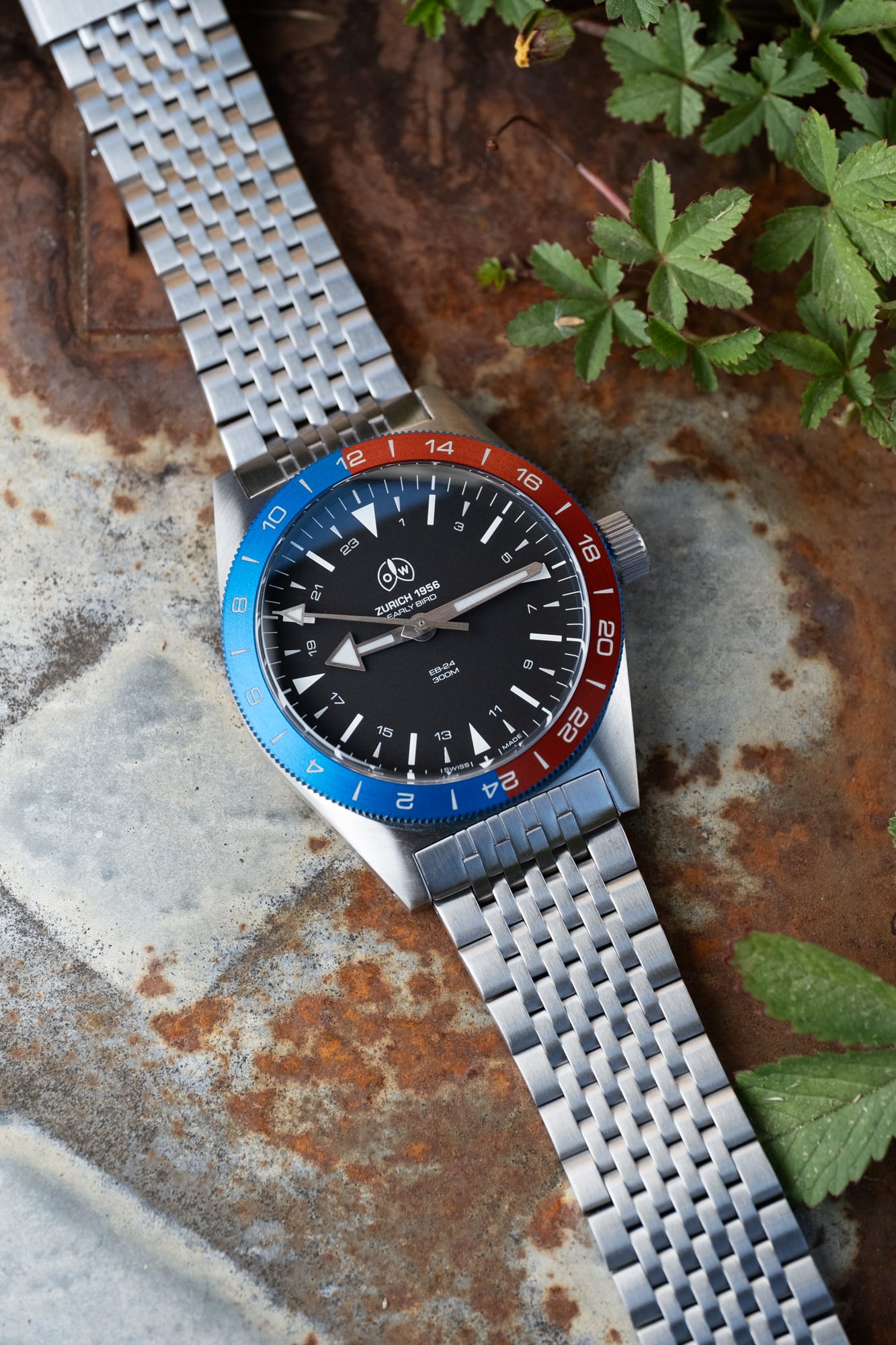
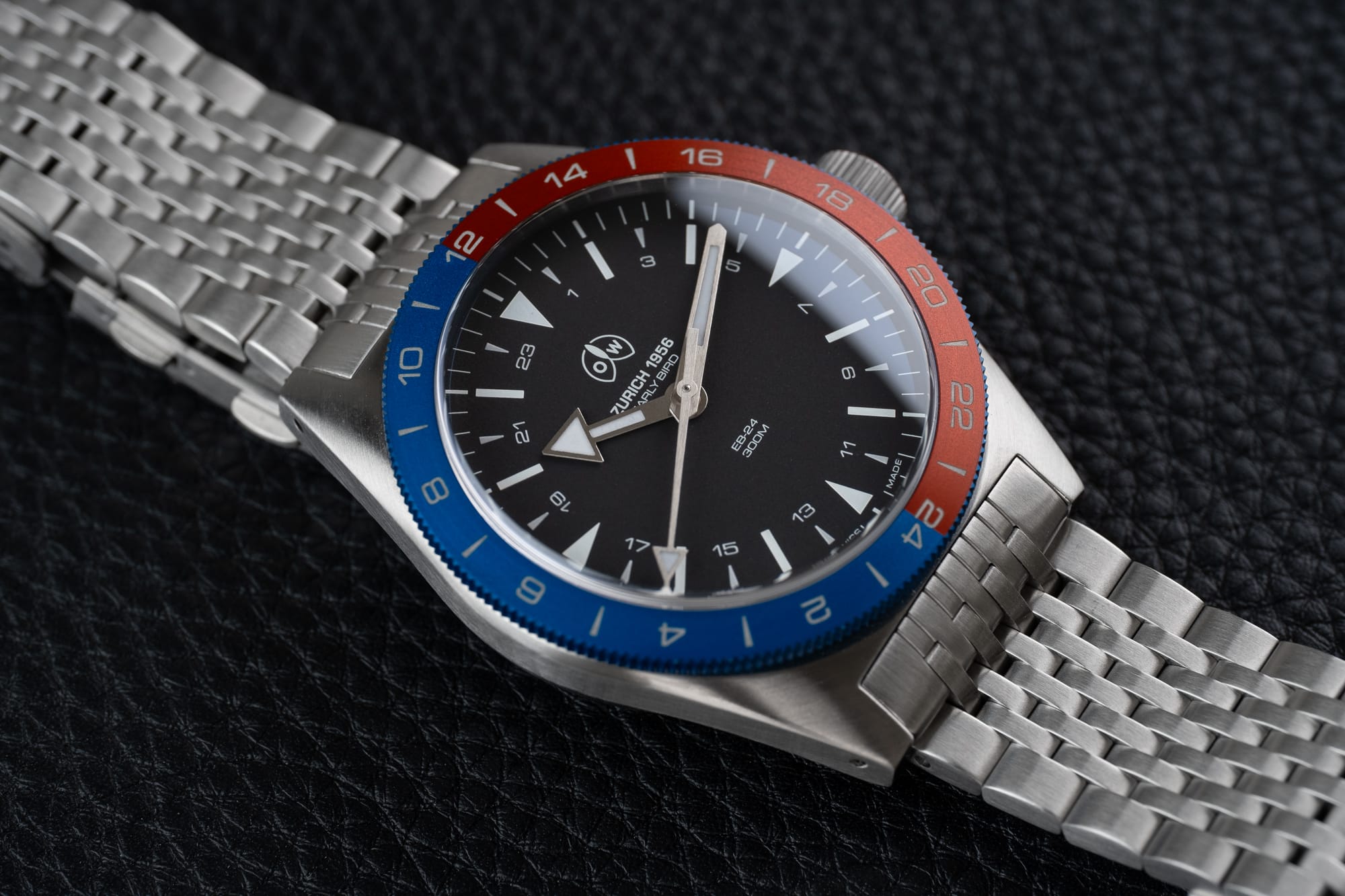
To aid nighttime viewing, hour markers and all hands glow thanks to generous areas of white Super-LumiNova. The lume is adequate initially, but does fade quite quickly. As with all OW watches that I’ve seen, the domed sapphire crystal that protects the dial is impressively thick. But common to most watches with domed sapphire crystals, daytime legibility is okay, rather than exceptional, since the domed shape reflects more of the world around you. An improved anti-reflective coating would help here, or maybe even a double-sided AR.
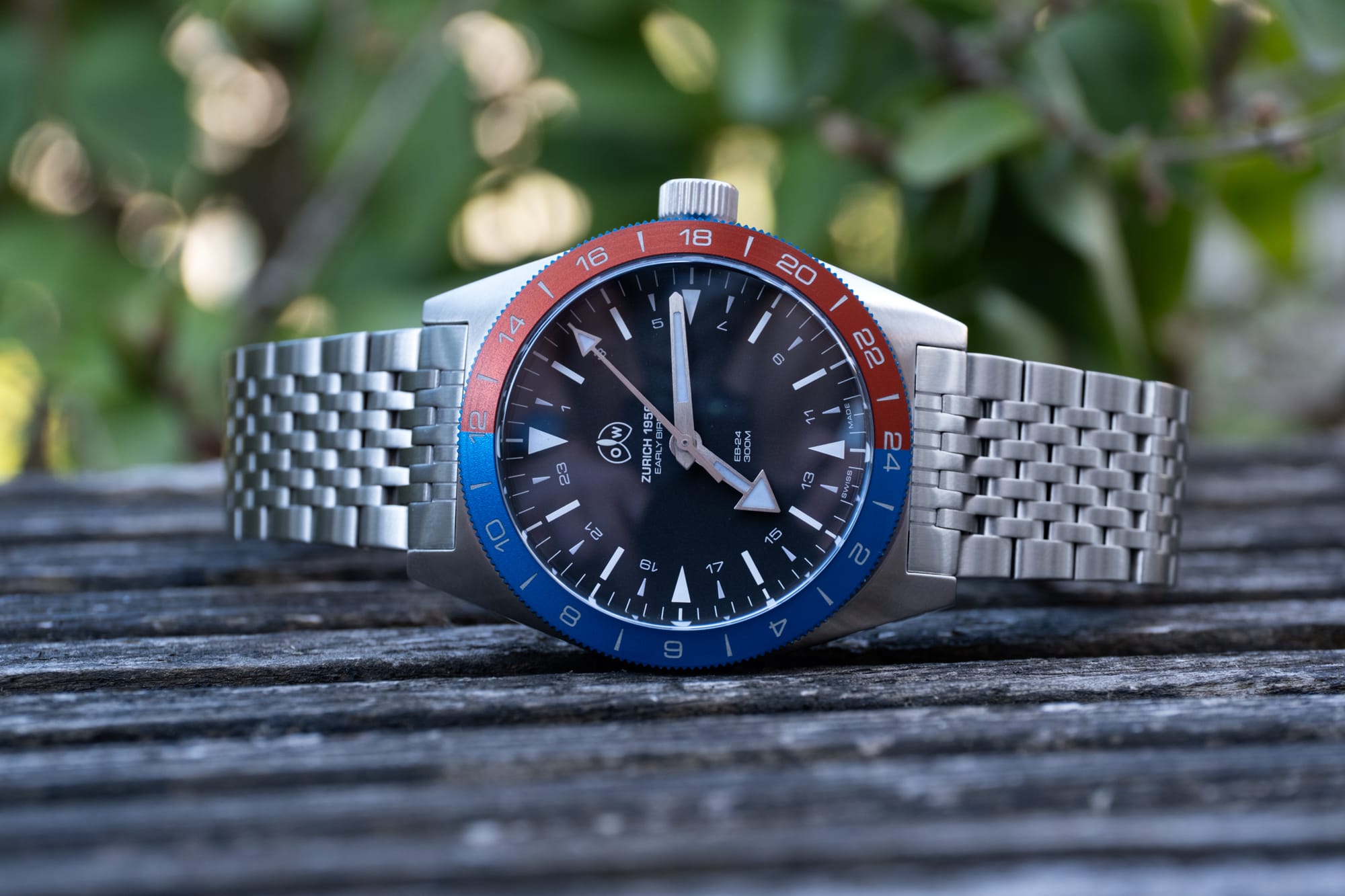
If you’re not used to reading the time on a 24-hour dial, it takes a bit of getting used to and I didn’t find it very intuitive. I had to frequently check the numbers on the dial or bezel to confirm the time. But then, I guess that’s the point. If you’re buying this watch it’s likely that either you’re already used to reading a military dial, or you’ve bought it because you want something unique in your collection and it won’t be your only watch.
The Movement
The original Early Bird was fitted with a FHF cal. 72 manual-winding movement with 17 jewels with an 18,000 v/ph. beat rate. The reinterpretation (like all of Ollech & Wajs’ non-chronograph watches) is fitted with a Soprod Calibre, this time a bespoke Soprod C-125 automatic GMT. Yes, you heard right. Although this watch isn’t a GMT watch as such, the GMT wheel is used for the hour hand (instead of a GMT hand), with the hour wheeland quick-set function being removed. Unfortunately, this means that there is a ghost position on the crown, but without using a custom calibre at considerable cost, I guess there is no other way to do it. The 25-jewel movement has a stop-seconds allowing you to set the time precisely, and beats at 4Hz/28,800 vibrations per hour. The 42-hour power reserve is modest, but adequate for most. The movement also has Incabloc shock protection and a bespoke OW Zurich 1956 rotor with custom screws. It’s assembled for OW and adjusted in three positions, giving a very respectable accuracy of -7/+7 seconds per day. Ollech and Wajs claim that they scrutinised and tested many movements from different manufacturers for durability and performance before choosing to fit Soprod calibres, so buyers can have a level of confidence here.
Final Thoughts On The Ollech & Wajs Early Bird
The Early Bird is a very interesting reissue, but I do think that it’s probably one that will be appreciated most by hardcore OW or military enthusiasts.
It’s a very solid, well-proportioned watch with tool watch credentials, that looks good to boot. It’s Swiss made, houses a regulated Swiss automatic movement and with a quirky 24-hour dial and ‘pepsi-esque’ bezel, it’s pretty unique in terms of what it has to offer. Add in a truly impressive 300 meters of water resistance and I struggled to think of a direct competitor (but do let us know in the comment if you can!). For these reasons, this could be the watch that’s been missing from your collection!
However, the poor bracelet and clasp continue to be Ollech & Wajs’ Achilles Heel, and you could say it’s a bit of a ‘plain Jane’ watch. What you see in the photos is what you get! Although distinctive, the case is not complex, the finishing is minimalist, the dial is printed and there is little in the way of expensive materials or innovative engineering. Priced at 1956 CHF, it does have you questioning where some of the money went and in today’s ultra-competitive market, unless you’re a hardcore OW fan (and there are plenty of them!), you might find better value for money elsewhere. On the flipside, this understated, no-frills approach doesn’t make it a bad watch, it just depends on what you’re looking for. Ollech & Wajs aren’t cheap watches to make, far from it. Their ethos is to assemble the watch in Switzerland and to invest a lot of money with local Swiss-Jura suppliers. And labour costs are much higher in Switzerland, that’s just fact. Also, unlike most brands, they probably spend more on the things you can’t see such as overbuilding for water resistance, the crown assembly, movement choice and movement regulation. So, if you’re looking for an authentic and unpretentious, 24-hour dial watch that was originally designed as a hardy tool for aviators, this could be a great watch. After all, there’s got to be a reason OW supply so many military personnel and emergency services, those that place themselves and their kit in harm’s way, right?!