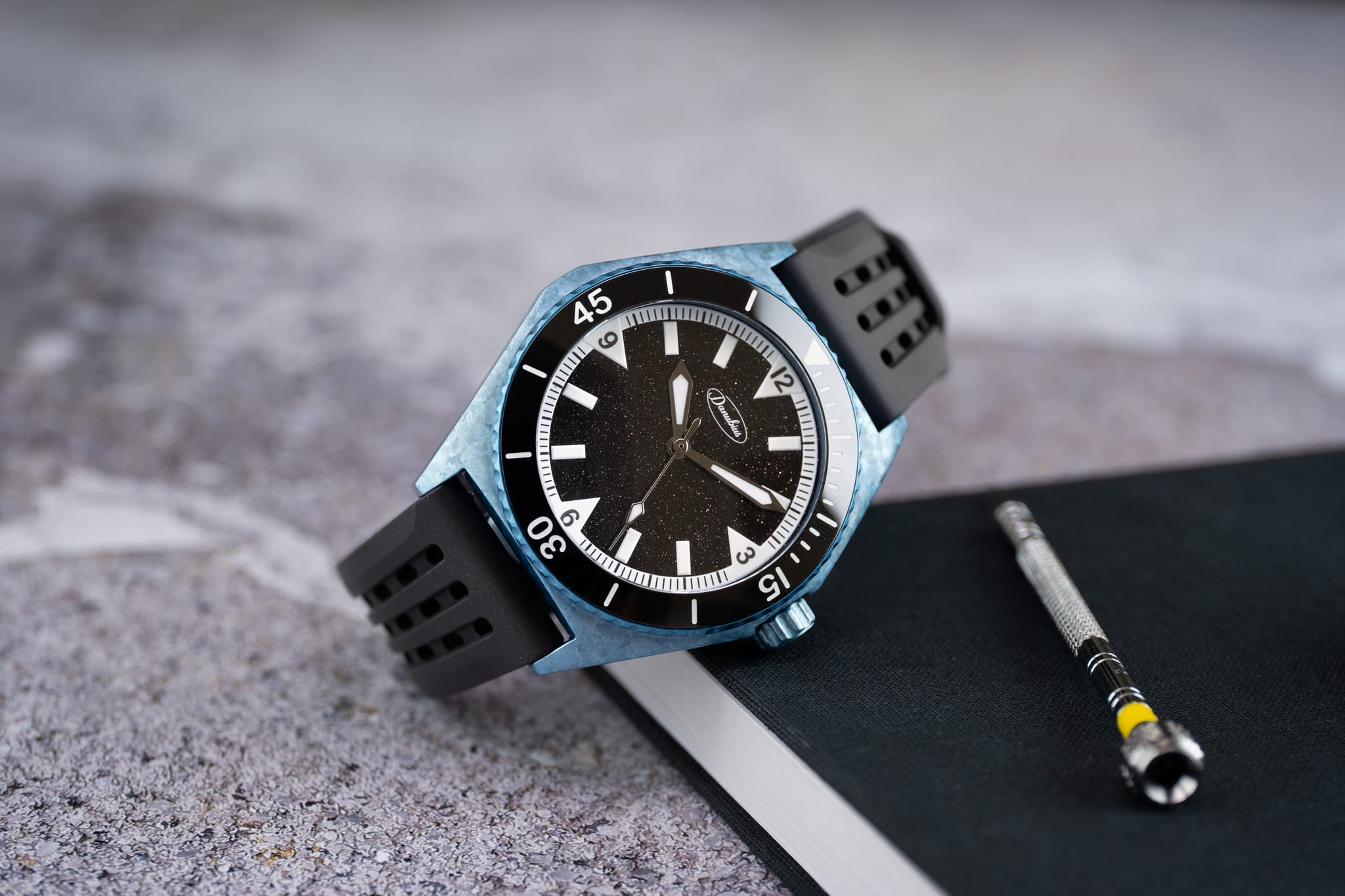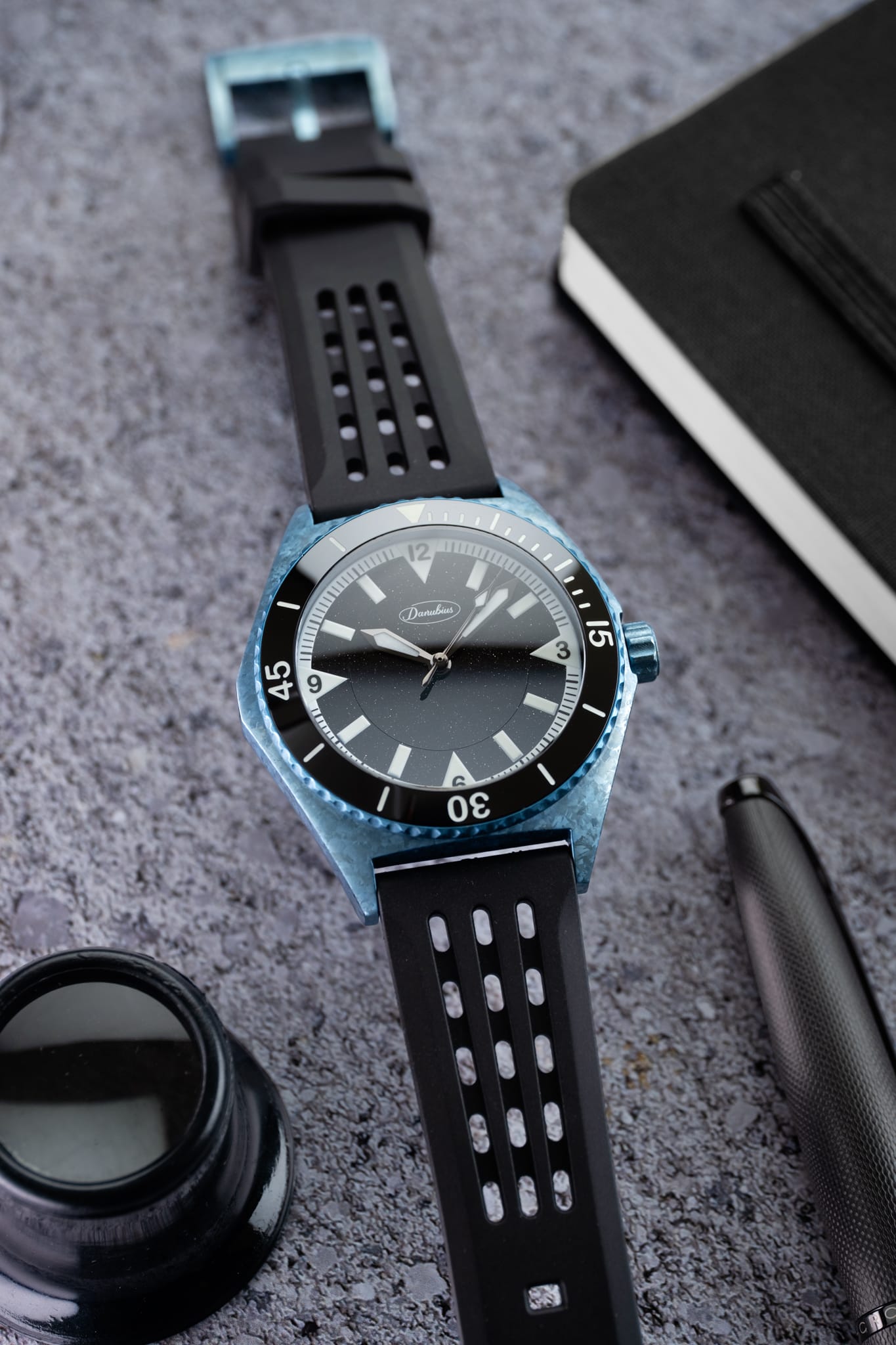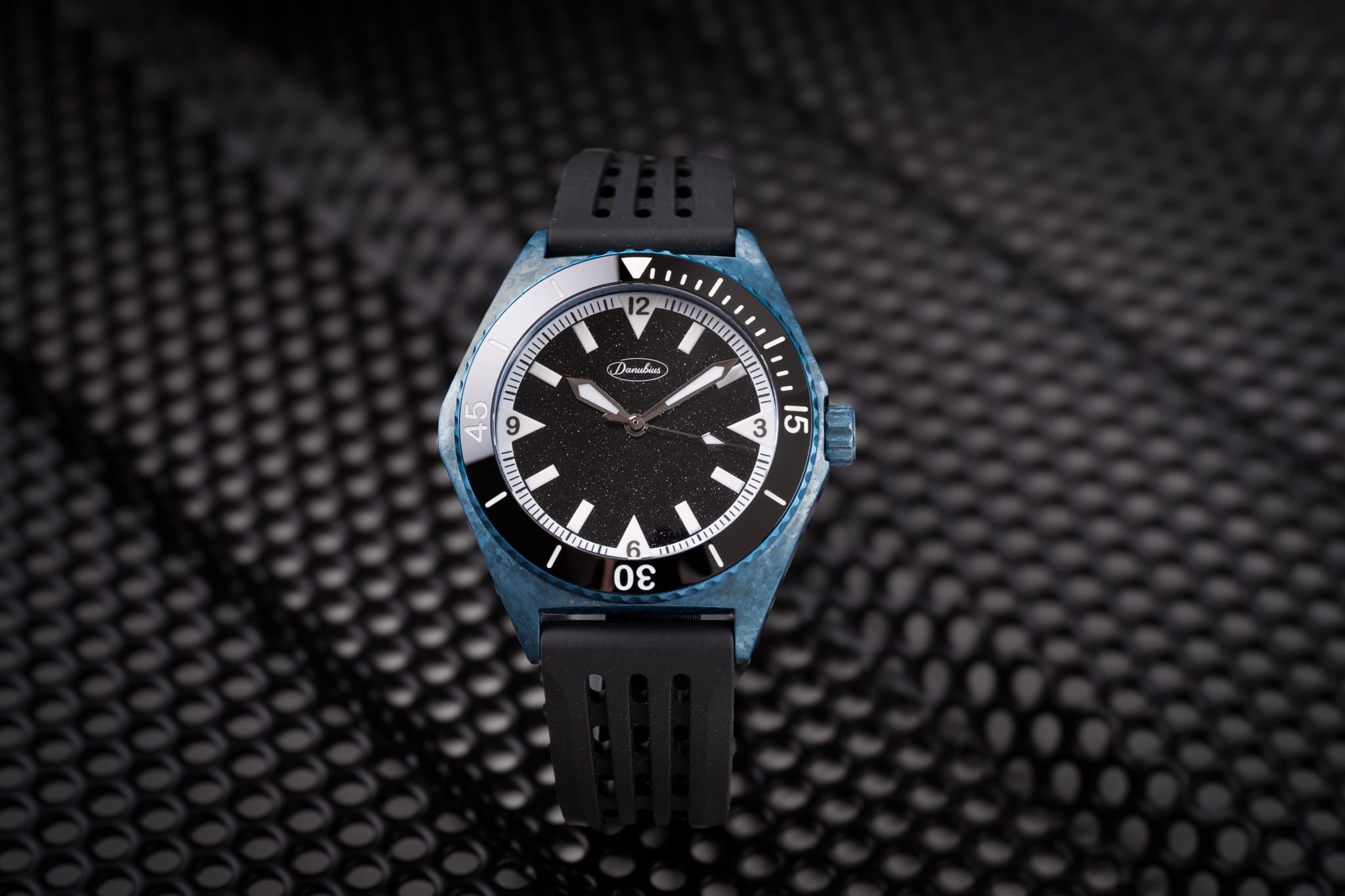
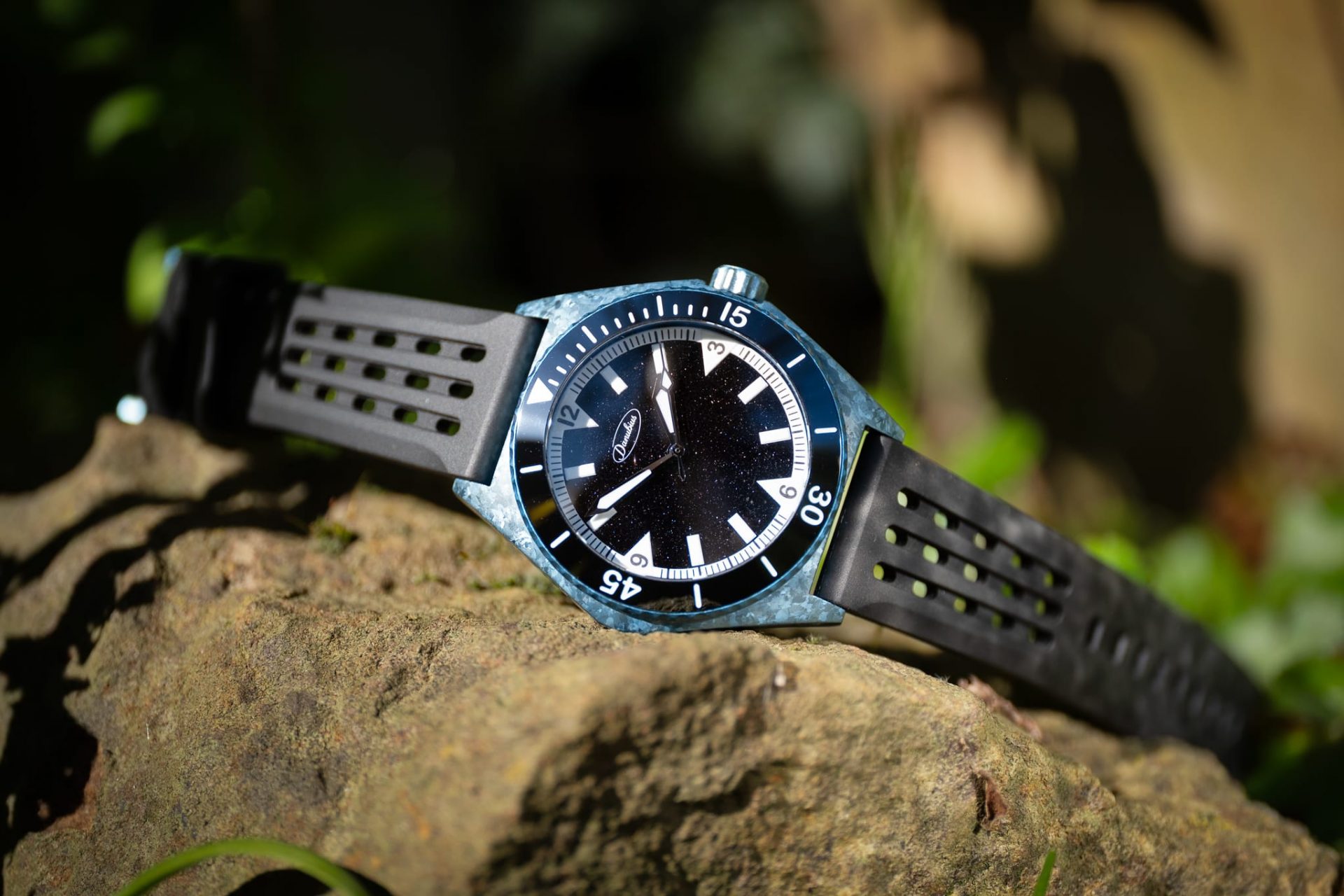
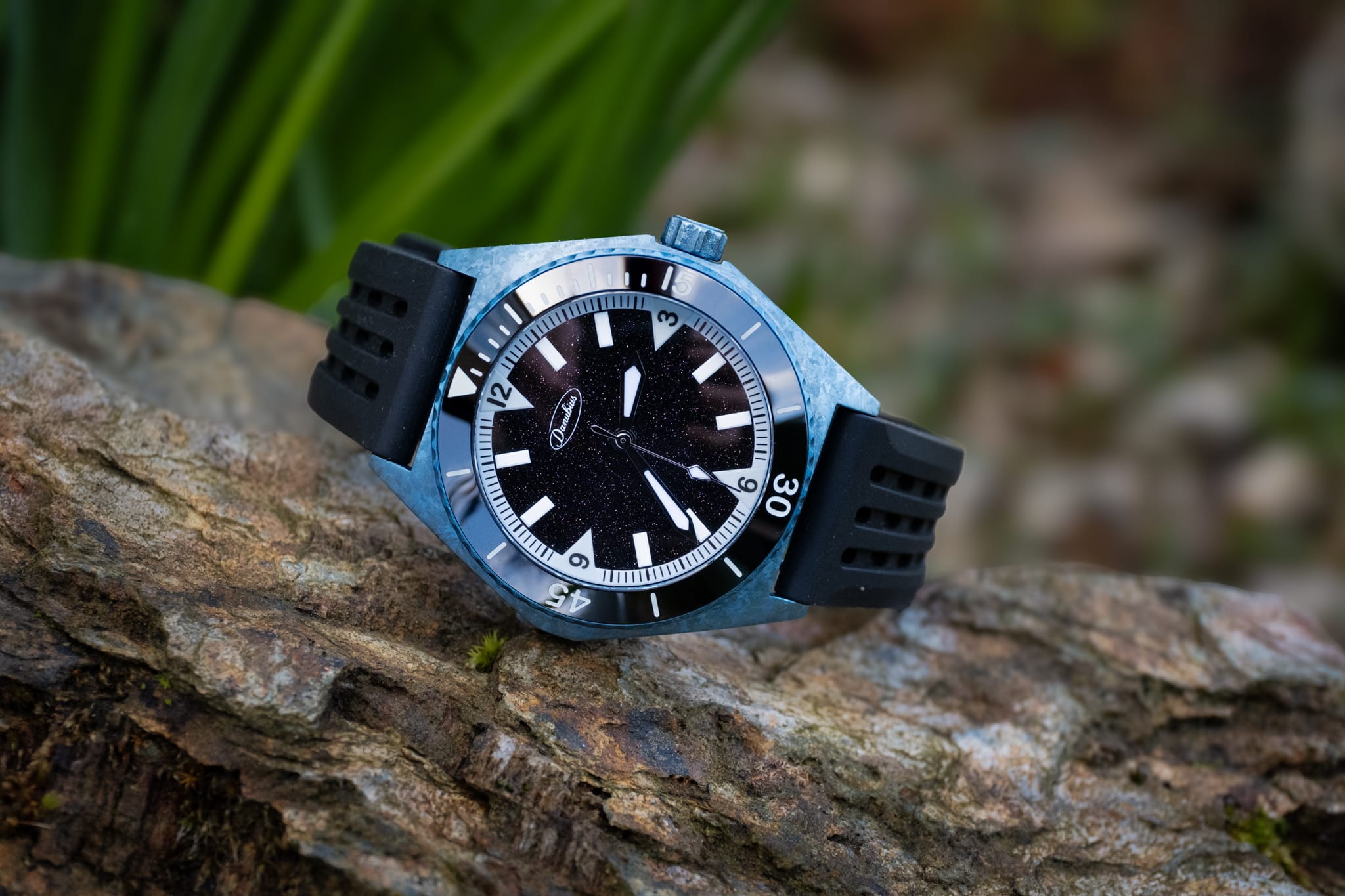
Bored of dials? Then let’s talk watch cases! In recent years the market has been flooded with watches that have dials made from exotic materials such as semi-precious minerals, stones or meteorite. What’s less common is to find brands using specialist metals for dials, such as crystallised titanium. Even rarer still is to find watches using crystallised titanium for the construction of an entire watch case. In fact, the new Danubius Black Sea could be the only dive watch in the world using this intriguing case material. A brave move from a new brand, but I have a feeling other watch brands may follow!
Brand and Collection Overview
Danubius, is Latin for Danube, so the brand name is fitting for a new microbrand based out of Romania. Headed up by Alin, a watch collector and a man obsessed with materials who had ticked off most of his wish list but felt that one thing had been missing. Up until now, no one had tackled using crystallised titanium as a case material. Being disillusioned from having approached other brands to execute his vision to no avail, he felt compelled to take on the mission himself, so he began work on the Black Sea in 2024. Fast forward to March 2026 and after many challenges trying to find the right manufacturing partner and dozens of rejected samples, his concept is coming to fruition in the form of the Black Sea.
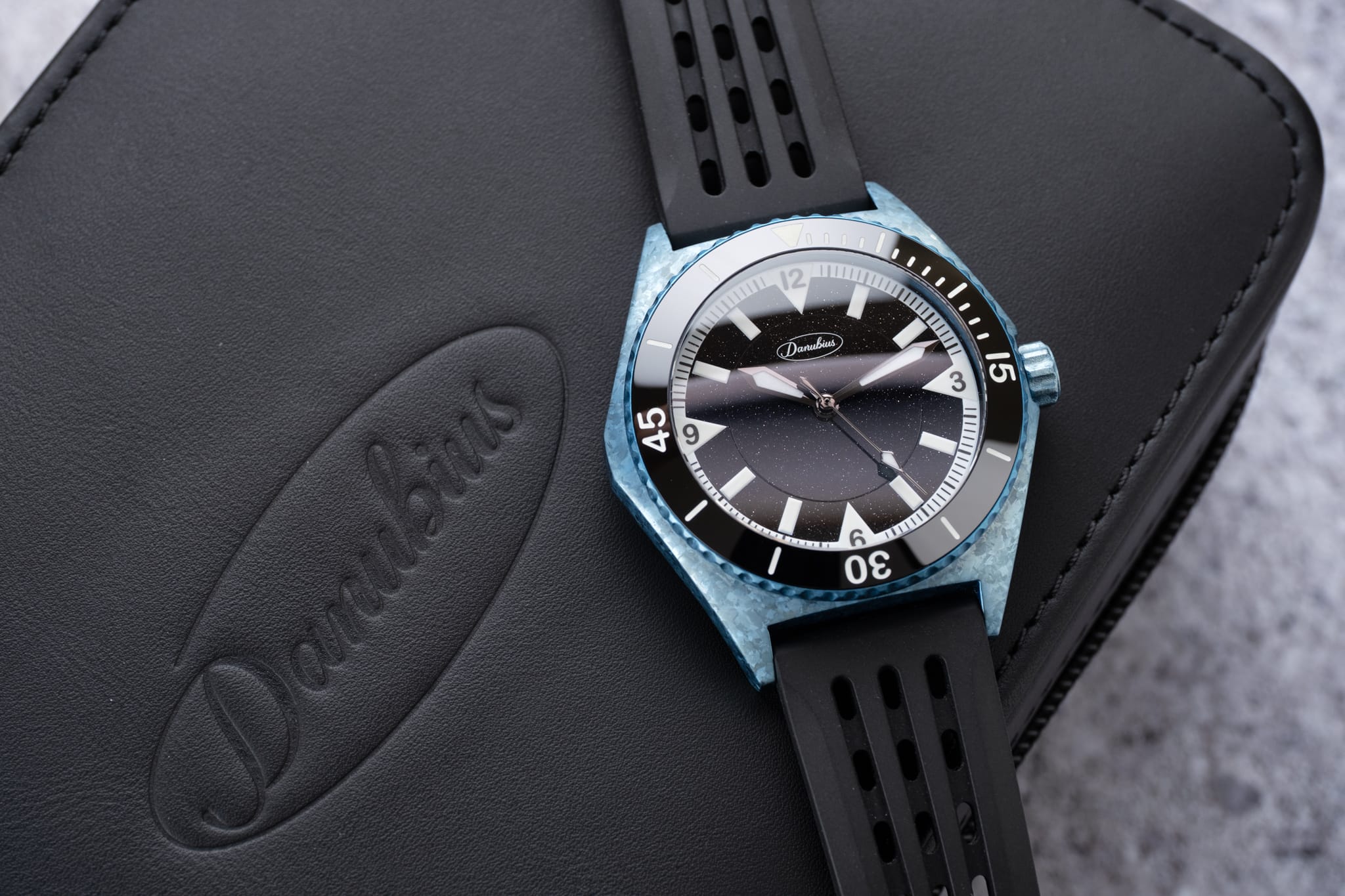
The 40mm Black Sea dive watch is available in two different dial options, Musou Black for near total light absorption, or Aventurine with its shimmering mineral depth. Both are fitted with a Swiss automatic movement and have a launch price of €950, rising to €1300 once the pre-order window closes. Included in the package is a useful black three-watch presentation box/storage case with blue interior, the design of which will be updated to include a pouch for straps and the warranty card. Warranty period is 24-months and watch assembly is described as ‘global’. The watch launches on 31 March via the Danubius website, with delivery of watches to customer expected in Q1 of 2027.
Unique Materials
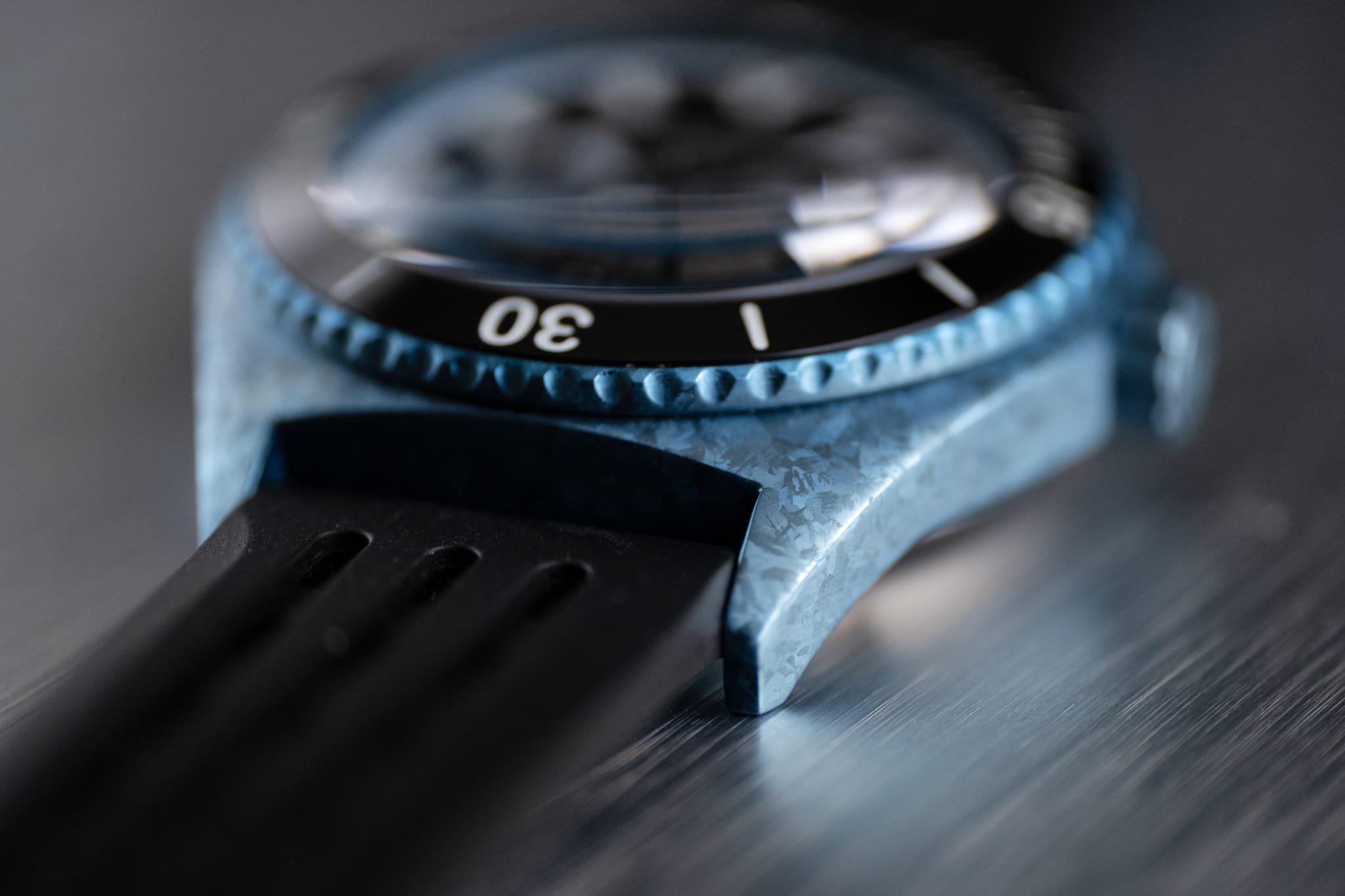
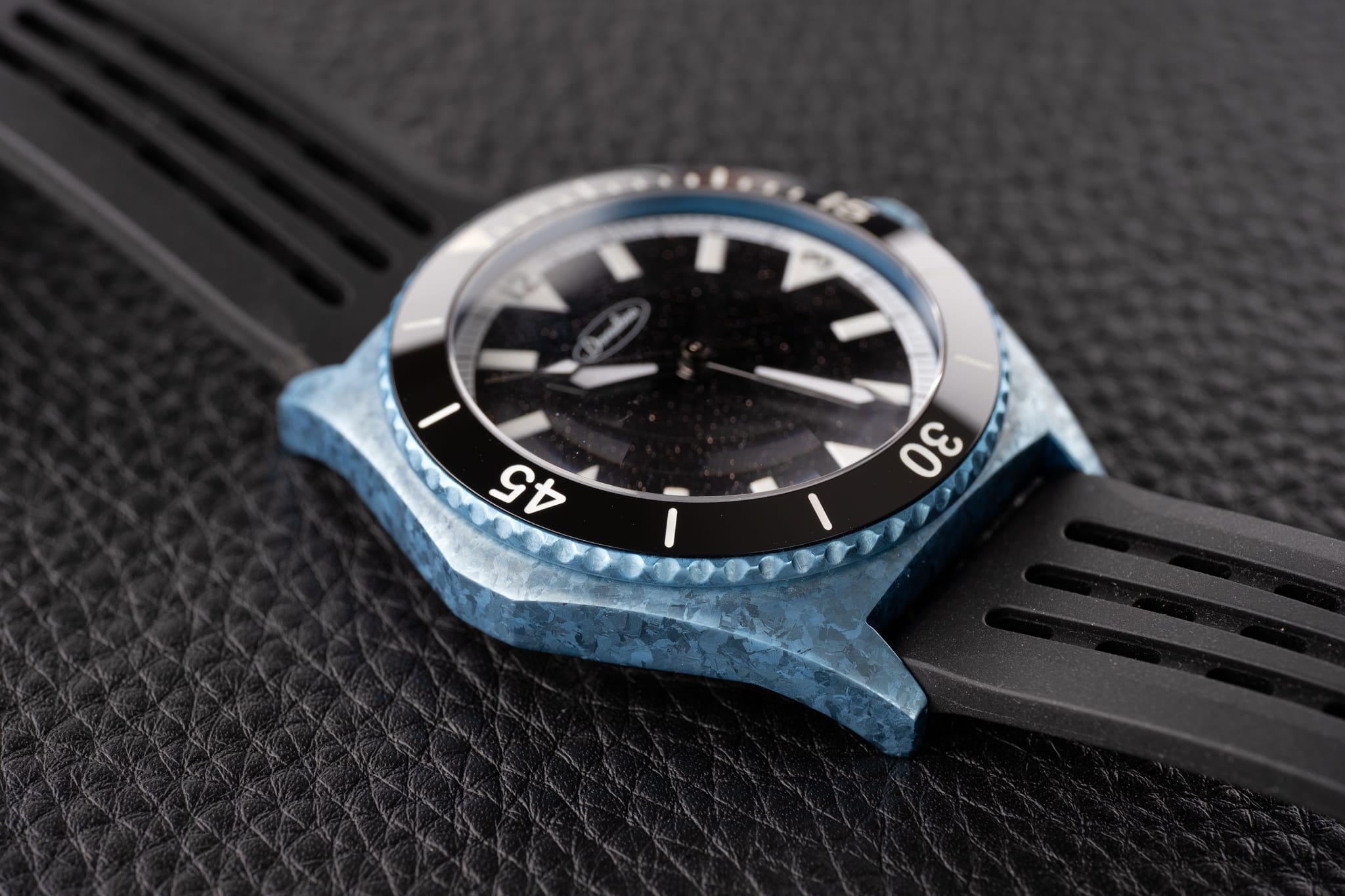
Unusually for a watch, the star of the show here is the case, which is crafted from crystallised titanium, a material I’ve never encountered before. Crystallised titanium is achieved through a fascinating and complex process that involves specialist equipment, expert skills and patience. The crystal effect is achieved through a slow cool down of the furnace and pressure, which changes the atom structure of the molten metal as it cools, resulting in the formation of dendrites (or crystals), the appearance of which are controlled through the precise rate of cooling. Subsequently, in the case of the Danubius Black Sea, the crystallised titanium is anodised which enhances the natural crystalline structure and gives the watch its blue colour.
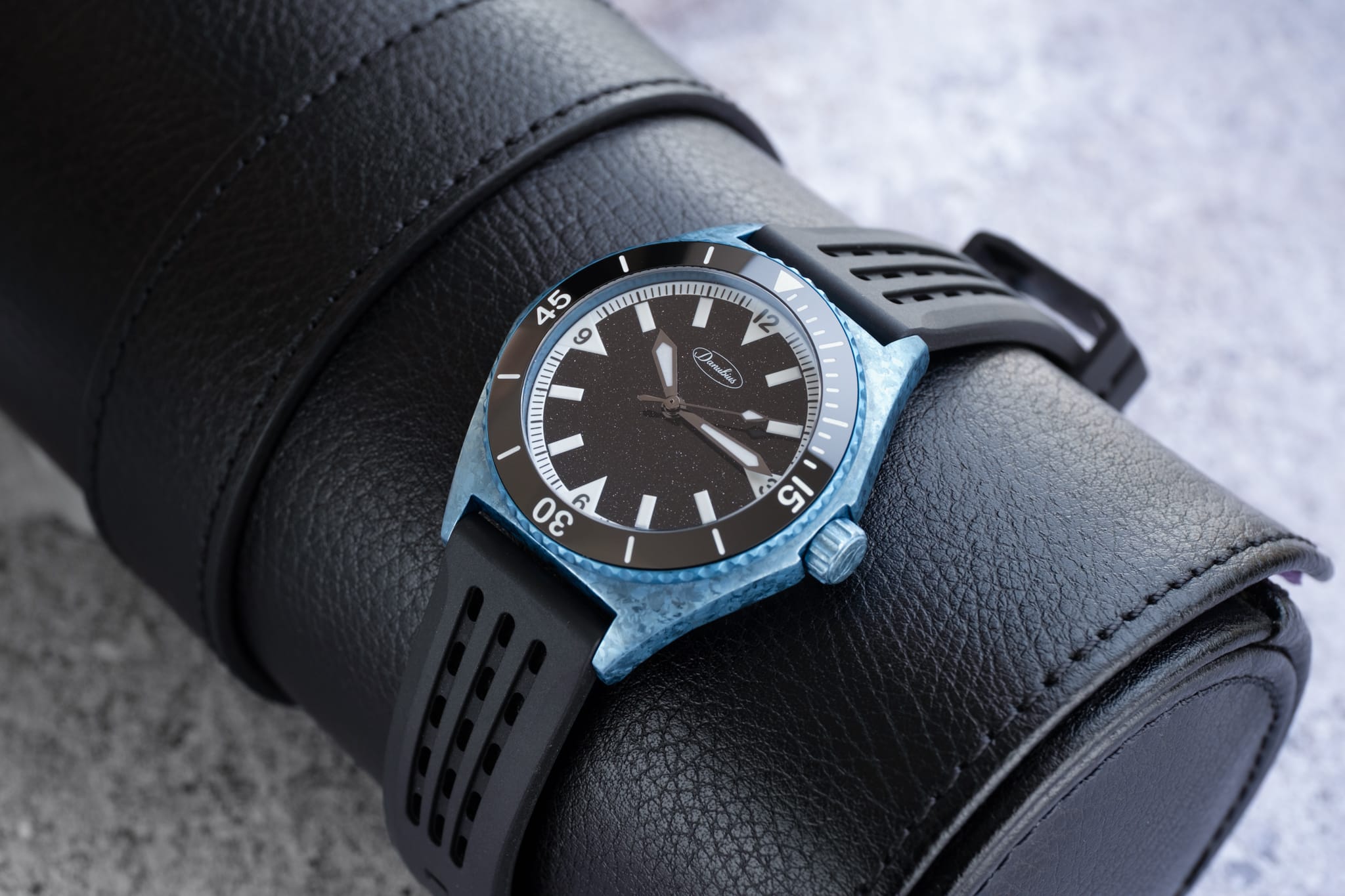
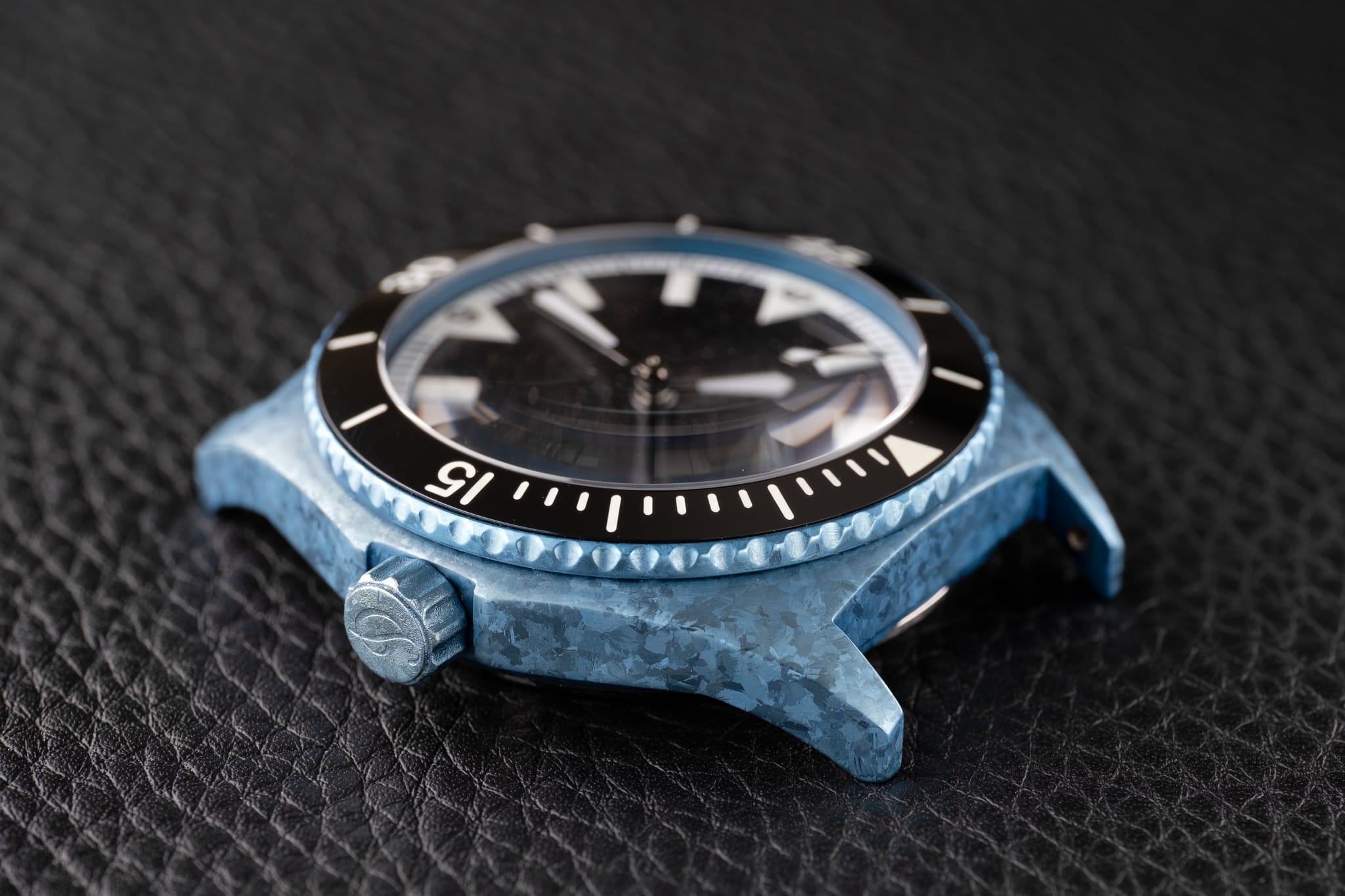
And the result is a thing of beauty! The appearance is somewhere between that of a frosted car windscreen and meteorite (but with less elongated striations). It has a semi-matt appearance that’s smooth to touch but has lots of metallic light play thanks to the random pattern of the crystals. It’s really very cool, and unlike ceramic or PVD, each watch is completely unique. No two cases will ever look the same!
But beauty is only half the story, as not only does the Black Sea benefit from the strength, lightness and anti-corrosive qualities of titanium, but unlike PVD coated steel the crystalised and anodised titanium won’t chip or flake, as it’s not merely a coating or paint. Crystallised titanium is also slightly tougher even than standard Grade 2 titanium.
Case Geometry and Wearing Experience
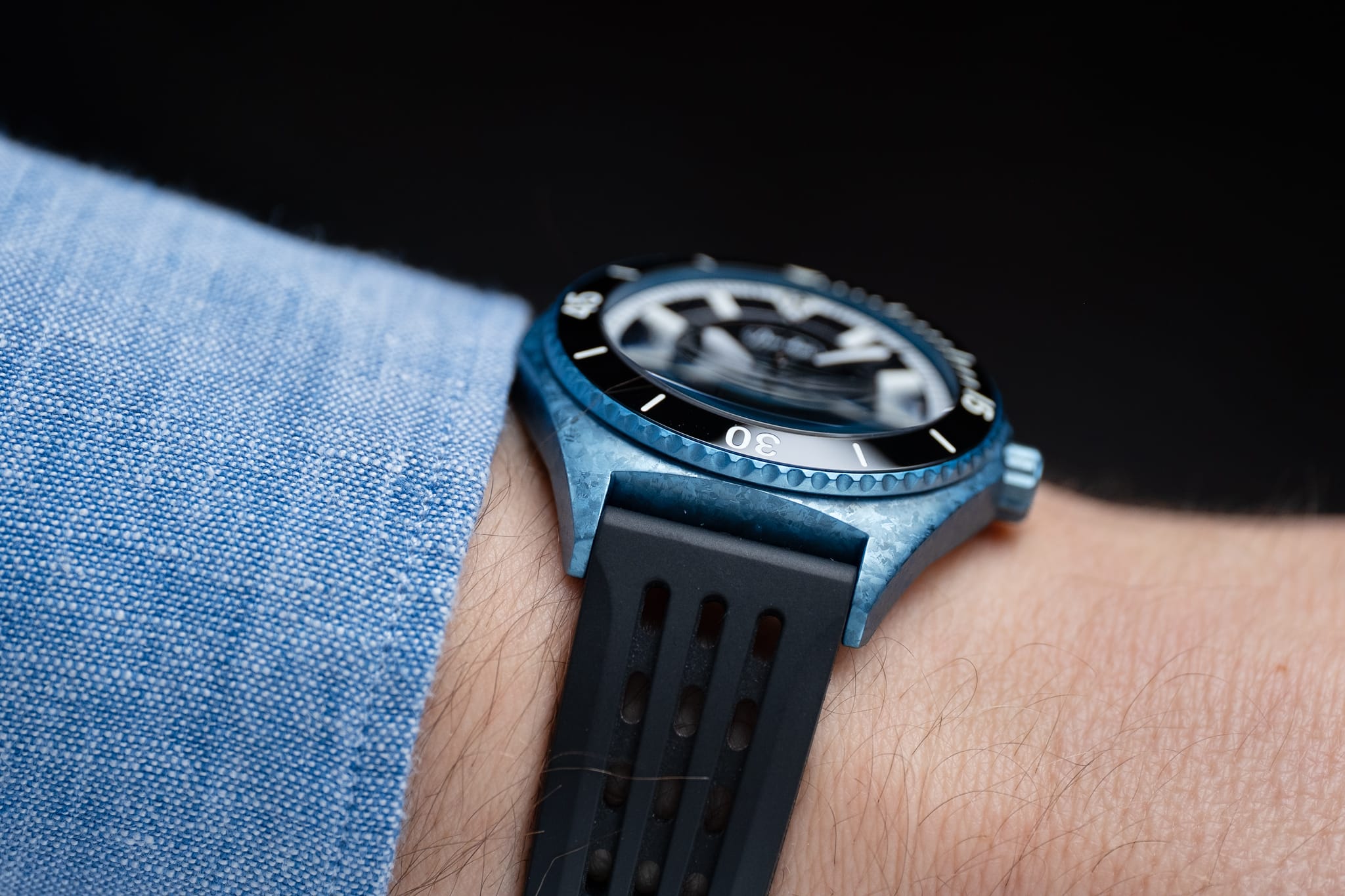
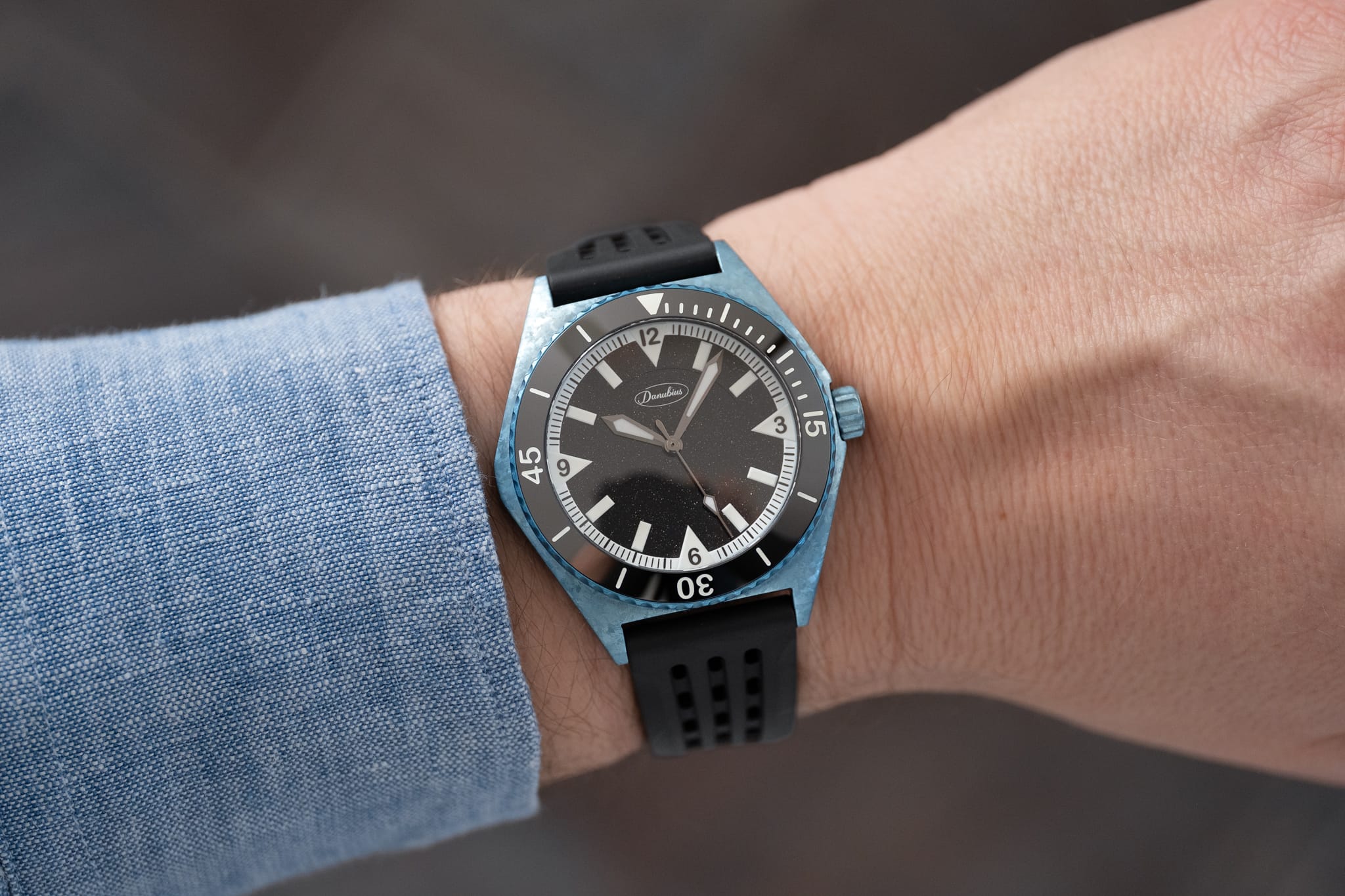
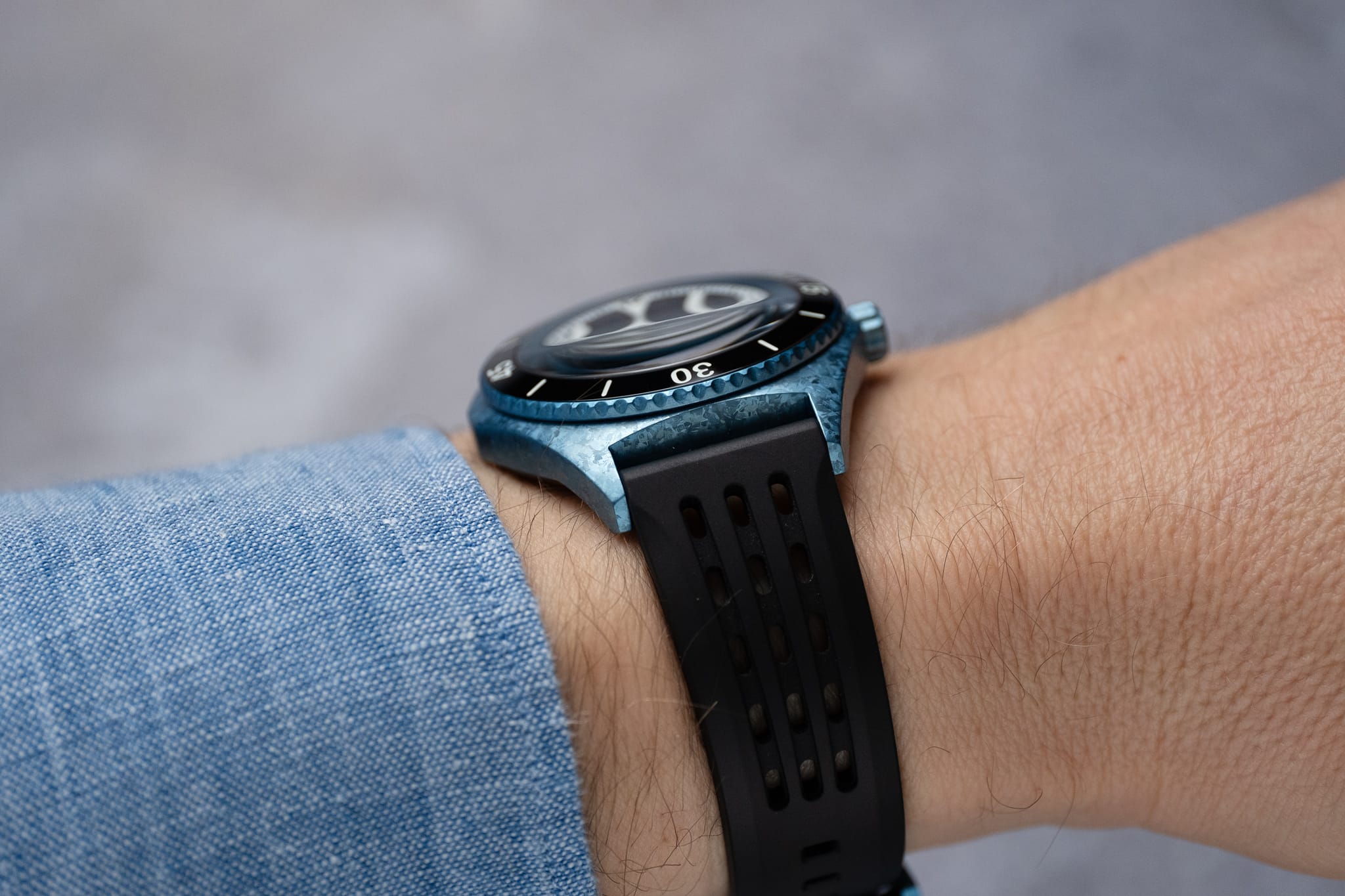
The case diameter is 40mm and the lug-to-lug length (span across the wrist) is 47mm. The overall thickness is 13mm, but 3mm of that is down to the sapphire crystal so it wears considerably thinner than 13mm. The Black Sea weighs in at 78 grammes with the strap, which is certainly light, but not as light as other titanium watches I’ve reviewed. However, this figure is deceptive, as I’m almost certain that the watch case itself is extremely light, it’s just that the extremely thick, domed sapphire crystal adds a lot of weight. As a result, the Black Sea wears much, much slimmer than the specs allude to. In fact, whilst the case material might be the headline grabber, it’s the case geometry of the Black Sea that is the unsung hero. It’s been an absolute joy to wear. The second I strapped it on to my wrist, it felt right at home. It hugs the wrist thanks to subtle little nips and tucks. Everything is just right and it’s clear that it’s been given some thought.
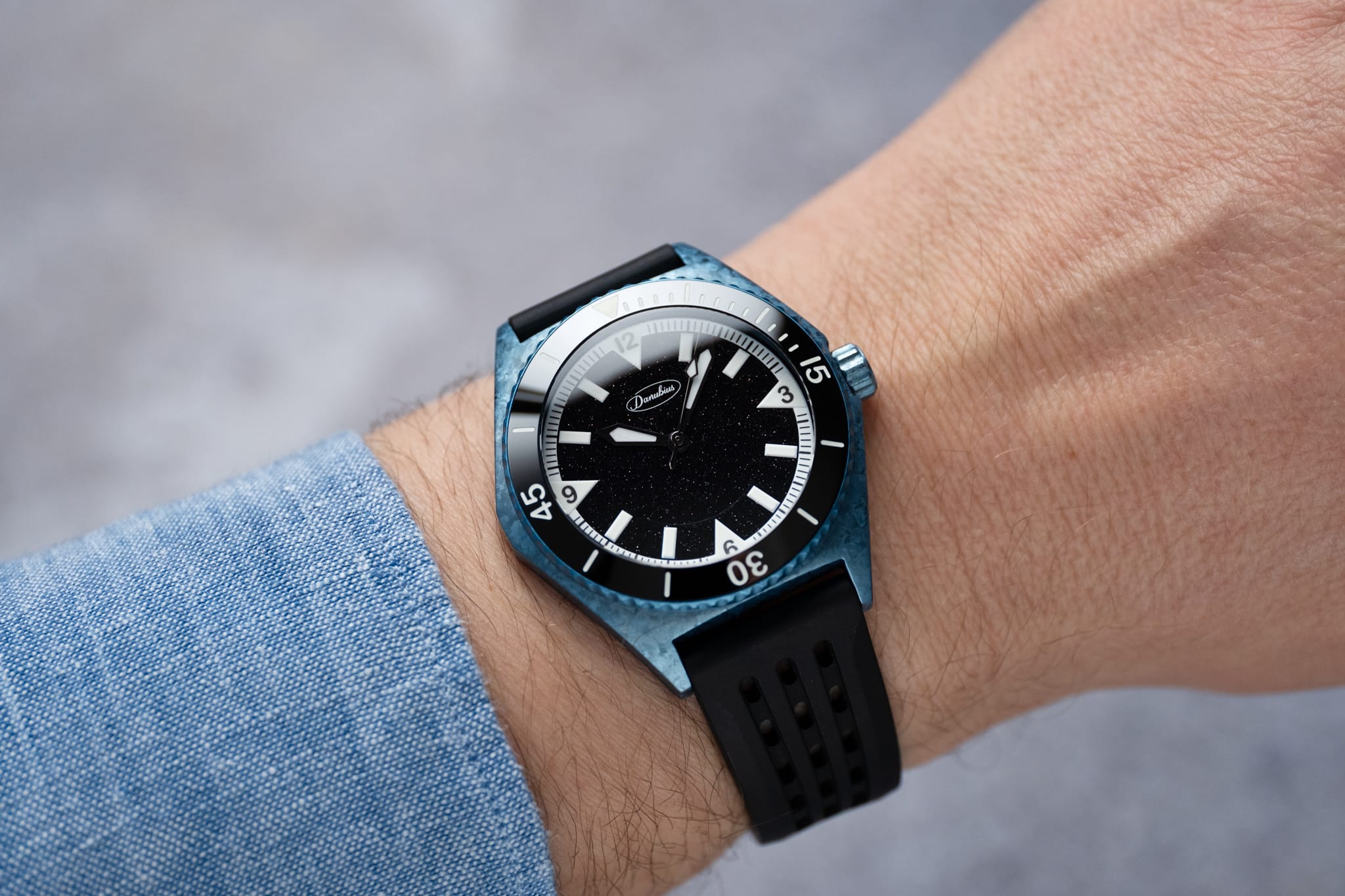
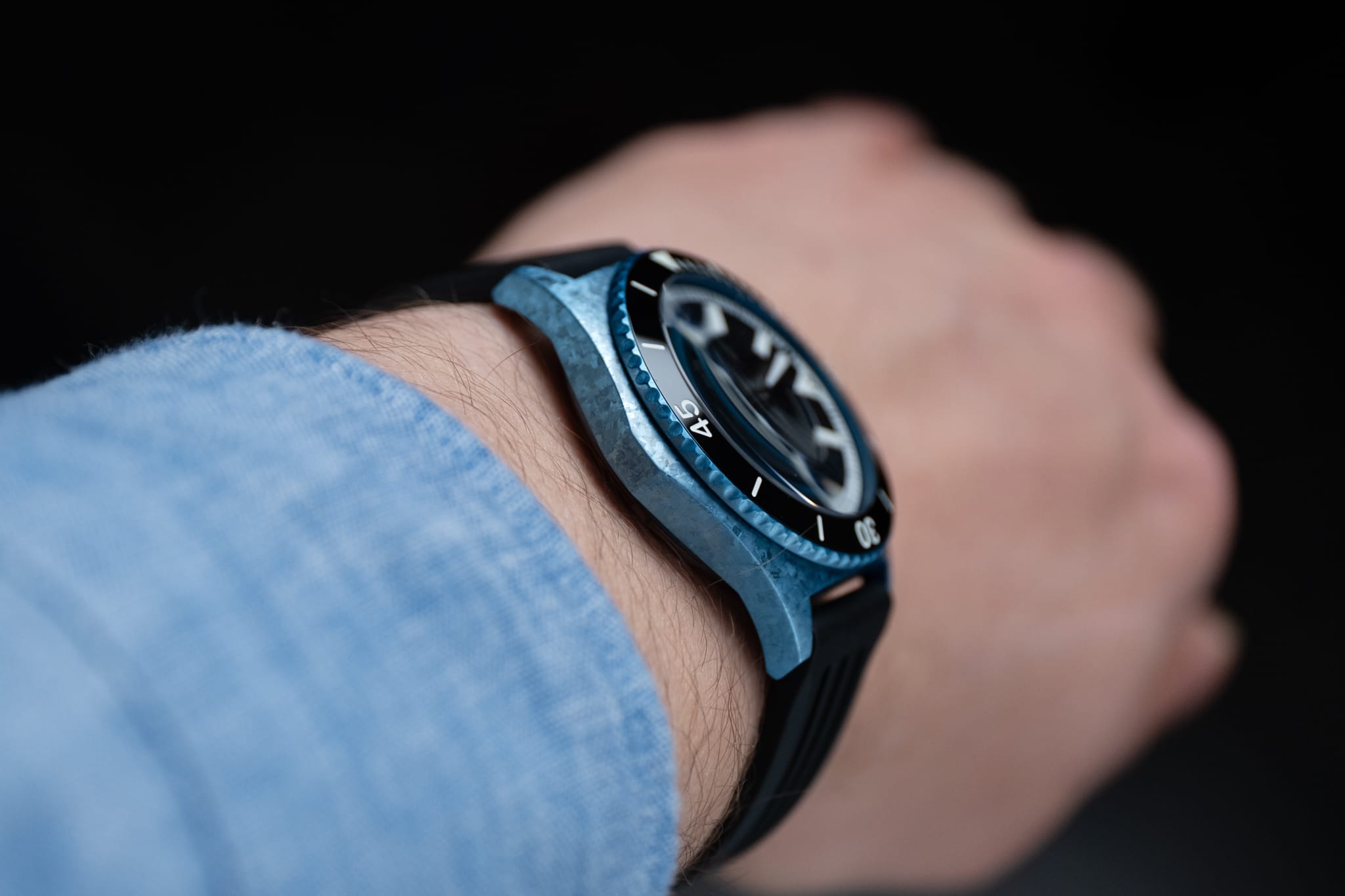
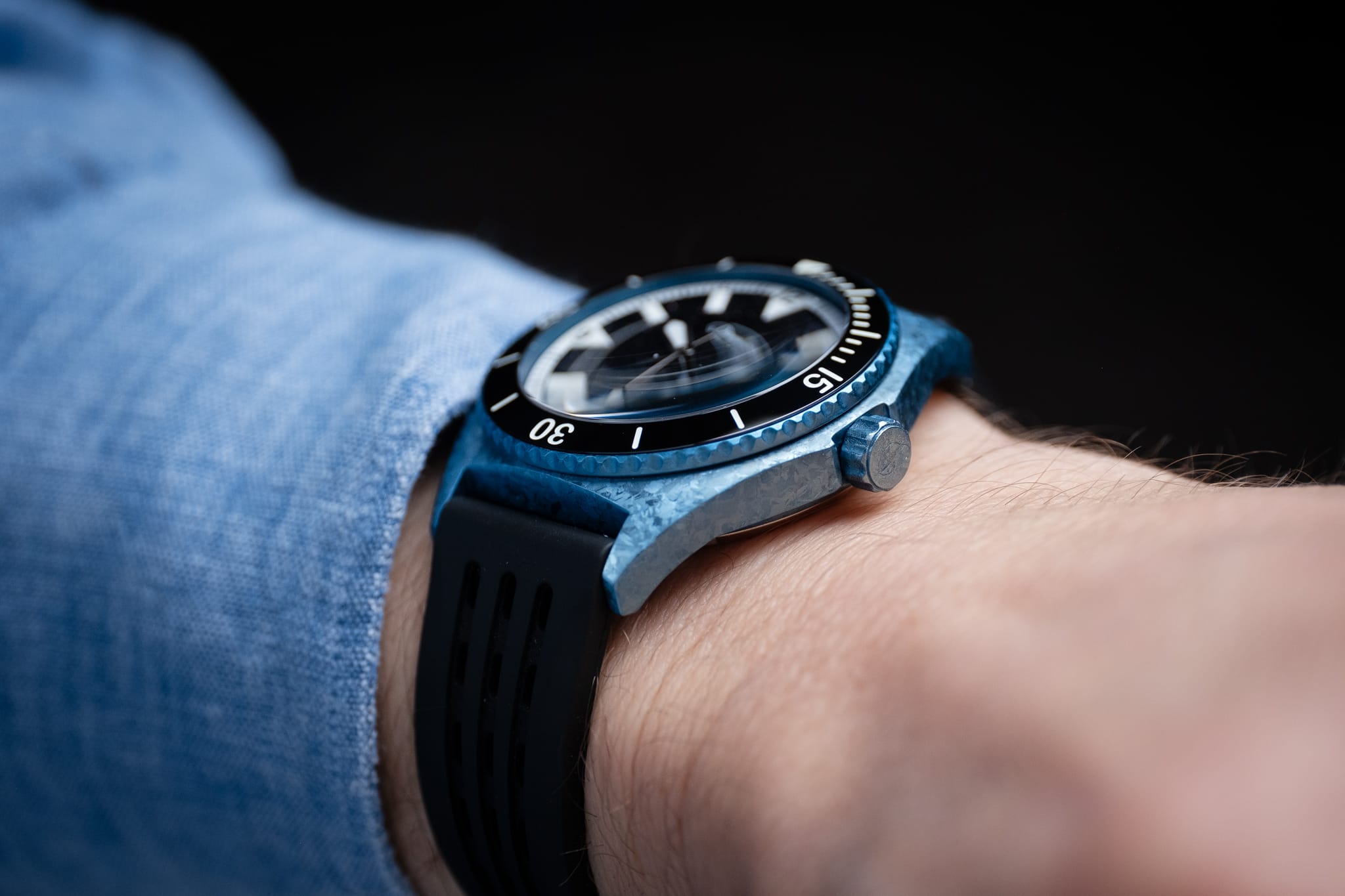
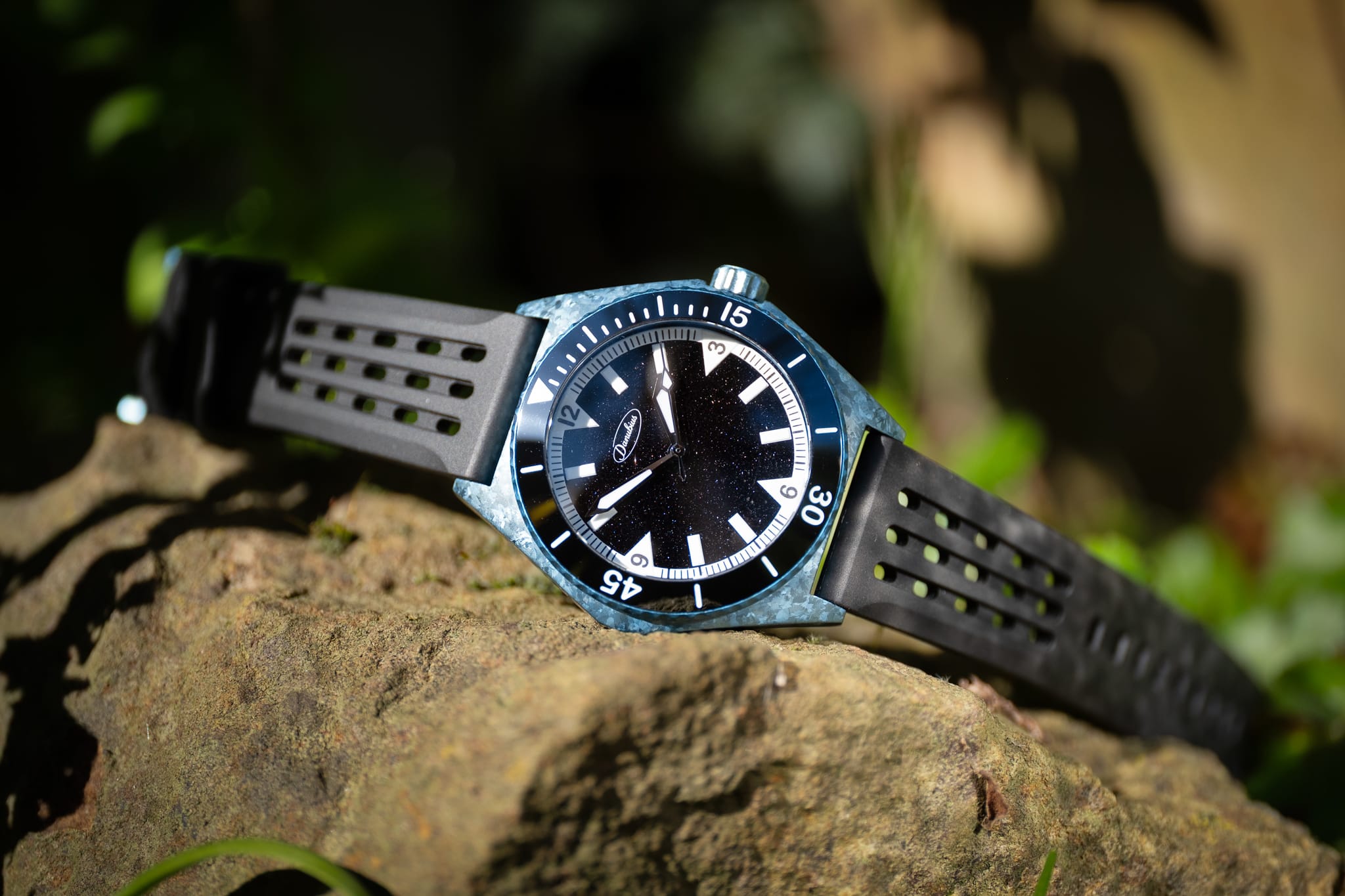
Starting from the front, the first thing you’ll probably notice is that the domed sapphire crystal that protects the dial is extremely thick, giving a lens-like appearance that distorts the dial considerably when viewed at an angle. This adds character, looks great and exudes quality. However, as I found out, it’s certainly at the expense of easy photography, as despite having an internal anti-reflective coating, reflections are aplenty!
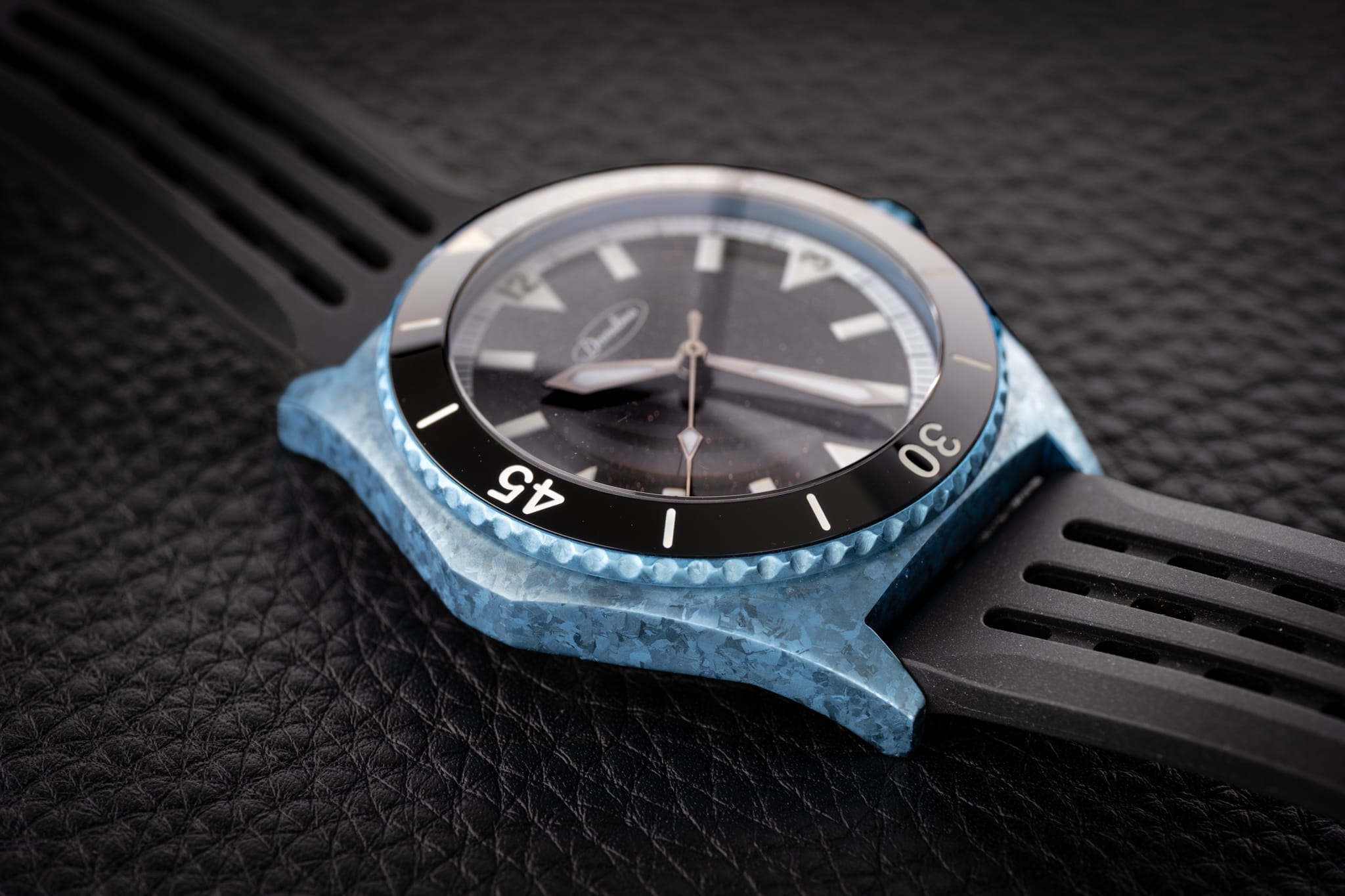
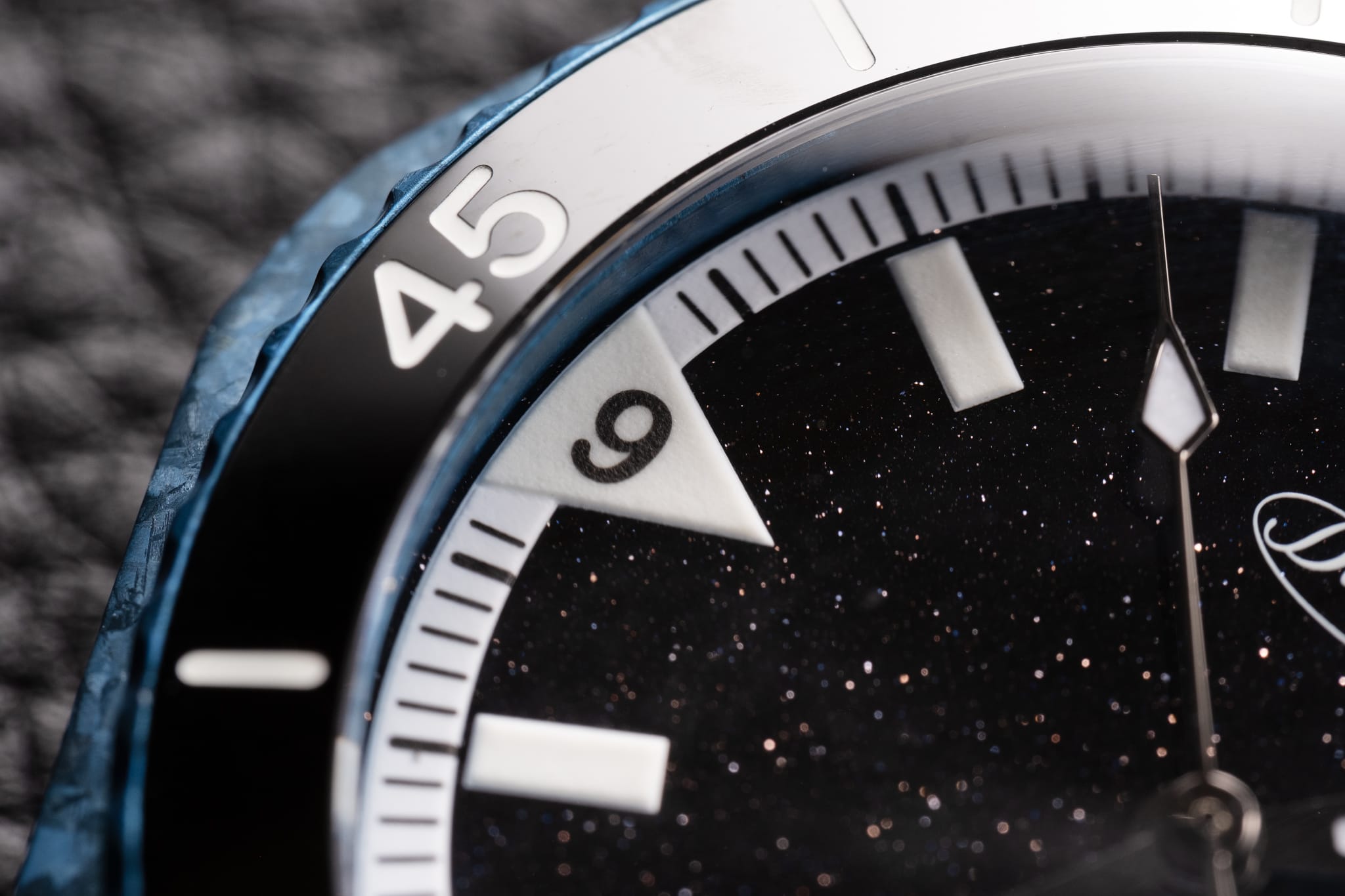
The slopping 120-click bezel surrounding the crystal is crafted from the same crystallised titanium as the case, but has a gloss black ceramic insert, engraved with diver’s countdown markings. There is the usual inverted triangle at 12, Arabic numerals denoting the 15, 30 and 45 minute markers, hash marks for every five minutes and smaller hash marks for each minute up to 15. The bezel knurling is quite shallow and ‘soft’ for want of a better word (maybe because of the material?!), however it’s still reasonably easy to grip and the bezel action on my prototype watch was sublime, refined and with just the right amount of damping. It reminded me a bit of the action on my Tudor Black Bay, but a little lighter. There is a very small amount of back play, but no more than most watches.
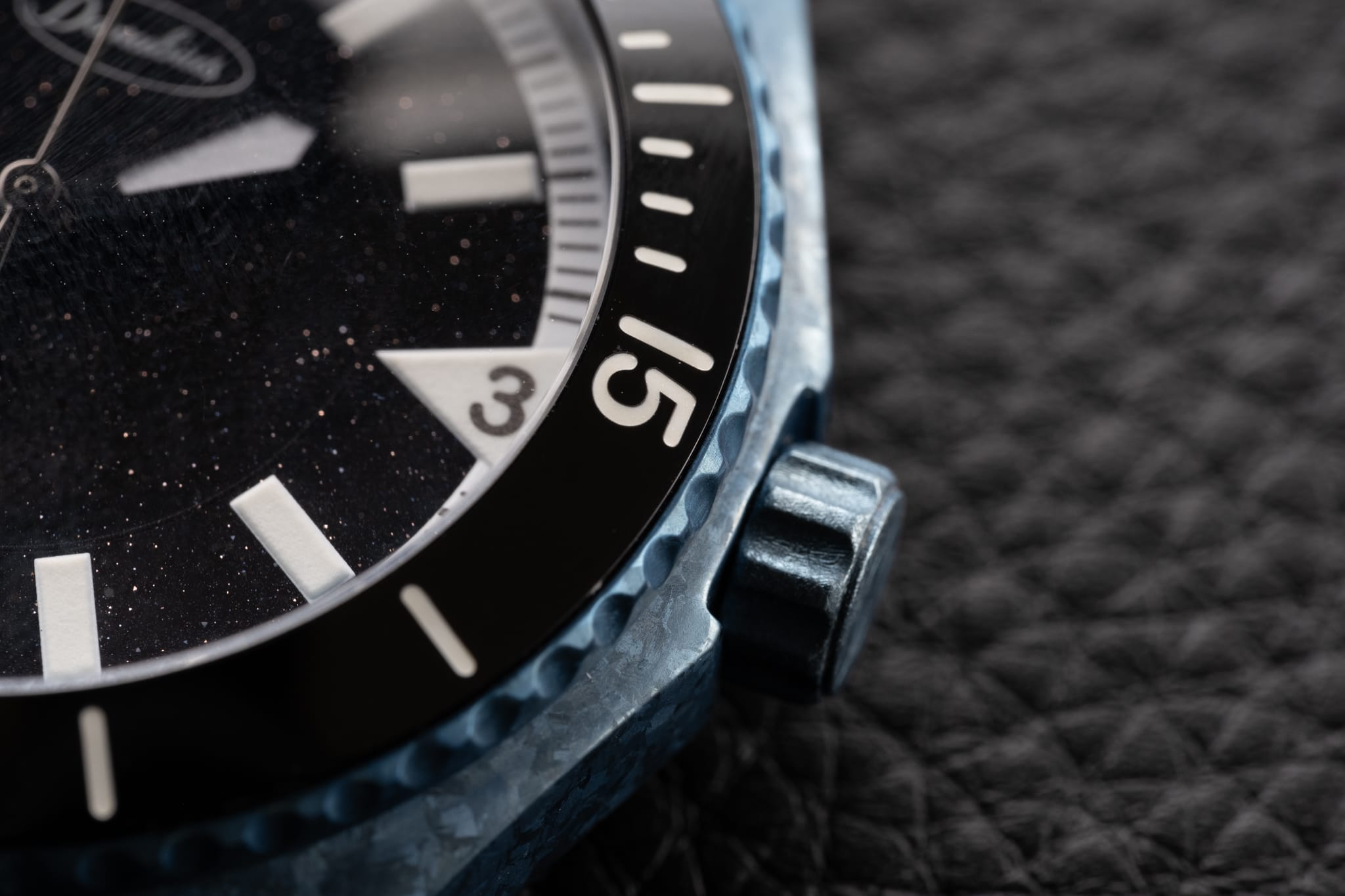
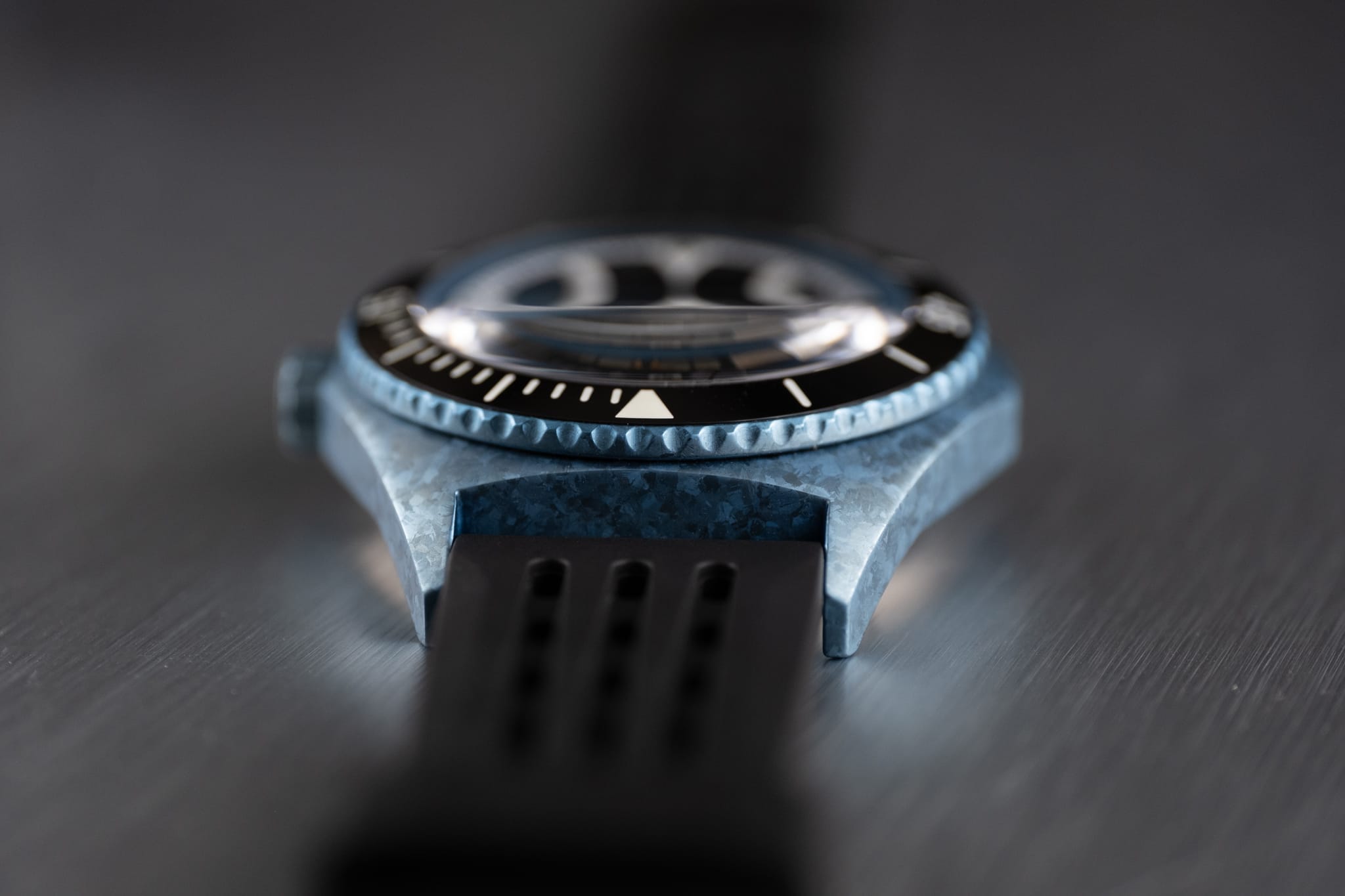
The mid-case cuts a distinctive shape, thanks to it being straight-cutbetween the lugs, having an integrated crown guard a 3 o’clock and flat kick-out at the 9 o’clock to visually balance the crown side. Other than that, it’s a relatively simple case as it’s crafted from a single piece of metal that flows seamlessly from end to end with no interruptions, no lug joints, no steps and no bevels. This approach is perfect to show off the crystallised titanium in all its glory.
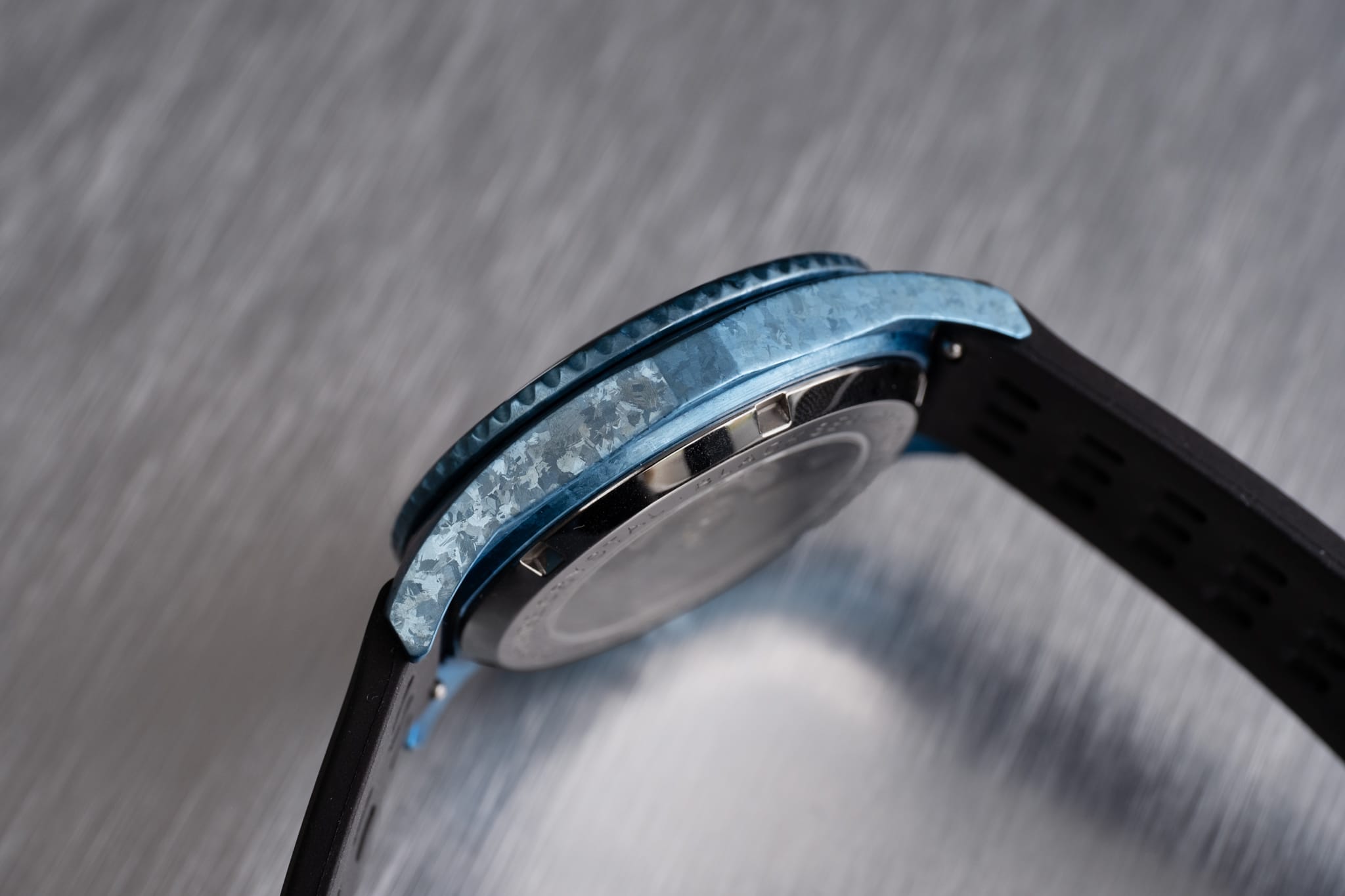
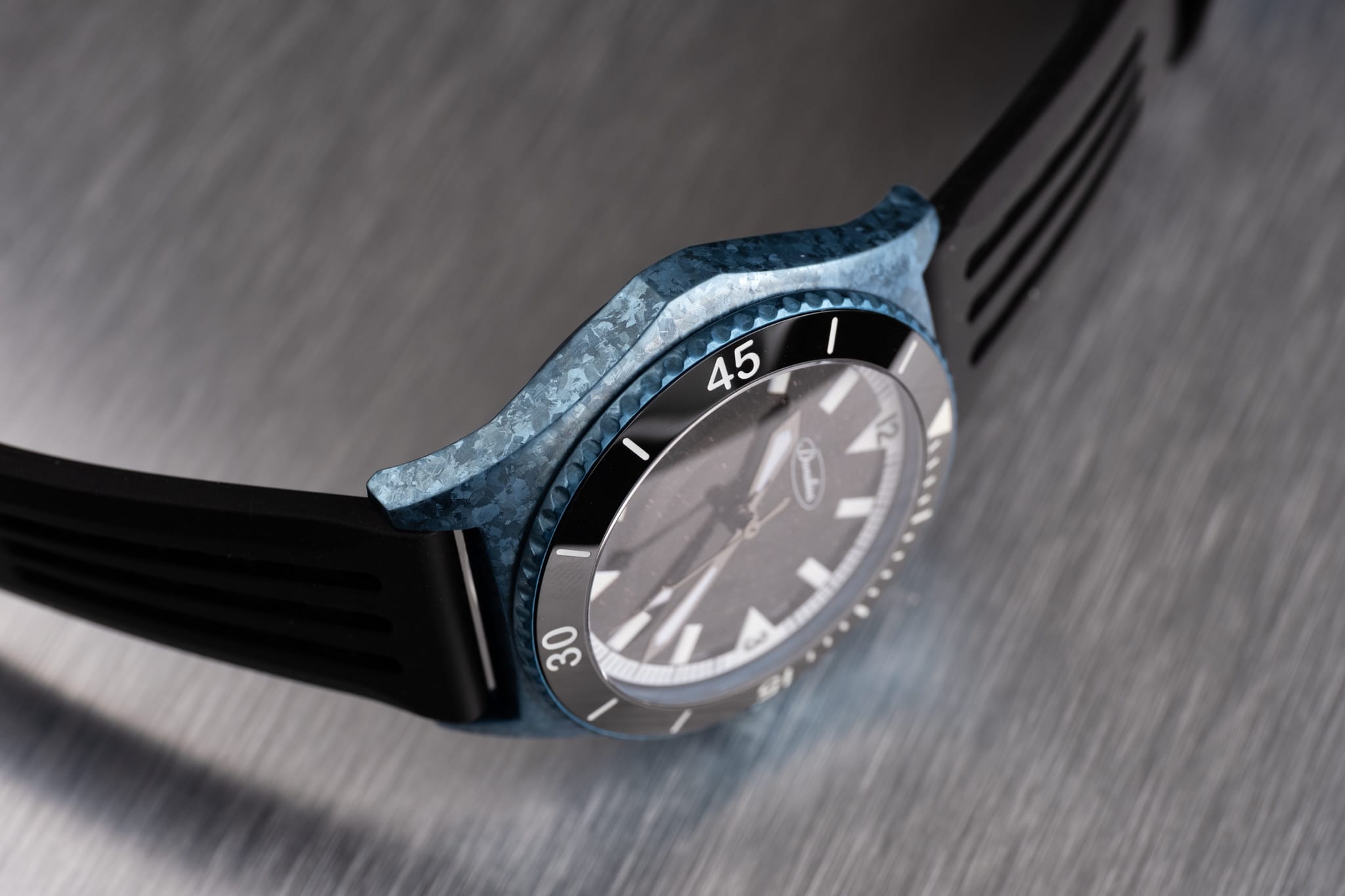
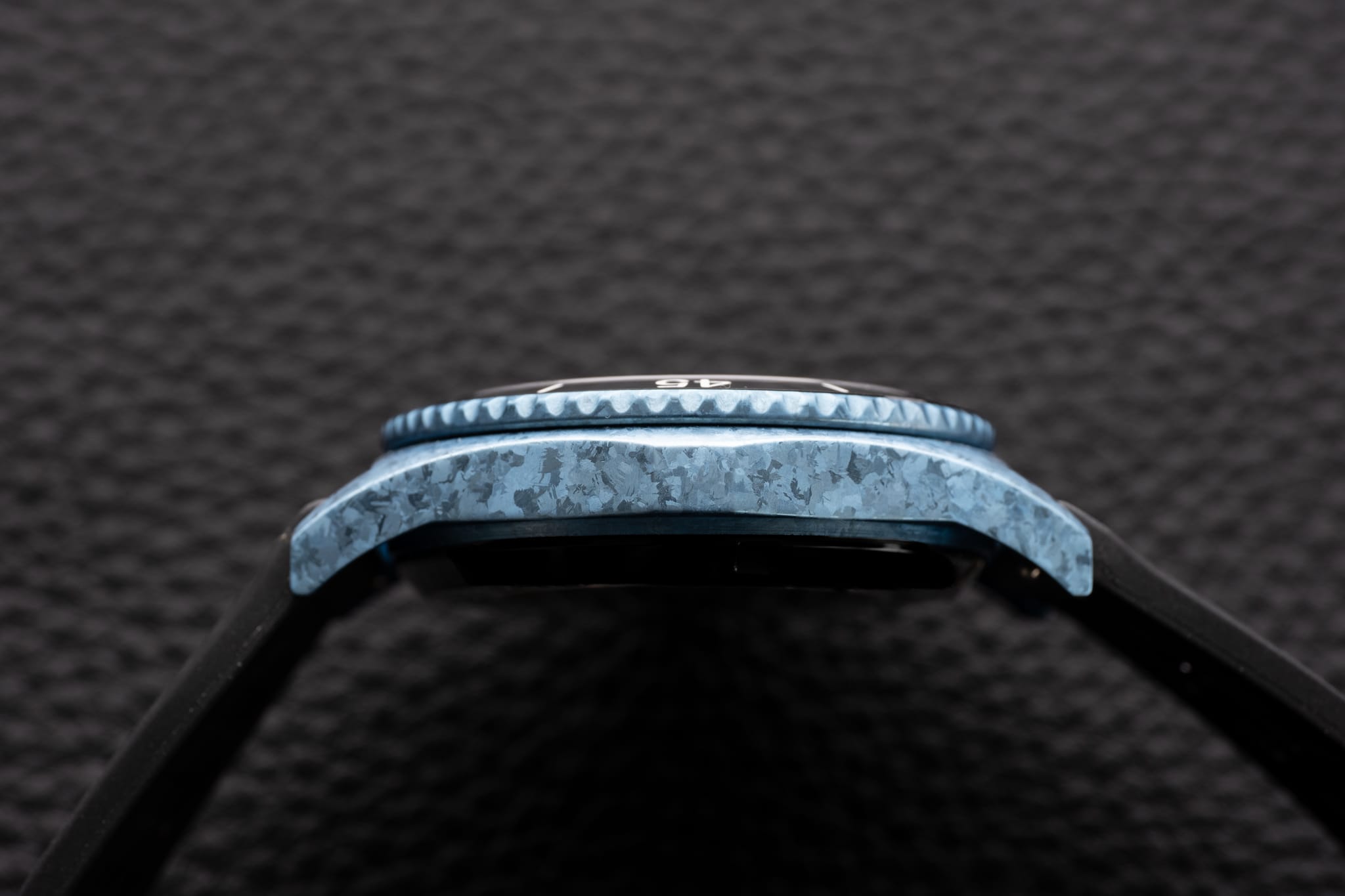
Flip the watch on its side and the profile view illustrates why the watch wears so well. It’s a thin mid-case anyway, but then it thins out even more at the juncture of the lugs and then the lugs themselves angle down to hug the wrist. Rather than adding extra metal to form the crown guards, the case is cut away to form a recess to protect the crown.
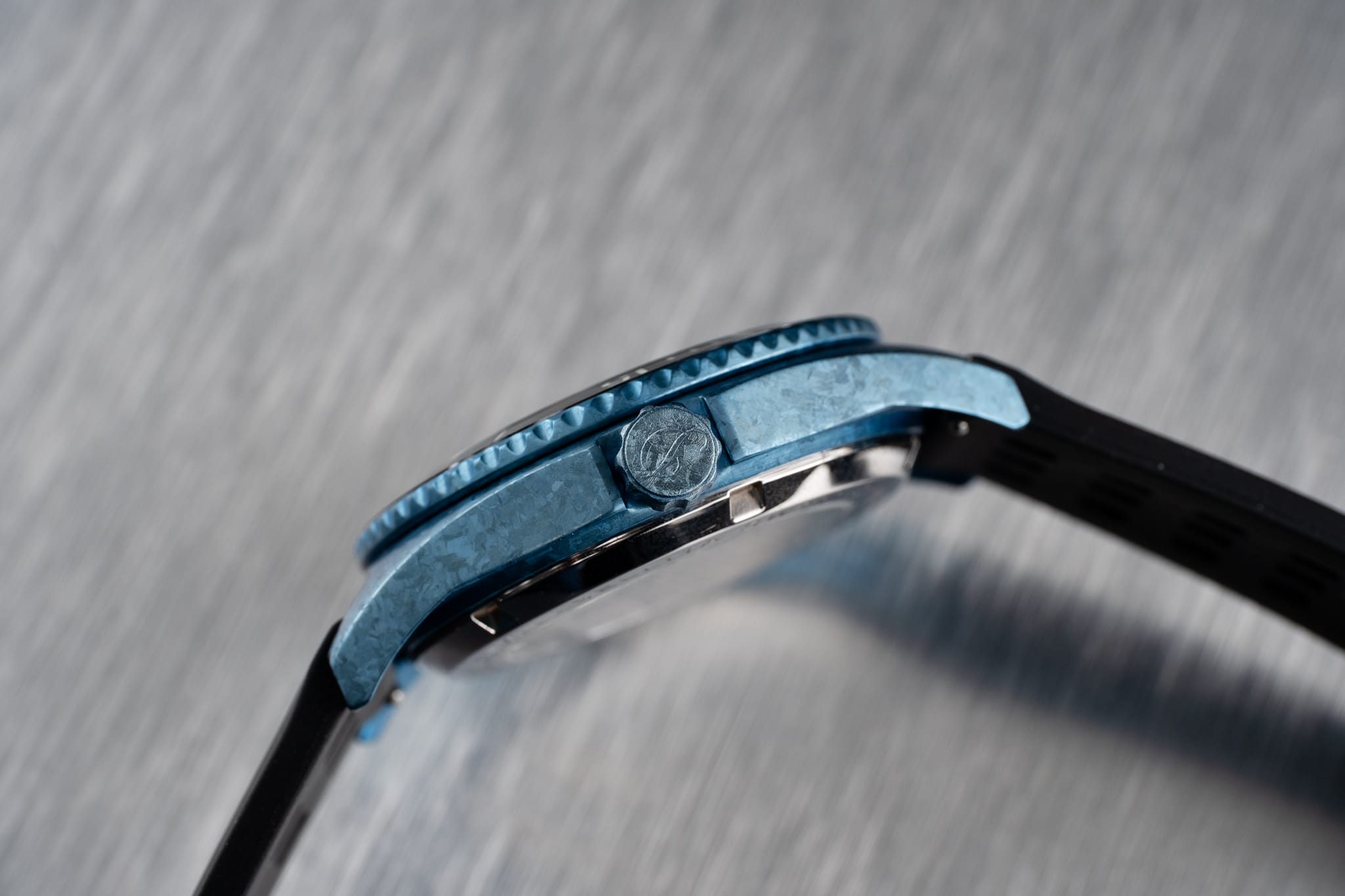
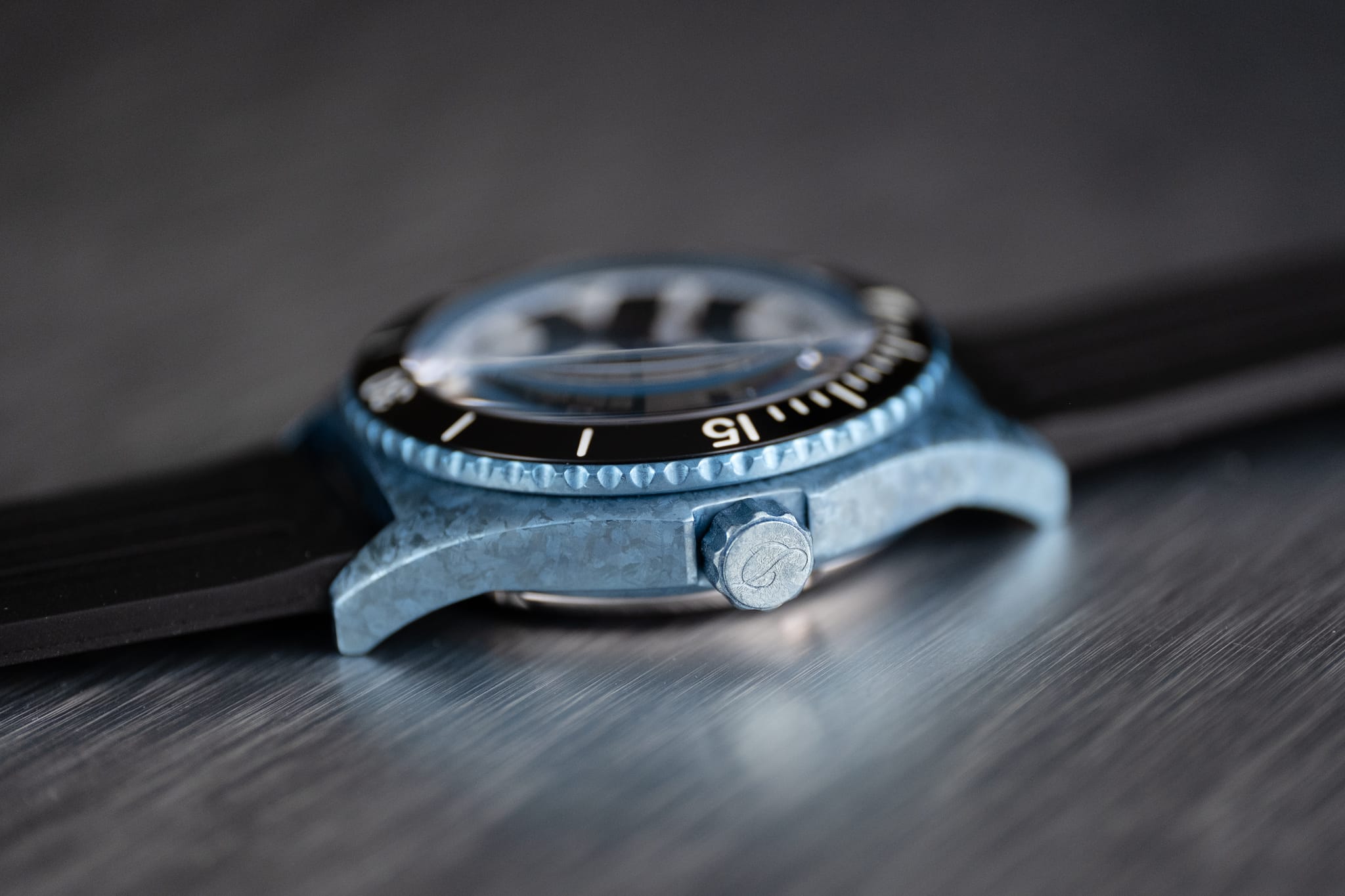
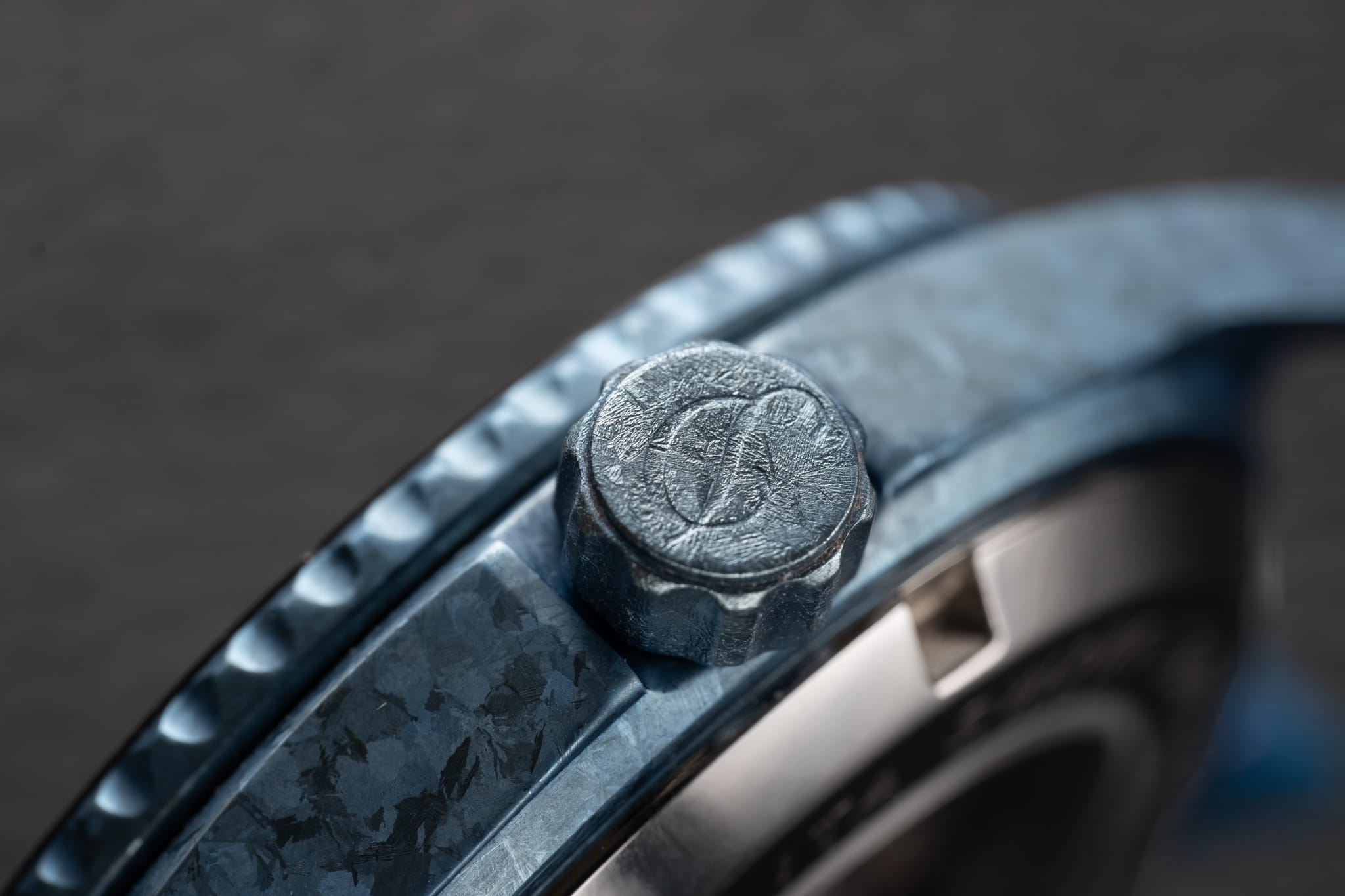
The 6.4mm screw-down crown is also made from crystallised titanium and is branded with the Danubius ‘D’. I will say that I think the engraving on the crown needs to be much deeper as it looks a bit insubstantial. Also, the crown felt a little gritty when unscrewing, although Danubius has said that they will be fitting a stainless steel bush inside the crown on production models, which should help minimise this.
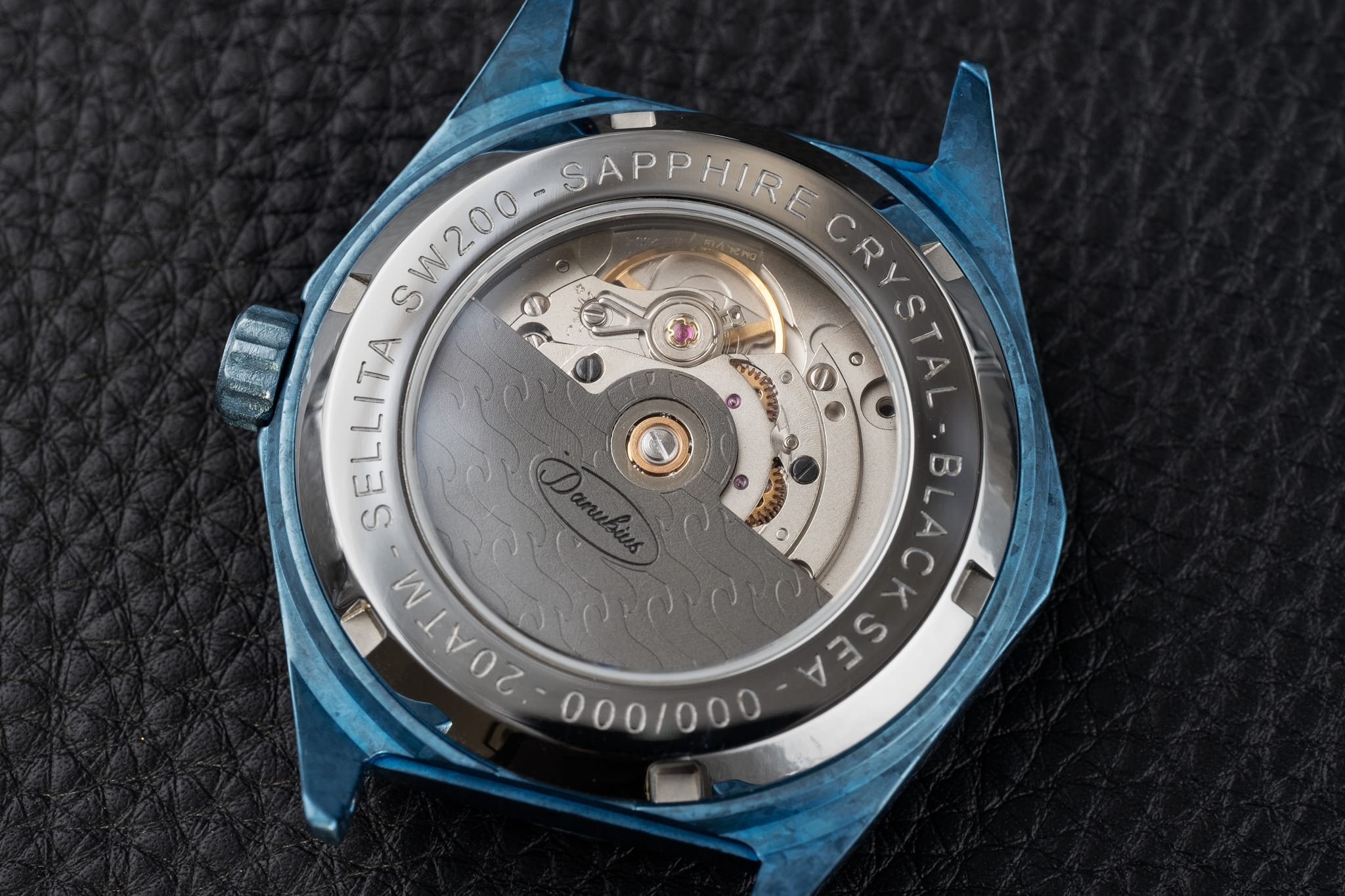
Moving to the screw-down caseback, we have a simple polished stainless steel perimeter engraved with specs of the watch and a sapphire crystal exhibition window at the centre, which shows off the automatic movement beneath. The screw down crown and caseback contribute towards the 200-metre water resistance.
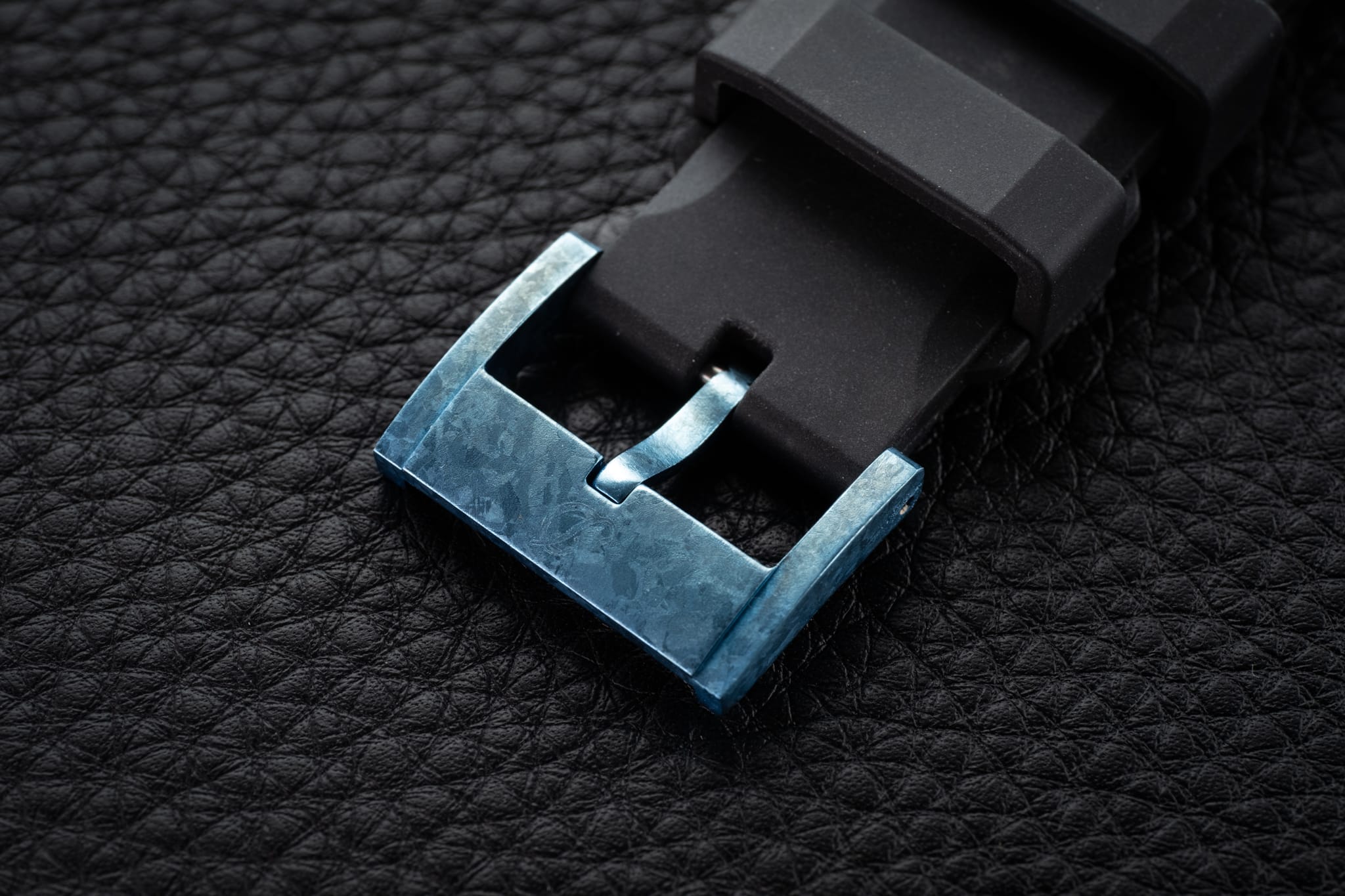
The watch is supplied on a pliable 20mm black FKM rubber strap which tapers to 18mm and features a perforated design with chamfered edges. Quick release spring bars make light work of strap changes and there are two keepers, one floating and one fixed. The strap is well suited to the watch and thankfully the buckle is crafted from the same crystallised titanium as that found on the case. You might notice that the tang for the buckle is too narrow on my prototype watch. However, Alin from Danubius has assured me that this will be made thicker for the production watches.
The Dial and Handset
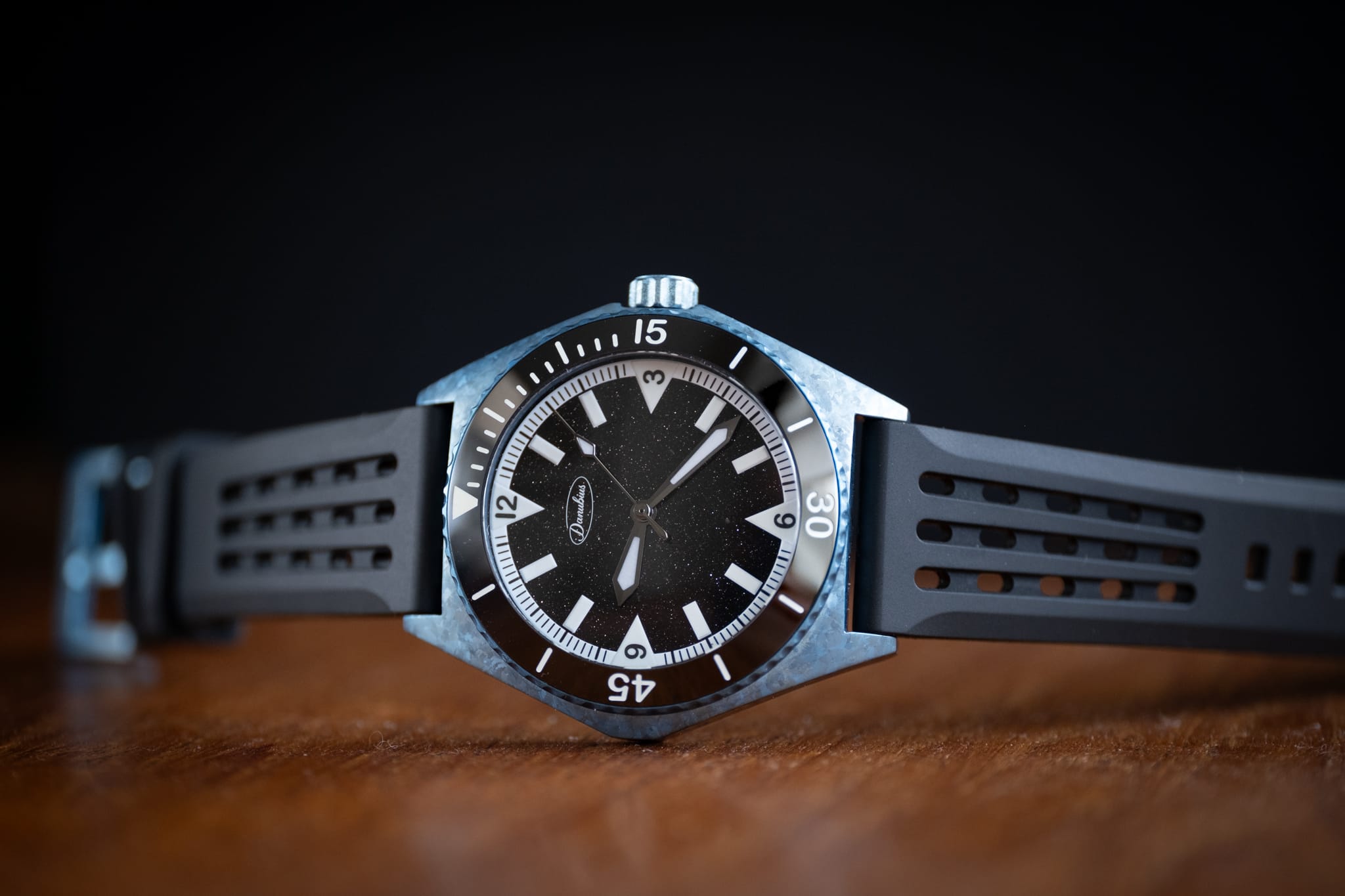
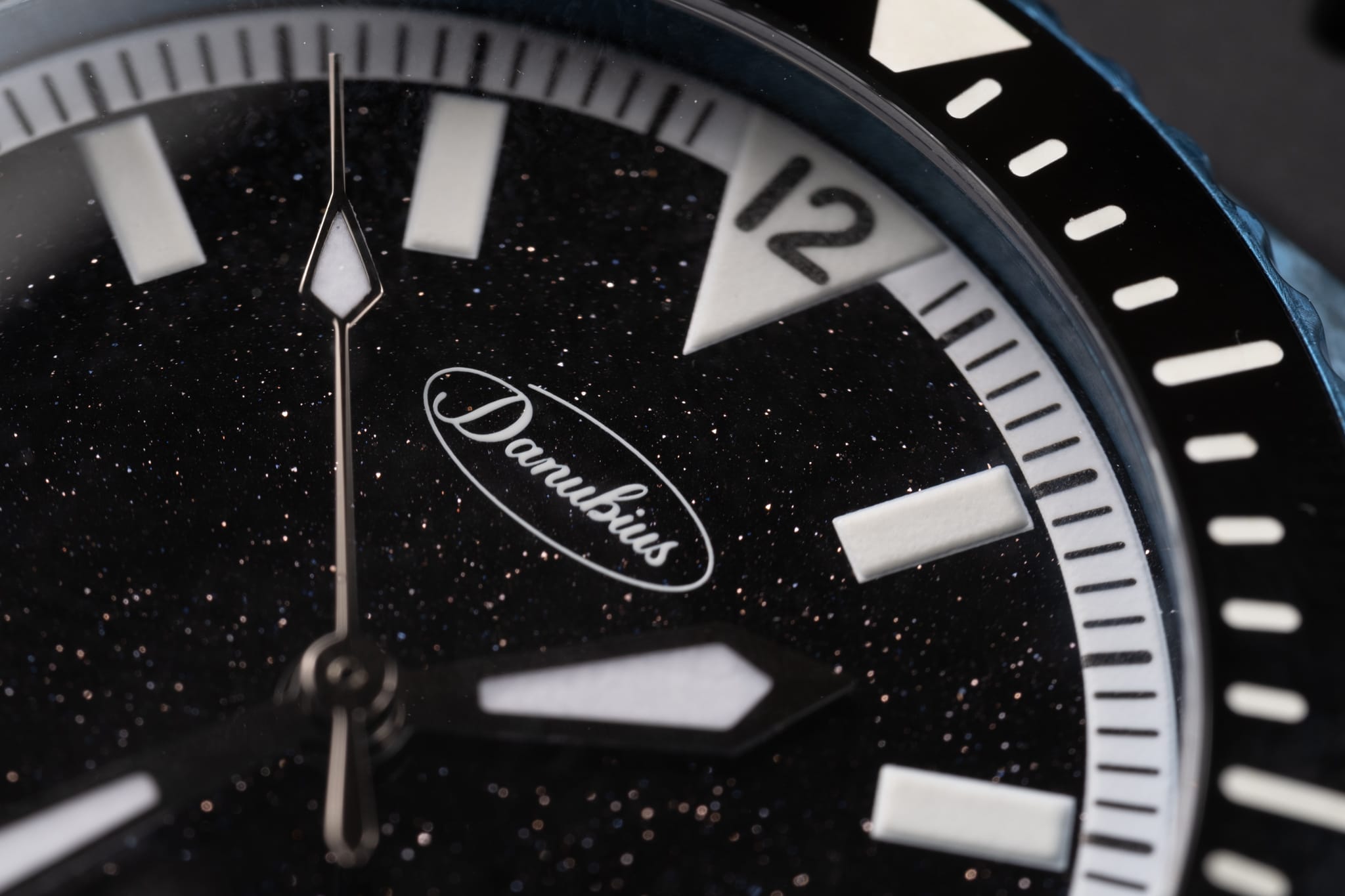
There are two types of dial available for the Black Sea; a Musou black which absorbs around 99% of light for a really deep saturated black, or aventurine as reviewed here. The aventurine has a glossy surface infused with tiny reflective mineral inclusions arranged randomly throughout which gives the appearance of a night sky. This brings a subtle opulence that doesn’t overpower the case, but does become more prominent as more light hits the dial.
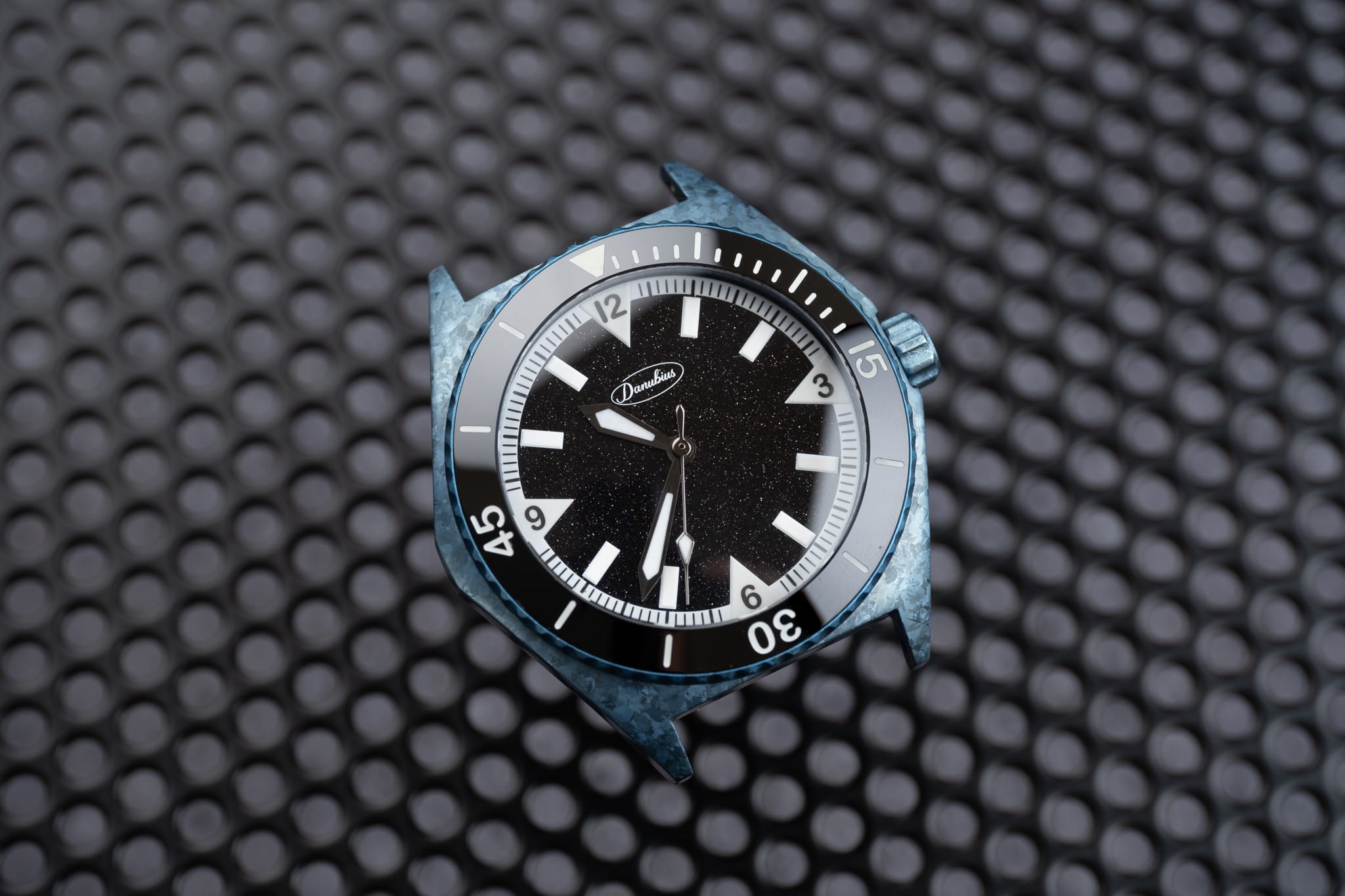
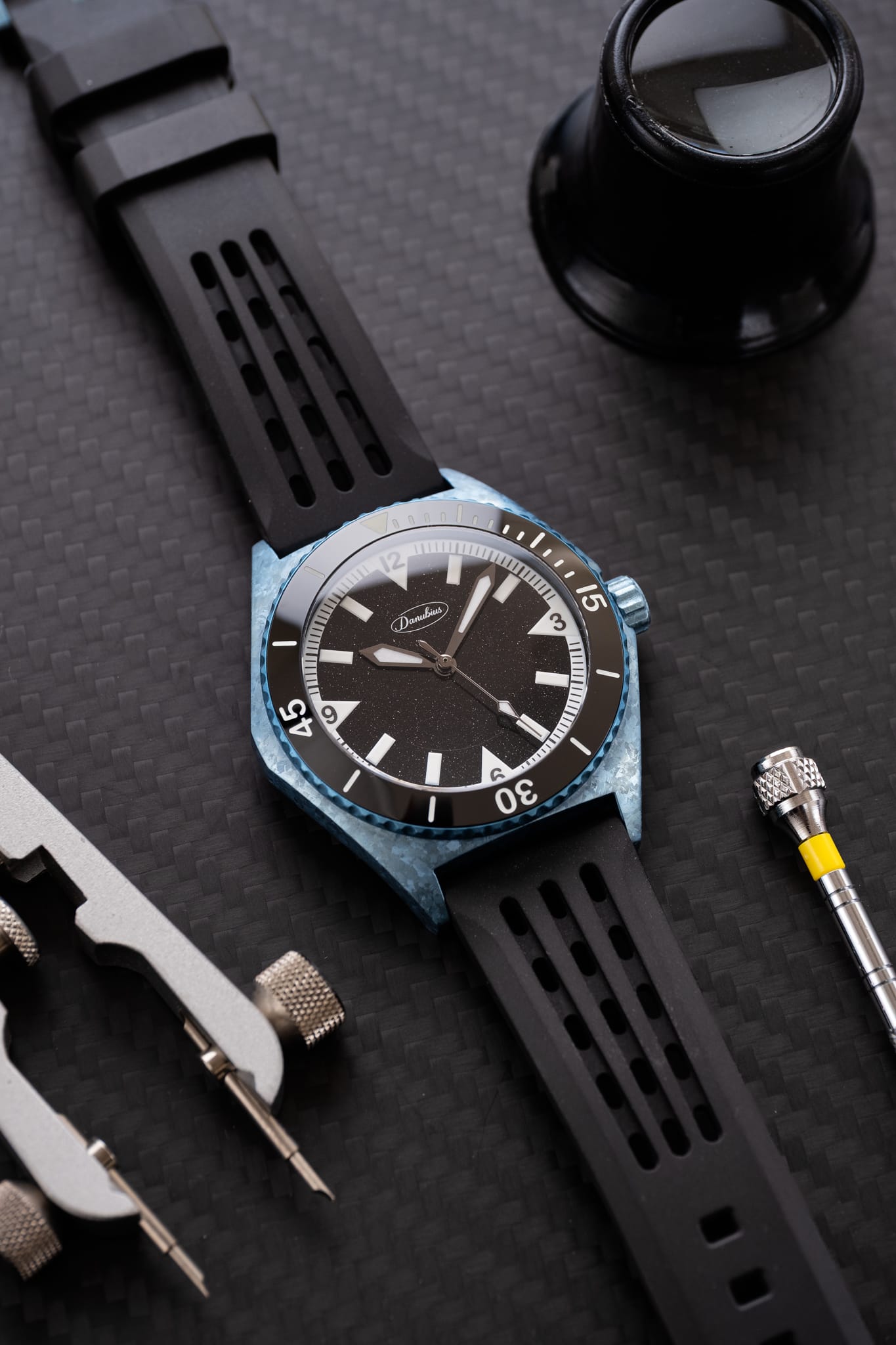
The broad sword-shaped hour and minute hands are diamond-cut and creased down the centre line, whilst the seconds hand features a kite-shaped section of lume. The hour and minute hands are said to be designed to ‘catch and shape light with absolute clarity’. However, because the hands are a gunmetal colour rather than silver, more often than not I found that they blend into the background. Much of the time it’s only the white, luminescent sections that are visible, which gives the illusion that the hands are smaller than they actually are. I mentioned this to Danubius and they said this was a considered design decision as they thought it better suits the watch. Although I totally respect this decision, maybe if the hands were either half brushed and half polished for increased contrast (like on some Seiko models) or were either more acutely angled/faceted to better reflect the light, it might be the best of both worlds?! Despite some legibility issues because of reflections from the domed crystal, it never gets in the way of actually being able to tell the time.
A white minute track occupies the outer edge of the dial, printed with long black hash markers denoting every five minutes and shorter hash marks for minutes in-between. Cardinal triangular hour markers are found at 3, 6, 9 and 12, printed with Arabic numerals, with batons making up the remainder. Whilst the hour markers aren’t framed, they are nice and deep and sit proud of the dial. If you look closely at my photographs, the minute track markings on my prototype watch don’t make sense, but Danubius are already aware of this and it will be fixed for production watches. Lume lovers will be thrilled with after dark legibility as the hands, hour markers and the majority of the bezel are liberally filled with blue Super-LumiNova BGW9. Elsewhere, green Super-LumiNova C3 is used for the minute track and zero-to-15-minute markings on the diver’s bezel. The bi-coloured lume makes for a glorious light display that lasts well into the night. With no date window and the only text on the dial being the printed Danubius logo, the Black Sea has perfect dial symmetry. Although it might have looked more premium if the logo was applied.
The Movement
A Swiss-made Sellita SW200-1b automatic movement powers the watch. This 26-jewel workhorse movement is a mainstay for watch brands at this price level due to its reliability, availability and relative ease of servicing. It’s hacking and hand-winding, has a 38-hour power reserve and beats at 28,800 vph or 4Hz, giving a nice smooth sweep to the seconds hands. The 1b version is a ‘no-date’ variant of the SW200, so there are only two crown positions, keeping time setting simple. Danubius doesn’t quote accuracy, so we should assume that the watch uses the standard grade version of the movement, which is rated at +/-12 sec/day. The movement is undecorated, except for a custom branded rotor with wave engraving. As the Black Sea has an exhibition case back it would have been nice to see a higher level of finishing, such as blued screws or circular graining on the main plates etc.
Final Thoughts on the Danubius Black Sea Dive Watch
It’s rare for me to review a watch that brings something completely new to the table, but the Danubius Black Sea dive watch does just that. I’ve never before seen a watch case crafted from crystallised titanium, and from my research and Danubius’ claim, it could well be that it’s unique. If not, it’s at least very rare. Not only is the case striking, but it manages to be so without ever being garish. Paring the case with black dials probably helps in that regard too, so as not to compete too much for attention. If you like the look of the blue crystallised titanium, the case virtually sells the watch on its own. However, don’t for a minute think that it’s the only thing going for it. Far from it. The case ergonomics and dimensions are very attractive and it wears like a dream. It’s powered by an industry standard Swiss automatic movement, lume lovers will rejoice, and the dial choices offer a little extra interest. It’s not a cheap watch by any means, especially when it reverts to full price, but it’s probably justified as I imagine a large proportion of the cost would have been in the research and development costs. The raw material cost for crystallised titanium is also much higher than that of standard Grade 2 titanium. This is because it’s more time consuming to produce, uses more energy due to the longer furnace firing needed to achieve the crystallised effect, has higher failure rates and requires specialist skills.
Areas for improvement include more anti-reflective coating on the sapphire crystal to cope with the reflections, little touches such as a deeper crown engraving, changing the surface angles or finishes on the hands to be more visible against the dial, using an applied logo, and improving the material for the presentation case. It’s described as being leather, however it felt and looked like more of a ‘pleather’ to me, so I would like to see a higher quality leather used. Finally, the watch understandably doesn’t come with a bracelet option, but nethertheless this might put some bracelet-loving watch buyers off. None of these negatives are significant enough to prevent a purchase and if you’re looking for an automatic watch with a colourful case, the Black Sea might be the perfect choice. Other than PVD, the only other option for a colourful case is ceramic, which is a great material, but titanium is less prone to fracture than ceramic. And there’s a certain smug sense of satisfaction, knowing that you’re almost certainly never going to meet another watch geek with a crystallised titanium cased watch. And even if you did, it wouldn’t be exactly the same as by the very nature of the process, each watch is completely unique. This alone makes for a compelling reason to buy the Danubius. With ‘fancy dial’ fatigue beginning to set in amongst collectors, I think we could indeed see more watch brands turning to case materials as Danubius has done here. But just remember Danubius did it first!